 Guide On Map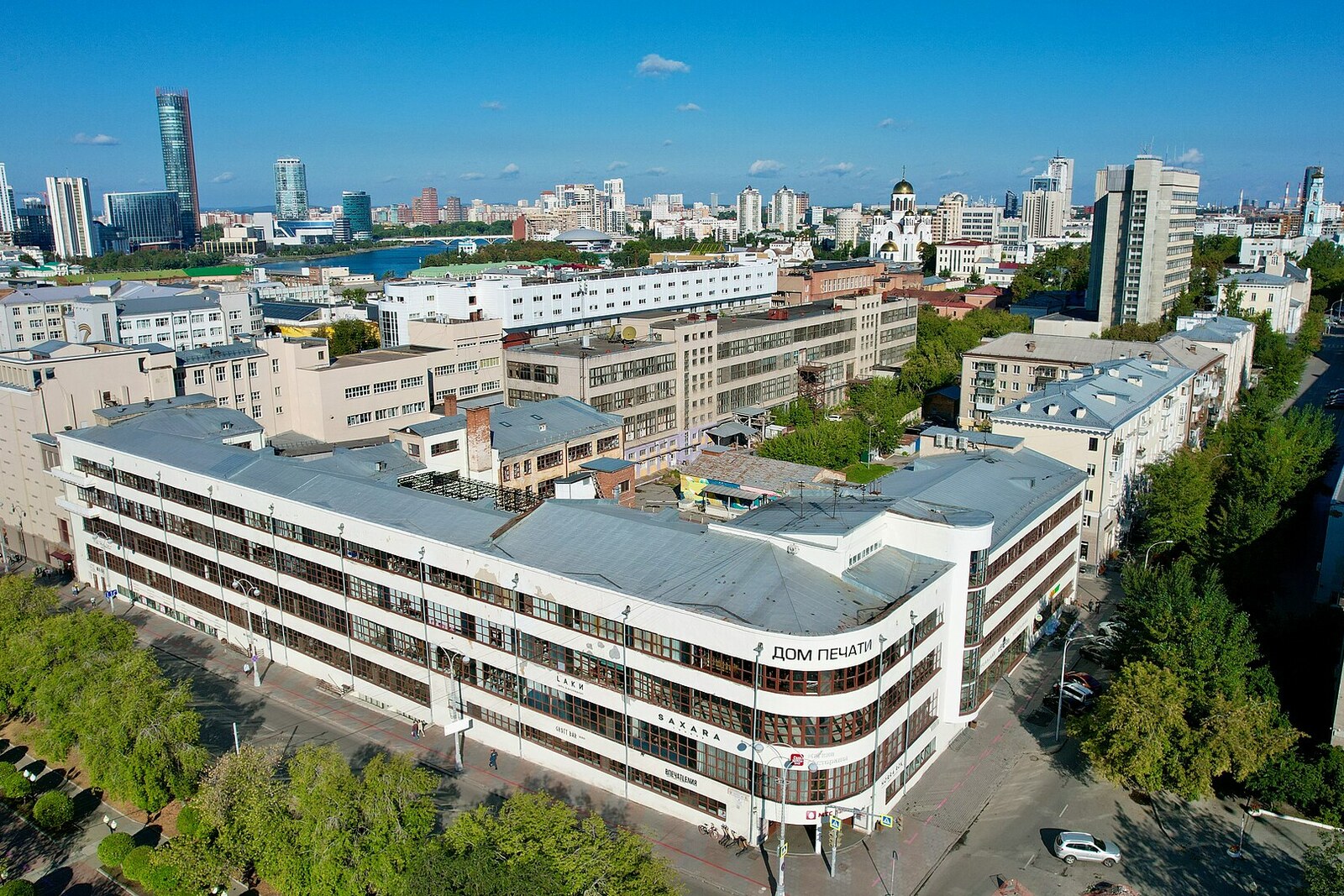
Look around first
What to notice
- Long building
- Rounded corner
- Rows of windows
The story of the place
The name House of Printing has outlived the printing house itself: the editorial office has long worked elsewhere, and the presses have been removed from here. The long building with its rounded corner and rows of windows once contained the newspaper’s entire journey—from manuscript and typesetting to finished bundles ready to be sent throughout the oblast. Editorial offices, a publishing house, workshops, and warehouses worked under one roof.
On January sixteenth, nineteen forty-three, an issue of Ural Worker came out of this printing house with a proposal from factory workers: to manufacture, beyond the mandatory plan, enough tanks and self-propelled guns to equip a separate volunteer corps. Yekaterinburg was then called Sverdlovsk. “Beyond the plan” meant a very tangible commitment: enterprises were already fulfilling military orders, while the new vehicles had to be made additionally and paid for through voluntary contributions.
The House of Printing was built in the early nineteen thirties specifically for Ural Worker. The editorial office, publishing house, typesetting workshops, printing presses, and warehouses were brought together under one roof. Here, text traveled the entire way from manuscript to a bundle of fresh newspapers ready to be sent throughout the oblast.
Lev Shaumyan, the editor in charge—a person responsible for the content of every issue—wanted to turn the factory workers’ proposal into a wider campaign. He declared the newspaper the information headquarters for forming the corps. Other Urals publications took up the story. Residents of Sverdlovsk Oblast, Chelyabinsk Oblast, and Molotov Oblast raised money, enterprises produced additional equipment, and workers filed applications to become volunteers. There were about one hundred ten thousand applicants—twelve times more than there were places in the corps.
Sergei Aleksandrov earned his living as a journalist and headed Ural Worker’s military department here. In March, he enlisted in the corps then being formed. Aleksandrov did not leave journalism behind: he went to the front as a correspondent for the newspaper Volunteer. Its staff moved together with the tank crews, produced issues on the march, and wrote about the battles and the people alongside whom they were. The corps entered battle near Oryol and finished the war in Prague; the journalists of its front-line editorial office traveled the same route.
The editorial office of Ural Worker is now at a different address, and the printing presses have been removed from here. The long building with its rounded corner has retained the name House of Printing. It literally describes the building’s former arrangement: in some rooms, they prepared the newspaper layout; in others, they turned it into a print run—like that January issue, which went out from here to readers in three Urals oblasts.
Useful on site
The facades are accessible from public streets; unrestricted access to the historic production rooms is not guaranteed.
Checked: June 24, 2026. Check the official source before visiting.View the building from the opposite side of the open space, so as not to lose its length and the direction of its facade. Do not count on unrestricted access inside.