 Guide On Map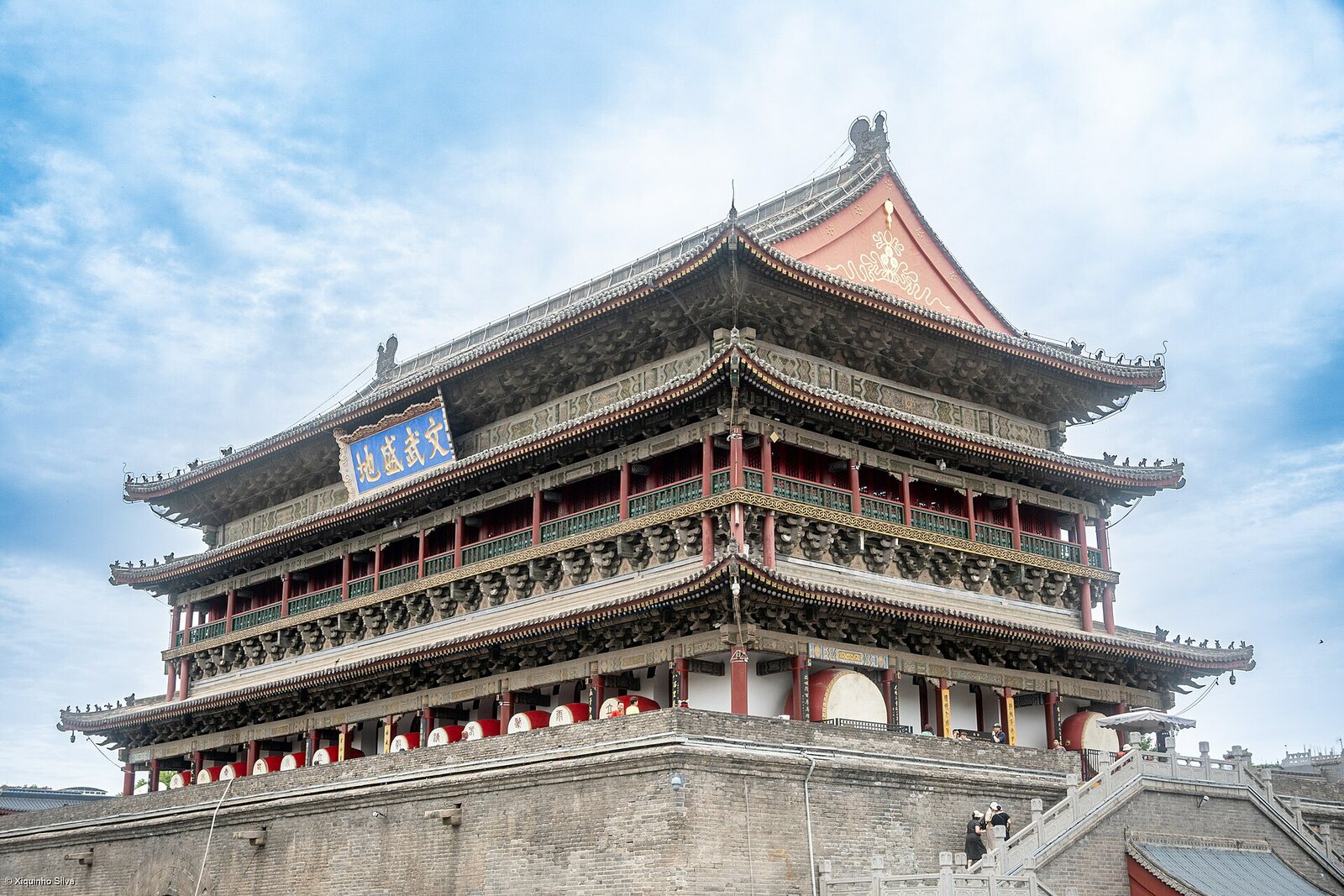
Look around first
What to notice
- The northern arch of Xi'an Drum Tower
- The tiered roof
- Beiyuanmen Street
- Street-front shops
The story of the place
The tall Xi'an Drum Tower was built in thirteen eighty, with the city drum placed at the top. In the evenings, its sound carried over the houses and official compounds around it. The northern arch beneath the tiered roof leads onto Beiyuanmen Street, toward Beiyuanmen Gate of the Northern Courtyard, where the governor's estate stood. The courtyard itself is now occupied by the administration of Lianhu District, while the street's name preserves the memory of the old gate.
In the autumn of nineteen hundred, the imperial court that had left Beijing settled at the end of what is now Beiyuanmen Street. Empress Dowager Cixi, the widowed empress and de facto controller of the Qing dynasty court, was fleeing the forces of the Eight-Nation Alliance and looking in Xi'an for a place from which she could continue governing the country. She took the Guangxu Emperor with her.
Local officials prepared the Southern Courtyard for them—the former offices of the governor-general south of Xi'an Drum Tower. Empress Dowager Cixi found it cramped and moved to the Northern Courtyard, the estate of the Governor of Shaanxi, about half a kilometer from here. The name Beiyuanmen Street already existed: it literally means “the gate of the Northern Courtyard.” This street led directly to the governor's entrance.
After the move, an inscription reading “Imperial Residence” appeared above the gate of the Northern Courtyard. Reports, official papers, and gifts from the provinces were carried there; Empress Dowager Cixi received officials there. Visitors needed rooms, money transfers, food, and goods. They rented lodging nearby, while merchants opened shops and exchange offices along the road to the residence.
Hui families—Chinese Muslims—had lived and traded in the neighboring lanes long before the court arrived. Empress Dowager Cixi did not create the Hui quarter, but her stay of almost a year brought Beiyuanmen Street many new customers and large sums of public and private money. Even after the court left, the street remained one of the city's commercial areas.
The people of the whole province paid for this boom. The office established to receive the court spent more than two hundred ninety thousand silver taels in less than a month. Over the whole period of Empress Dowager Cixi's stay, expenses came close to ten million. Officials increased levies; many peasants were ruined, and tens of thousands of hungry people came to Xi'an in search of food. After the peace treaty was concluded, Empress Dowager Cixi herself returned to Beijing. Her return convoy was said to contain about three thousand carts carrying silver, silk, antiques, and jewelry.
Xi'an Drum Tower marked the southern entrance to the road to the Northern Courtyard long before this story. It was built in thirteen eighty and the city drum was raised high above the rooftops so that residents and the many institutions around could hear the evening signal. The tower's northern arch still opens directly onto Beiyuanmen Street.
The administration of Lianhu District now operates on the site of the Northern Courtyard. Its address is Beiyuanmen Street, one hundred fifty-nine. The road to the former gate still begins beneath Xi'an Drum Tower.
Useful on site
Peak season according to a departmental publication: 8:30–21:30, individual tickets sold until 21:00, combined tickets until 20:00. An older official English-language source gives hours of 8:30–18:00; treat it as historical information and check current hours on site.
Checked: June 29, 2026. Check the official source before visiting.Going up inside is optional and may be arranged separately. North of the tower, it quickly becomes crowded; keep your belongings with you and do not enter the crowd if it prevents you from finishing the walk comfortably.