 Guide On Map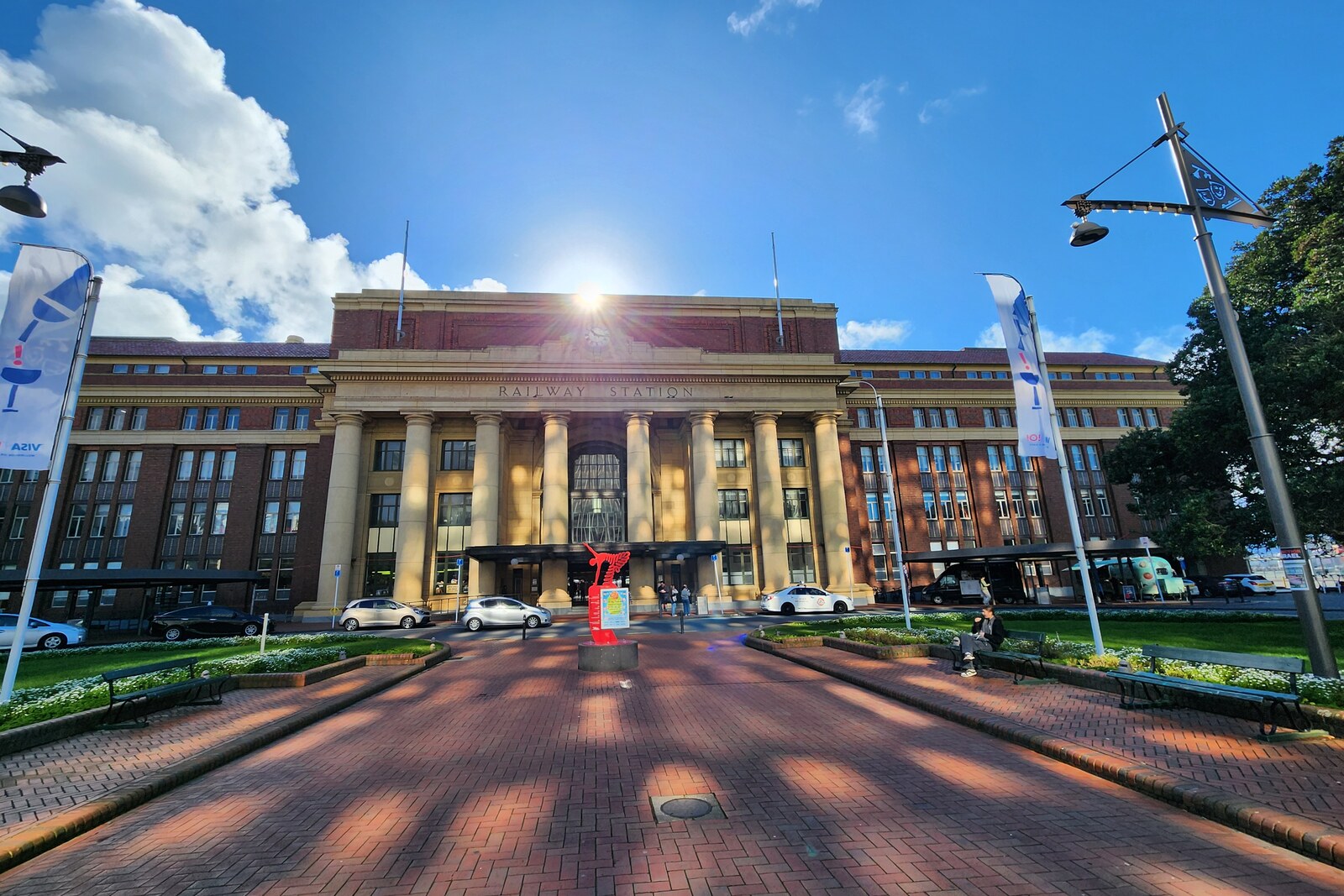
Look around first
What to notice
- Vaulted ticket hall
- Concrete arches in front of the platforms
- Broad passage to the platforms
The story of the place
On April tenth, nineteen sixty-eight, Chief Police Inspector George Twentyman ordered the survivors from the Wahine ferry to be brought to Wellington Railway Station. He needed to establish who had been rescued and prevent the stream of inquiries from relatives from disrupting the rescue operation itself.
The overnight ferry was travelling from Lyttelton to Wellington. At the entrance to the harbor, a storm drove the vessel onto Barrett Reef; a few hours later, Wahine capsized near Seatoun. There were seven hundred thirty-four people on board. Fifty-three of them eventually died, while the survivors reached shore at different points around the harbor. Some were sent to hospitals, while others were brought here.
Twentyman had already taken part in dealing with the aftermath of the Tangiwai railway disaster in nineteen fifty-three. There he saw how rescuers, investigators, and people searching for loved ones got in one another's way if they worked in the same place. This time, the inspector divided the tasks: inquiries were handled separately, bodies were taken to the morgue, a special group recorded the belongings of the dead, and the station became the assembly point for survivors.
For this purpose, they chose a building that the city had designated in advance to receive casualties in a major disaster. The Railway Department opened the present station in nineteen thirty-seven, combining two former northern terminals here. At that time, it was the country's largest building: its steel frame was encased in concrete, its brick walls were reinforced with vertical rods, and its piles were driven down to firm ground. Inside, there was a spacious ticket hall, a first-aid room, and a broad passage to the platforms. The structure was considered reliable enough to serve as the city's triage point for the injured after an earthquake. The shipwreck became the first real test of that plan.
Bringing a person to the station did not yet mean returning that person to their family. Some Wahine passengers were travelling under other people's names or with tickets issued to other people. Duplicates appeared on the lists, and the absence of a surname did not prove that a person had died.
Among those who arrived was Norman Kirk, the leader of the parliamentary opposition, who had come to learn the fate of ferry workers he knew personally. In his youth, he earned a living as a stationary-engine driver and was connected with the ferry workers' union; he knew crew members of the two interisland vessels by name. Around half past midnight, Kirk left the station for police headquarters and helped detectives put the confused list of survivors in order.
Police typist Frances McGovern worked on the same lists. One line mattered especially to her: her brother Lionel served in Wahine's engine room. A week later, he was due to lead his sister to the altar in place of their late father. Lionel's name appeared among the rescued only late at night.
Today, Wellington's suburban and regional rail lines end here. From the nineteen thirty-seven building, the vaulted ticket hall and the concrete arches in front of the platforms remain. On the day Wahine was lost, people waited behind these walls for the needed surname to appear on the next list.
Useful on site
The station's public hall operates around current rail services; office areas and non-passenger spaces are closed to visitors.
Checked: June 27, 2026. Check the official source before visiting.The main points can be understood from outside; the memorial plaque is in the service-and-office section, so do not count on unrestricted access to it.