 Guide On Map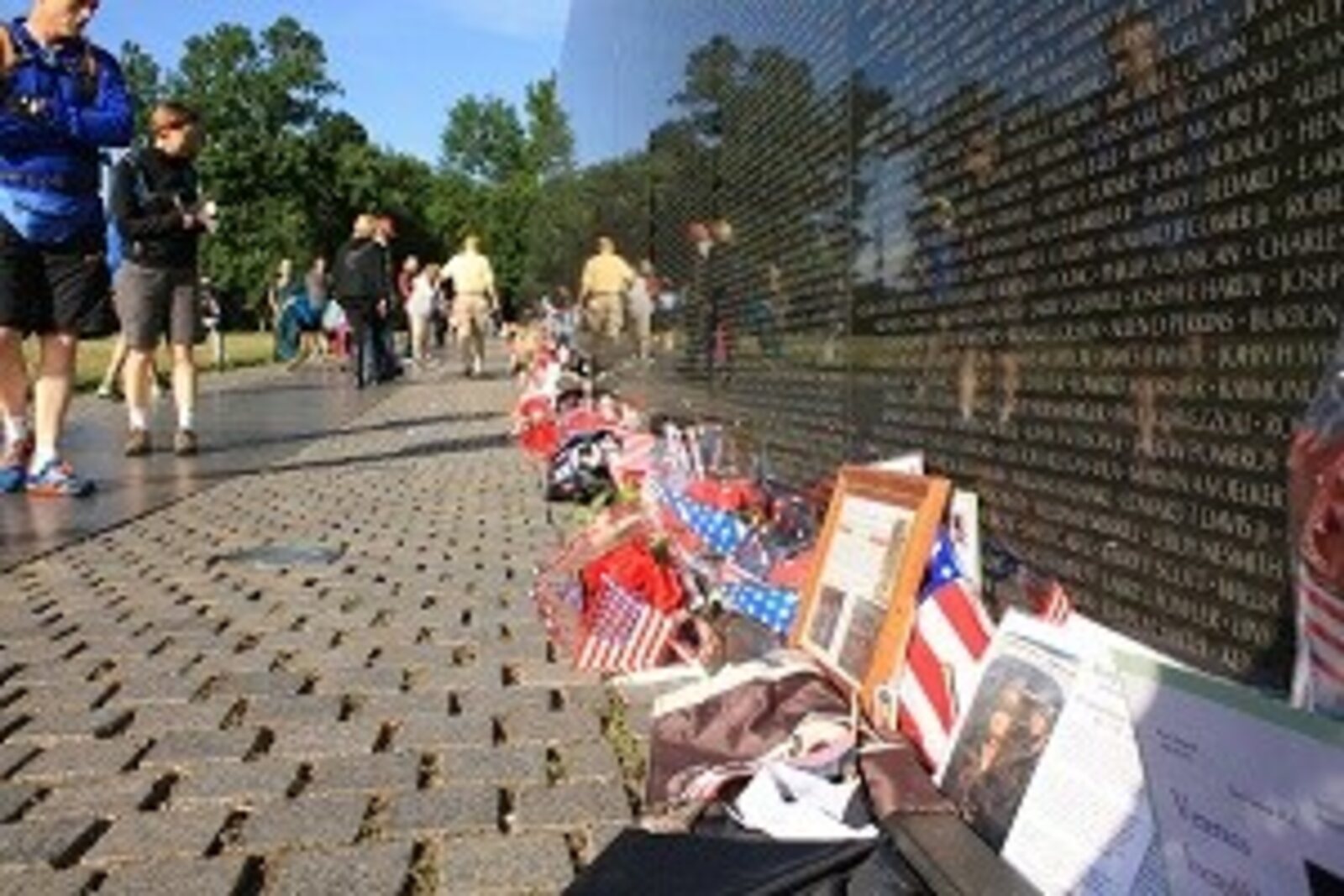
Look around first
What to notice
- Two walls of black granite
- Names carved into stone
- The central joint of the walls
- Letters and personal items at the foot
The story of the place
The names of United States service members who died in Vietnam or are listed as missing are carved into black polished granite. Two low walls are cut into the slope, and the name of the entire complex refers to all United States men and women who served in that war. The lines are arranged by dates of loss, then alphabetically, so those killed in one battle or accident remain together.
At the point where two black walls meet, the first and last dates of American losses in Vietnam stand side by side. This arrangement of the list began with a man who feared forgetting the names of his comrades.
On January twenty-first, nineteen seventy, soldier Jan Scruggs was serving in Vietnam with the one hundred ninety-ninth Light Infantry Brigade. He had already been wounded, spent three months in the hospital, and returned to his unit with shrapnel in his body. One morning, while a truck carrying ammunition was being unloaded, an explosion occurred. Scruggs ran to the burning vehicle and saw twelve dying fellow servicemen.
Nine years later, he watched The Deer Hunter. Scruggs still remembered the faces of the dead, but remembering all their names was becoming harder. By then, he had researched the psychological effects of war on returning soldiers and wanted to gather the names of the dead in one place. Scruggs put two thousand eight hundred dollars of his own savings into the project, founded the Vietnam Veterans Memorial Fund, and persuaded other veterans to seek a site in central Washington.
United States Congress allocated land near the Lincoln Memorial. Eight million four hundred thousand dollars in private donations were raised for construction. The design was selected in an anonymous competition from one thousand four hundred twenty-one submissions. The winner was twenty-one-year-old Maya Lin, a student at Yale University. She proposed cutting two walls of polished black granite into the slope and covering them with the names of United States service members who had died or were missing in action. They are the people listed here; the name of the entire complex refers to all United States men and women who served in the Vietnam War.
Lin rejected a single alphabetical list. The names are arranged by dates of loss, and alphabetically within each day. Those killed in one battle or one accident remain in the same section of the wall. The first names begin at the central joint, the list runs to the far end, continues from the other end, and returns to the center. This placed the beginning and end of the war side by side, with Scruggs's comrades among those killed on January twenty-first, nineteen seventy.
After the memorial opened in November nineteen eighty-two, relatives and veterans began leaving letters, photographs, medals, military dog tags, and personal items by the names. No one had included this in the design. At first, park staff simply collected the objects for storage, and in nineteen eighty-four they began cataloging them as a museum collection. Since then, more than four hundred thousand items have been left at the wall.
Now rangers collect them near the granite almost every day. Selected letters, photographs, and objects are taken to museum storage. On the wall itself, Jan Scruggs's twelve comrades still share one date; at its foot, people continue to leave what a line with a name and date cannot contain.
Useful on site
The memorial is usually accessible around the clock as an open area; approaches may change because of events, security, and temporary closures along the western axis.
Checked: July 1, 2026. Check the official source before visiting.Speak quietly and do not touch the items that have been left. If you are looking for a particular name, use the on-site directory rather than scanning the wall as an alphabetical list.