 Guide On Map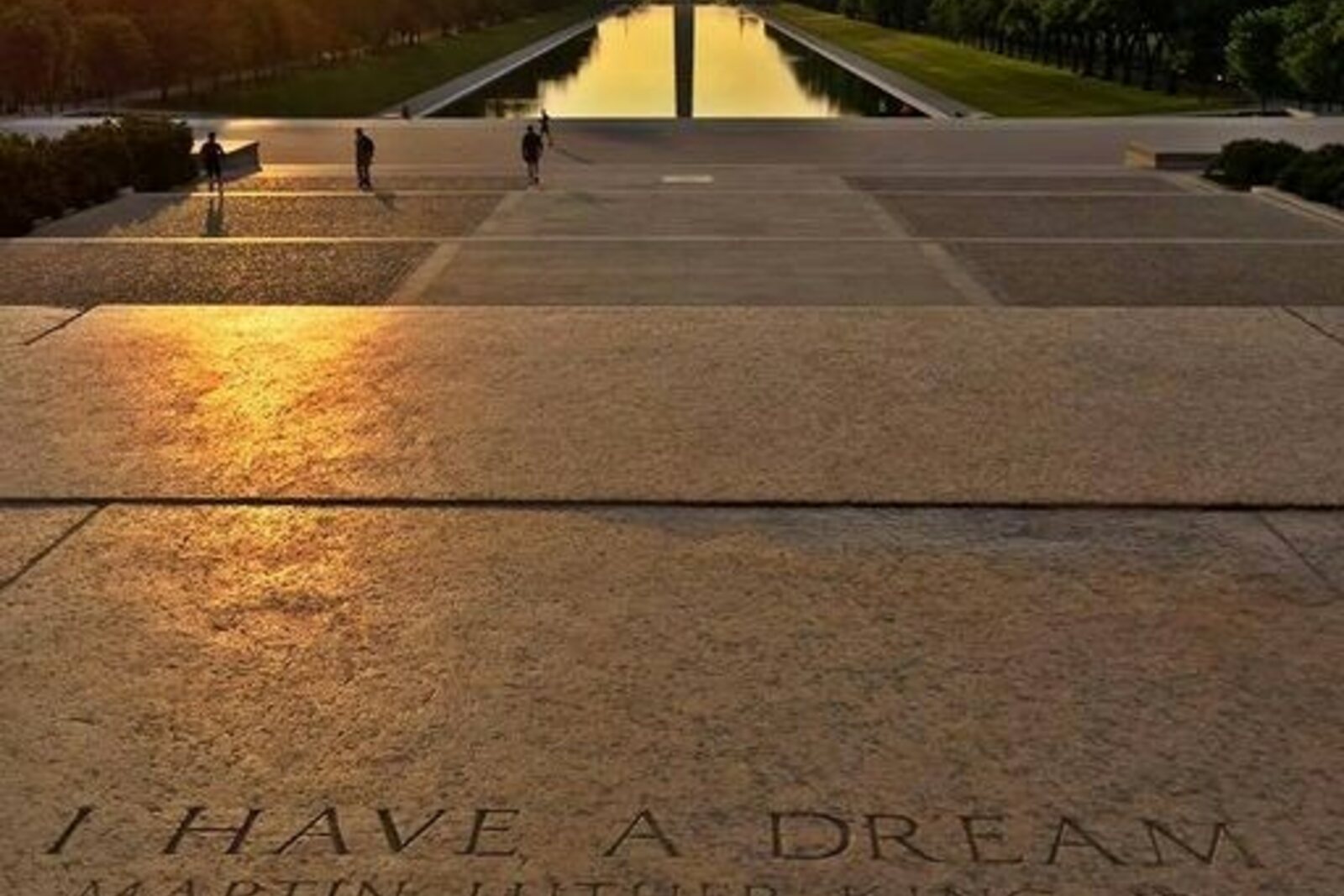
Look around first
What to notice
- Long shallow basin
- Water surface
- Reflection of the Lincoln Memorial
- Reflection of the Washington Monument
The story of the place
The Lincoln Memorial Reflecting Pool once nearly became the largest ice rink in the world. Its long, shallow basin was built in the early nineteen twenties so that the water would reflect the Lincoln Memorial on one side and the Washington Monument on the other. City residents almost immediately found another use for it.
In photographs from January nineteen twenty-three, skaters are already racing on the ice and playing hockey. Two years later, federal officials planned a large winter carnival here: costume skating, competitions, and even a baseball game between the Polar Bears and the Snow Birds. In the morning, participants came out to practice on solid ice, but by the scheduled time the sun had softened the surface. Hundreds of spectators made their way to the pool through slush and learned that the carnival was being postponed.
Washington architect and urban planner Paul Spreiregen saw skaters here in the winter of nineteen sixty. Four years later, he and his colleague Louis Justement proposed laying refrigeration pipes beneath the bottom. Then the weather would no longer determine whether skating took place or the ice melted by noon. The architects planned the rink for twenty thousand people and set aside space along the paths for skate rentals, small restaurants, and winter-festival pavilions. They estimated the cost at three to four million dollars.
Stewart Udall, head of the federal department that managed the National Mall, supported the architects and ordered the calculations to be checked. The project provoked debate: some wanted a large city ice rink, while others believed that fairground pavilions would alter the purpose of the memorial space. Engineers, too, found no simple way to freeze reliably a pool more than half a kilometer long. It never reached a construction contract.
Spreiregen returned to his proposal forty-seven years later: he wrote to a newspaper that he still considered such an ice rink valuable for the city. There are no refrigeration pipes beneath the current bottom. Skating here is prohibited, the water remains shallow, and all that survives of the former rink are photographs of people with hockey sticks and skates in the very place where the two monuments are now reflected.
Useful on site
The pool's edge is usually accessible as part of the open grounds, but the view of the water and passageways change because of repairs, algae, events, and barriers. On the date checked, separate holiday restrictions were in effect on the western axis through July 9, 2026.
Checked: July 1, 2026. Check the official source before visiting.Do not enter the pool or count on a perfect reflection: the water and surface may look different. For a pause, choose an open stretch of the edge or lawn.