 Guide On Map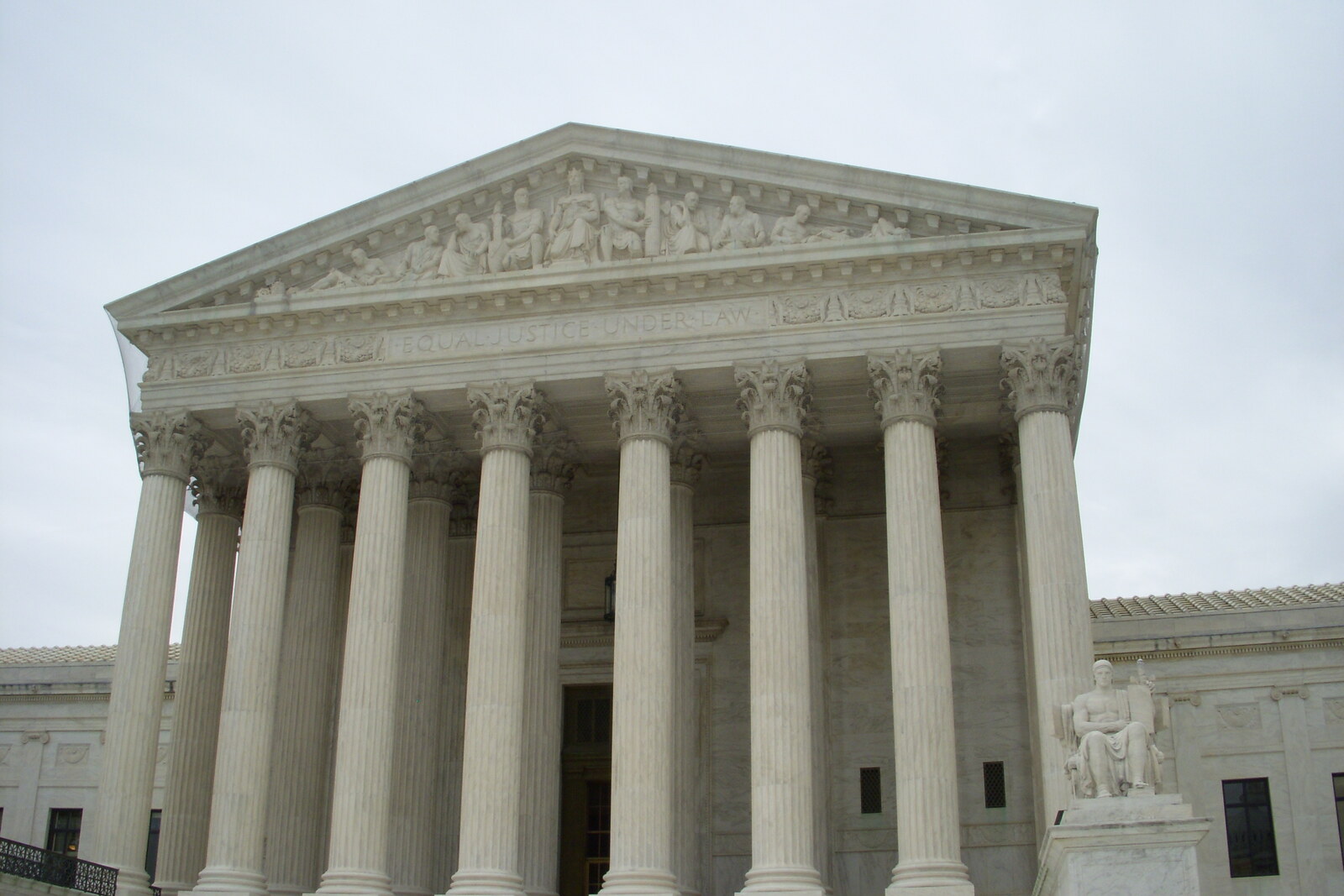
Look around first
What to notice
- Central columns
- The inscription “Equal Justice Under Law”
- Great Hall
- Courtroom doors
The story of the place
On January fifteenth, nineteen sixty-three, Abe Fortas spoke in the courtroom behind this facade. He was the lawyer whom the U.S. Supreme Court had appointed to defend the imprisoned Clarence Earl Gideon. Gideon himself remained in a Florida prison. Several sheets covered in his pencil writing had reached Washington.
Gideon got by on odd jobs and rented a room opposite a pool hall near Panama City. When small change, beer, and wine disappeared from the pool hall, he was charged with breaking and entering. Gideon had no money for a lawyer. He asked the judge to appoint one, but in Florida an indigent defendant was entitled to this only when facing the death penalty.
Gideon defended himself: he gave an opening statement, questioned witnesses, called his own, and argued with the prosecutor. The jury found him guilty, and the judge sentenced him to five years in prison. For a man who had completed eight grades, that was the price of an error in a question he did not even know how to put correctly before the court.
In the prison library, Gideon read the Constitution and decided that the right to a lawyer should not depend on money. He wrote his request to have the case reconsidered in pencil on official paper: prisoners were not allowed pens. He had to borrow a pen only to sign it. The U.S. Supreme Court made sense of this carelessly prepared message, accepted the case, and assigned Fortas to turn the prisoner's idea into a legal argument.
They were not reexamining here who had taken the money from the pool hall. The U.S. Supreme Court determines whether lower-court rulings comply with the Constitution and Federal laws. Fortas argued before the nine justices that a person without legal training cannot conduct a criminal trial on equal terms with a professional prosecutor. Bruce Jacob, Florida's assistant attorney general, defended the earlier rule: since nineteen forty-two, the U.S. Supreme Court itself had allowed states to appoint free counsel only in special circumstances.
Fortas turned that rule against Florida. The record showed that the judge and prosecutor had even tried to help Gideon, yet he still did not know what objections to make, how to test testimony, or where to seek information for his defense. So individual concessions by the judge did not replace a lawyer.
On March eighteenth, Justice Hugo Black announced the unanimous decision: the accused person's right to counsel is necessary for a fair trial, so states must provide lawyers for those unable to pay for them. The decision did not free Gideon immediately. He was sent back for a new trial in Florida.
Gideon now chose a local lawyer, Fred Turner. Turner investigated the case, untangled contradictions in the main witness's words, and obtained testimony from a taxi driver that did not support the account of drinks taken from the pool hall. The jury acquitted Gideon. After two years in prison, he was released, and state courts began appointing counsel for indigent defendants in serious criminal cases.
The U.S. Supreme Court has sat in this building since nineteen thirty-five; before that, it was assigned rooms across the street, in the U.S. Capitol. The courtroom where Fortas spoke for Gideon, who remained in prison, is still behind the central columns, at the end of the Great Hall. Above the entrance, the inscription remains: “Equal Justice Under Law.” These words appeared on the facade almost three decades before the pencil-written letter made the court decide what they meant for a person without money for a lawyer.
Useful on site
Open to the public Monday through Friday from 09:00 to 15:00, except Federal holidays; court operations may restrict access.
Checked: June 28, 2026. Check the official source before visiting.All key details are visible from the public space outside. Access inside may depend on court operations, so check separately.