 Guide On Map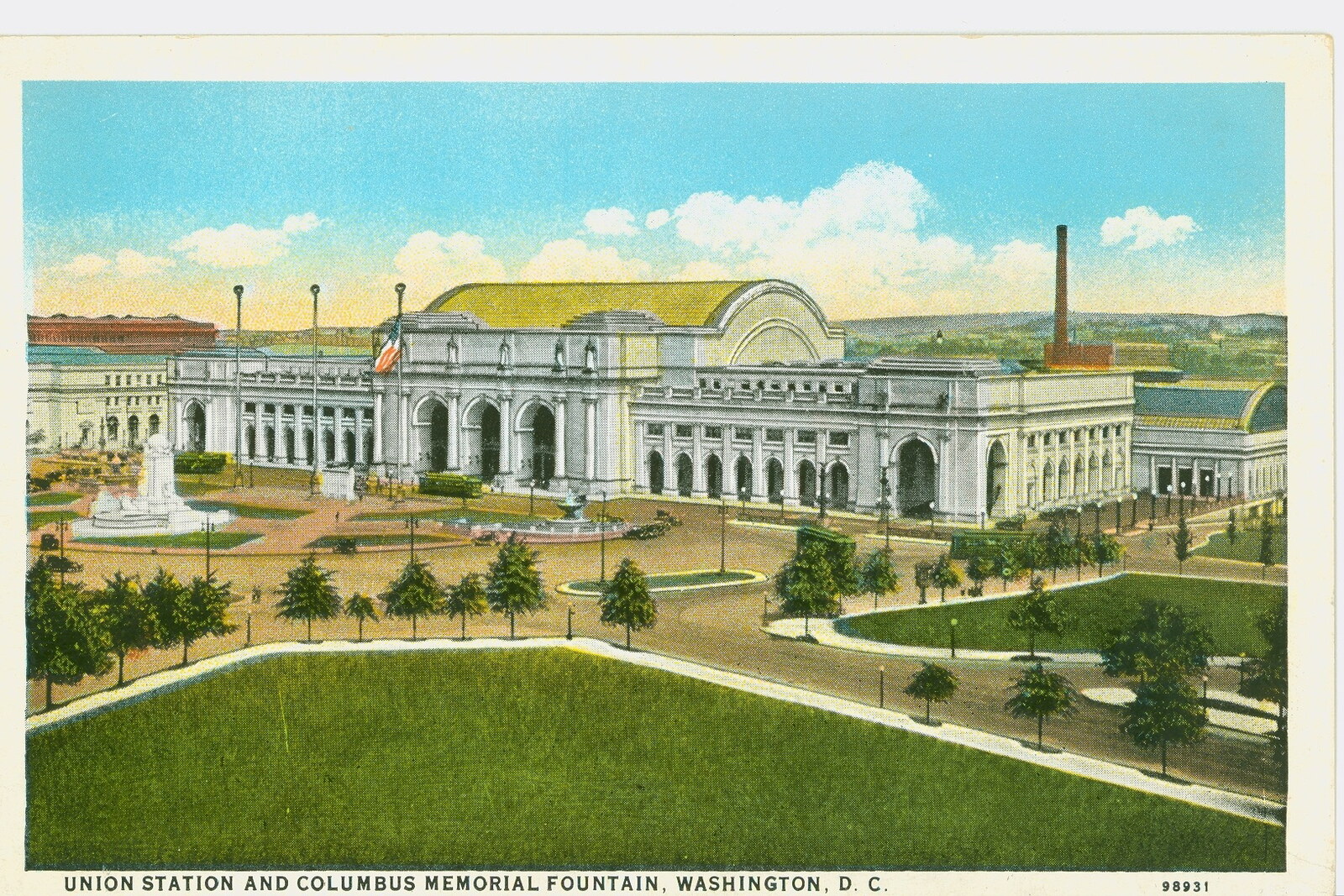
Look around first
What to notice
- Main passenger hall
- Dead-end tracks
- Floor above the lower level
- Lower hall
The story of the place
The word “Union” in the name is an old railroad term: a shared station for trains of several companies. In the early twentieth century, architect Daniel Burnham pressed to have the Pennsylvania Railroad tracks removed from the National Mall. The company's president, Alexander Cassatt, agreed to move the station north of the U.S. Capitol. Congress authorized the construction of a single terminal for the Pennsylvania Railroad and the Baltimore and Ohio Railroad. The name remained from that union. Today, long-distance and commuter trains, the subway, and buses arrive here.
The designers brought the elevated tracks to dead ends beside a transverse passenger hall. A train was supposed to stop before the barrier, let people off, and leave by the same route. On the morning of January fifteenth, nineteen fifty-three, one train did not stop.
Engineer Henry Brower was driving the overnight Federal from Boston. About three kilometers from the platforms, he tried to slow down and realized that the brake line was barely working. A valve behind the third car had closed on its own: its handle could catch on the lower part of the car frame. Commands from the cab reached only the locomotive and the first three cars. The other thirteen kept pushing them toward the station.
Brower applied the emergency brakes, sounded a series of horn blasts, and tried to put the electric motors into reverse. The reversal tripped the protection and barely reduced the speed. Signal operator John Feeney, on duty at the entrance to the station tracks, saw that the Federal was passing the switches too fast and called the station master's office. There was no longer time to move the train to another track.
Ray Klopp, an employee in that office, led his colleagues out and ran to clear the passenger hall. On the train itself, conductor Thomas Murphy told people to stay in their seats, lie on the floor, or crouch against the seats. Everyone had less than a minute left.
At eight thirty-eight, the locomotive struck the buffer stop on Track sixteen at a speed of about fifty-six kilometers per hour. It demolished the station master's office and a newsstand, crossed the hall, and broke through the floor. The rear of the locomotive fell into the baggage room one floor below. The hole stopped the train a few meters from the wall of the main hall. Dozens of people were injured, but no one died.
Five days remained before Dwight Eisenhower's first inauguration, and the capital's main railroad entrance could not be closed. Repair crews laid a temporary wooden deck over the hole. After the ceremony, the locomotive was cut into three parts, removed, reassembled, and returned to service. Brower went out on his next run just two days later; before departure, he checked the brakes for half an hour.
The Interstate Commerce Commission required cars of this design to be inspected and barred from service as long as the brake-valve handle could catch on the frame. The hole itself has long been gone. On the lower level, where the food court is now located, there was once the baggage hall into which the locomotive fell.
Useful on site
Open around the clock for passengers with tickets; for everyone else, public access is limited during nighttime hours, and shop hours vary.
Checked: June 28, 2026. Check the official source before visiting.It is convenient to listen to this story in the publicly accessible part of the station; do not expect the former President's House or places connected with funeral trains to be open or marked.