 Guide On Map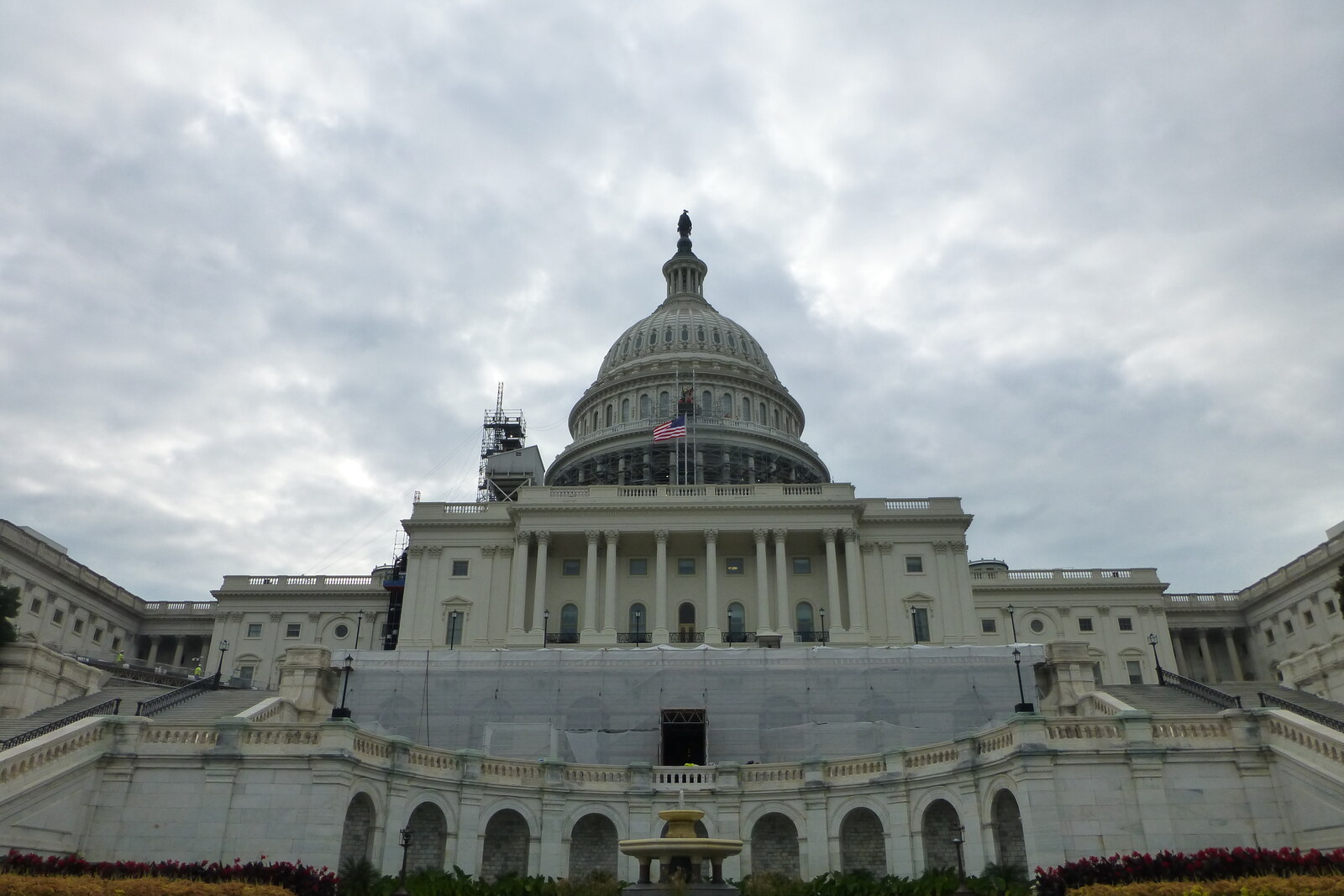
Look around first
What to notice
- Oval lawns
- Curved paths
- Low stone walls
- Lamps on granite supports
The story of the place
In the fall of eighteen seventy-four, the Capitol Grounds looked like a ruined park. Workers were felling trees, stripping away soil, and digging up old pipes. The outlines of the future paths were not yet visible. Washingtonians objected: the former park gave neighbors shade and served as a place to relax, and a mature tree cannot be grown again in a single season.
Behind the clearing was Frederick Law Olmsted, a landscape architect hired by Congress to redesign the grounds around the expanded U.S. Capitol. Olmsted made his living designing parks; he was paid fifteen hundred dollars for the initial plan here. At the same time, work worth two hundred thousand dollars was placed under his overall direction. If no convincing result appeared after the felling, he risked both a paid commission and his professional reputation.
Senator Justin Morrill, who headed the Committee on Public Buildings and Grounds, invited Olmsted after the major reconstruction of the U.S. Capitol. The building had acquired new wings and a dome, while the adjacent park retained its former size and layout. Straight paths divided it into rectangles, trees were planted in rows, and flowerbeds and shrubs were added without an overall plan. A survey conducted for Olmsted showed that three quarters of the trees were diseased or damaged. Their roots spread along the surface: dense clay lay beneath a thin fertile layer.
Yet the condition of the trees did not remove the main objection. People were losing their familiar park now, while the promised landscape existed only on drawings. Olmsted replied in a public letter. He acknowledged that the defenders of the old trees had sound reasons to protest, then explained what justified the destruction.
He rejected the grounds' former purpose as a neighborhood recreation area and flower garden. The Capitol Grounds were to become the yard of a functioning Congress building: to receive people, lead them to its many entrances, and leave enough open space for large ceremonies. Streets approached the square from every side, so an ordinary grid of paths would have cut the grass into small pieces. Olmsted curved the routes to connect the entrances while also creating two large oval fields with no paths crossing them.
For these fields, about one hundred fifty thousand cubic yards of soil were removed on the east side. The exposed clay was loosened to a depth of about two feet; then the old soil was returned and new soil added. Beneath it, sewer, water, and gas lines were laid again. Some healthy trees were transplanted, while all other new plantings were moved toward the edges and the paths. Grass and open views were left in the center.
The clearing continued despite the protests. Olmsted directed the transformation of the grounds until eighteen eighty-nine, and the entire design was carried out over almost two decades. The present curved paths, low stone walls, lamps on granite supports, and broad fields preserve the layout of his plan.
Nothing remains here of the rectangular park over which Washingtonians argued. Its place is occupied by the very oval lawns for which Olmsted ordered the old trees removed.
Useful on site
The outdoor paths are usually accessible, but individual lawns, stairs, and approaches may be closed for security, events, or work.
Checked: June 28, 2026. Check the official source before visiting.Stay on permitted paths and regard the lawn as a historical stage: there is no need to look here for individual traces of inaugurations, Coxey's March, or Easter games.