 Guide On Map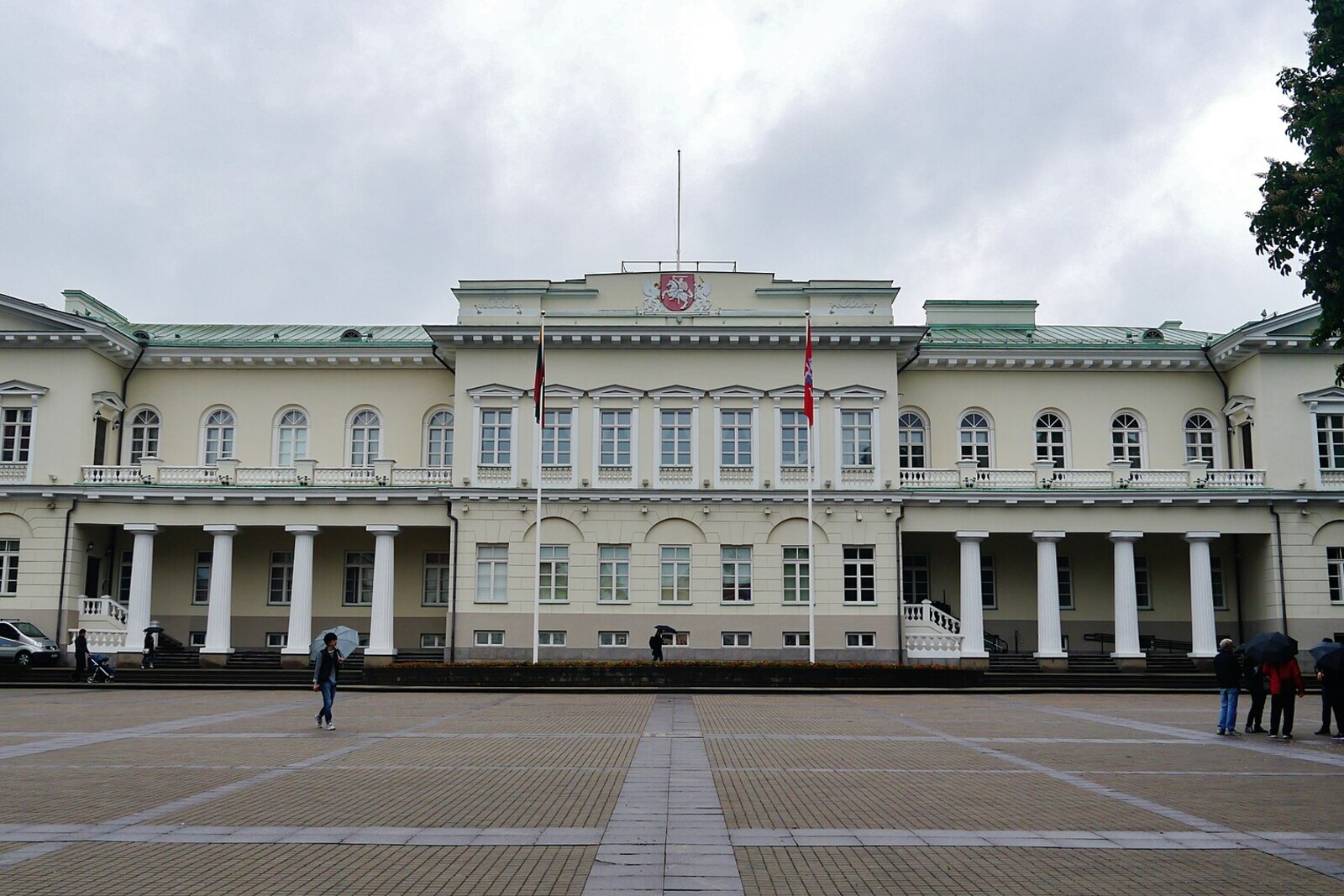
Look around first
What to notice
- The palace’s white façade
- Doric columns
- The presidential standard above the roof
The story of the place
The light façade and row of Doric columns reveal the palace’s ceremonial side; when the President of Lithuania remains in Vilnius, his standard is raised above the roof. Before the Russian administration, the bishops of Vilnius lived here. The building was then transferred to the governor-general, the tsar’s viceroy over several provinces: he lived and worked here and received visiting monarchs. Now these walls house the President of Lithuania and his chancellery, and negotiations and receptions for foreign leaders take place here.
On July first, eighteen twelve, the French emperor Napoleon received the Russian envoy Alexander Balashov here. Balashov came with a proposal to stop the war. According to Balashov’s memoirs, the conversation took place in the very room from which the Russian emperor Alexander I had sent him a few days earlier. A Louis XVI-style table and mahogany furniture remained there. Another emperor was now sitting at the table.
Five years earlier, Napoleon and Alexander had made peace and declared themselves allies. Napoleon demanded that Russia take part in the Continental System—a ban on trade with Britain. For Russian merchants, this meant losing one of their main markets, and Alexander gradually stopped fulfilling the terms. Both emperors began concentrating troops. In June, Napoleon took the Grande Armée across the Neman River and expected to force Alexander to yield through several swift battles.
Alexander had lived in this palace since April, preparing for war. As he left Vilna—the name used for Vilnius in the Russian Empire—he sent Balashov to meet the French. Balashov was a general adjutant, an officer entrusted with the emperor’s personal assignments, and minister of police, meaning the head of the internal security department. His position and livelihood depended on Alexander’s trust. Now he had to pass through the enemy’s forward posts and deliver a letter to Napoleon in person.
French hussars nearly opened fire before the Cossack accompanying Balashov sounded a truce signal on his trumpet. One of the French commanders took the letter and kept the envoy under guard. For several days, Balashov moved along behind the advancing army. When he was finally summoned to Napoleon, French troops had already occupied Vilnius, and Napoleon had settled into Alexander’s rooms.
There was one condition: negotiations would begin if the Grande Armée withdrew back across the Neman River. Napoleon refused. To turn back after occupying Vilnius would have meant admitting the failure of a campaign he had presented to Europe as an almost completed victory. Balashov left with the refusal; Russian officers worried about him did not know until the very end whether the envoy would be released. After his return, official negotiations ceased.
Napoleon spent nineteen days in the palace. While he organized supplies and administration in the occupied lands, two Russian armies had time to withdraw and avoided a decisive battle at the border. The French emperor moved on and occupied Moscow, but still received no peace from Alexander. The Grande Armée began its retreat and nearly perished on the way. Napoleon never returned to this palace.
In December, Alexander returned here. Outside the palace, they welcomed Mikhail Kutuzov, commander in chief of the Russian army, who was pursuing the retreating French. Inside, Alexander awarded him the Order of St George, First Class—the empire’s highest military award. Thus the refusal Balashov had carried from this room in summer found its resolution here in winter.
The palace was suited to both imperial headquarters for a reason. Before Vilnius was incorporated into the Russian Empire, the residence of the bishops of Vilnius stood here. The Russian administration then transferred it to the governor-general—the tsar’s viceroy over several provinces. He lived and worked here and received visiting monarchs.
The white façade with Doric columns appeared later: the palace was extensively rebuilt in the eighteen twenties and early eighteen thirties. Since nineteen ninety-seven, the President of Lithuania and the presidential chancellery have worked here, and negotiations and receptions for foreign leaders take place here. When the president is in the palace and in Vilnius, the presidential standard is raised above the roof. It is no longer possible to identify from the square the exact window of the room Balashov described: the present façade was built after that meeting.
Useful on site
The square is accessible at all times. Free tours of the palace take place on weekends according to a separate schedule and require advance registration.
Checked: June 24, 2026. Check the official source before visiting.This is an active official residence: view it from permitted public areas and observe security requirements. Visits to the interior halls are possible only as a separate organized program.