 Guide On Map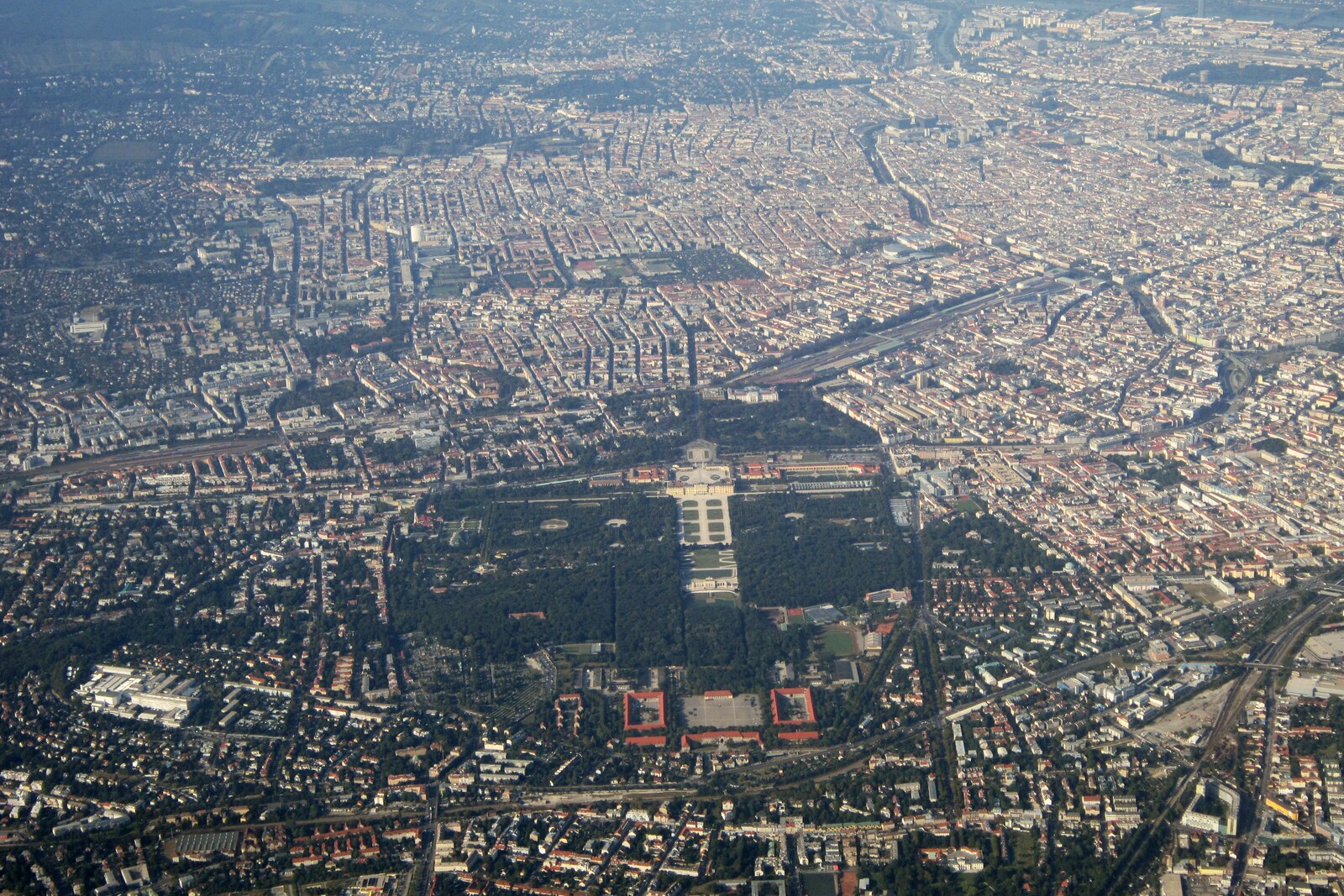
Look around first
What to notice
- Patterned flowerbeds
- Two rows of marble statues
- Numbers on the sides of the pedestals
The story of the place
In seventeen seventy-three, Maria Theresa commissioned the court sculptor Johann Wilhelm Beyer to fill the Great Parterre with heroes of antiquity. The parterre was the name for the low, patterned flowerbeds in front of the palace's garden facade. Even walls of hedges surrounded them, and the marble figures were meant to extend the courtly decoration into the open air.
Beyer received the commission thanks to a decision that combined art and calculation in equal measure. Near Sterzing in Tyrol, he found white marble which, in his words, was no worse than Carrara marble, and proposed an inexpensive way to transport it. Fifteen sculptors roughly hewed the figures at the quarry so as not to transport unnecessary weight. The blanks were then sent down the Inn and the Danube to Schönbrunn, where the work was finished.
For each figure, the court set a payment of one thousand guilders, in addition to associated expenses. About half went to the master who carved the marble; the rest went toward the model, material, and organization. That is why the signature “the work of Beyer” conceals an entire workshop. “The Flight from Troy,” for example, was executed by Philipp Jakob Prokop, while many other groups were made by Johann Baptist Hagenauer, Ignaz Platzer, Veit Königer, and their assistants.
The ancient characters here served as a readily understood courtly language. Aeneas carries his feeble father out of captured Troy, while his small son walks beside him: for an educated viewer, this represented a ruler's care for older and future generations. Jason holds the Golden Fleece—the emblem of the Order of the Golden Fleece, which belonged to the Habsburgs. Artemisia leans on the urn of her husband, Mausolus; contemporaries recognized in the grieving widow an allusion to Maria Theresa, who wore mourning for the rest of her life after her husband's death.
Circumstances did not allow Beyer to arrange these heroes in a strict order. The court architect Johann Ferdinand Hetzendorf von Hohenberg conceived a complex system of fountains and intended the statues for the flowerbeds and the slope. In seventeen seventy-six, workers had already dug the basins, but a constant shortage of water forced them to fill in the excavations. A year later, the figures were moved into semicircular niches along the hedges. Hohenberg, not Beyer, assigned their final locations. Individual pairs retained their connection—the abduction of Helen stands opposite the flight of Aeneas, the beginning and the end of the Trojan War—but the two rows did not form a unified sequence.
Hardly had the masters finished the arrangement when Maria Theresa's son and co-ruler, Joseph II, secured the opening of the garden to everyone. The court nobility objected, but from seventeen seventy-nine onward, Viennese people who had not studied ancient mythology walked among the marble heroes. Beyer himself later acknowledged this difficulty: without knowledge of myths, he wrote, an ordinary visitor would not understand the subtle allusions intended for enlightened connoisseurs.
After nineteen forty-five, the palace administrator Josef Glaser ordered numbers from one to thirty-two placed on the sides of the pedestals so that the figures would be easier to identify. The numbering begins at the eastern hedge: the first number is on the pedestal of Artemisia with the urn, and the fifth is on the group in which Aeneas carries his father out of Troy. Neither Beyer nor Hohenberg saw these numbers.
Useful on site
Open as part of the park: daily from 6:30; closing varies by month from 17:30 to 21:00. Free admission.
Checked: June 29, 2026. Check the official source before visiting.Do not try to take in the entire row at once: choose a few figures and approach them along the permitted paths.