 Guide On Map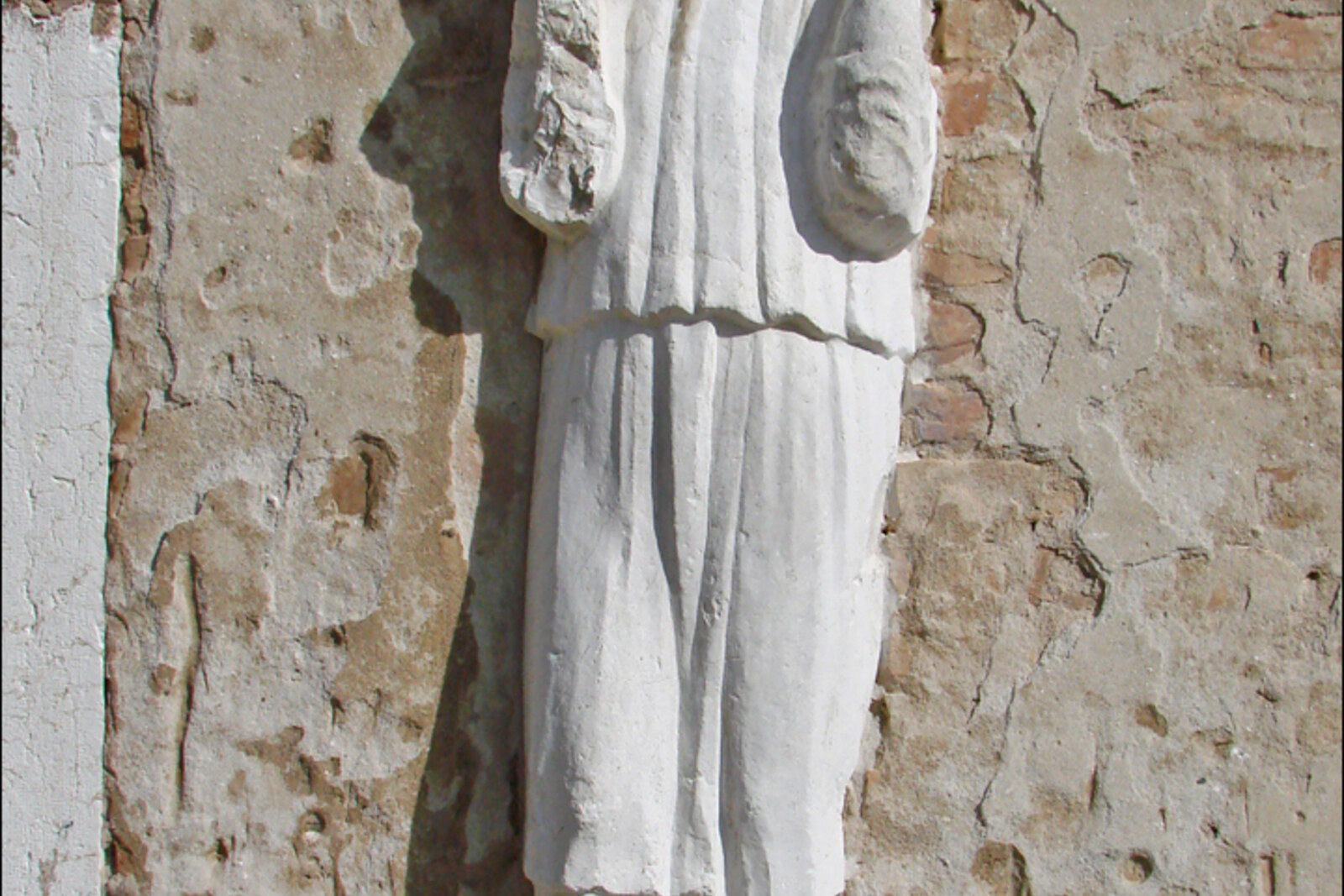
Look around first
What to notice
- Stone figures in Eastern dress
- Statue of Rioba
- Iron nose
- Camel relief on the neighboring palazzo
The story of the place
Figures of men in Eastern dress are set into the walls of houses in Campo dei Mori. The name of the square is linked to three Greek brothers—Rioba, Sandi, and Afani. According to an old Venetian chronicle, in eleven twelve they fled civil strife in Morea—the name then used for the Peloponnese—and brought a great fortune with them.
The brothers were merchants. Near the present-day square, they built houses, while their family traded in spices and apothecary goods, sent out its own ships, and kept a warehouse marked by a camel. An image of a camel driver with a camel survives on the neighboring Palazzo Mastelli. According to the traditional explanation, Venetians nicknamed people from Morea “mori,” and the nickname passed to the bridge, the waterfront, and the square.
The stone men cannot be regarded as exact portraits of the brothers. The figures date to the late thirteenth century, while their names and biographies were connected to them by a later urban tradition. That same tradition turned the corner statue into the Statue of Signor Antonio Rioba—a local gentleman who never existed.
Rioba acquired a very real job. Venetians attached anonymous mockery, accusations, and poems to the statue. A person did not put their name beneath a dangerous text: the stone signor was declared its author. That is why Rioba was called Venice's “speaking statue.”
In eighteen forty-eight, this street nickname was needed by the twenty-seven-year-old philologist and archivist Francesco Berlan. He earned his living by teaching and by working for the education department, but after the Austrian garrison left, he joined the political life of the republic proclaimed in Venice. Together with Augusto Giustinian, Berlan founded a daily satirical newspaper and named it the Signor Antonio Rioba Newspaper. Its first issue came out on July thirteenth. Now the fictional inhabitant of Campo dei Mori debated with other city statues on printed pages.
The police stopped the newspaper several times. After a particularly sharp article, the Patriarch of Venice forbade the faithful to sell and read it, and on March twenty-ninth, eighteen forty-nine, the publication closed. Berlan became a deputy, took part in the defense of the republic, and left after its fall: he was not allowed to return to Venice. In exile, he lived by newspaper work and was able to resume the Signor Antonio Rioba Newspaper only ten years later.
At the corner of the square, the recipient of those notes and newspaper articles remains: the stone Rioba. In the nineteenth century, his lost nose was replaced with a piece of iron; among the other “mori,” it is by this dark nose that people recognize the signor whose name people used to sign words they did not dare sign with their own.
Useful on site
Open urban space; access is usually around the clock.
Checked: June 28, 2026. Check the official source before visiting.View the sculptures from the square, respecting residential entrances. Tintoretto's House is an exterior historical landmark, not a promised museum interior.