 Guide On Map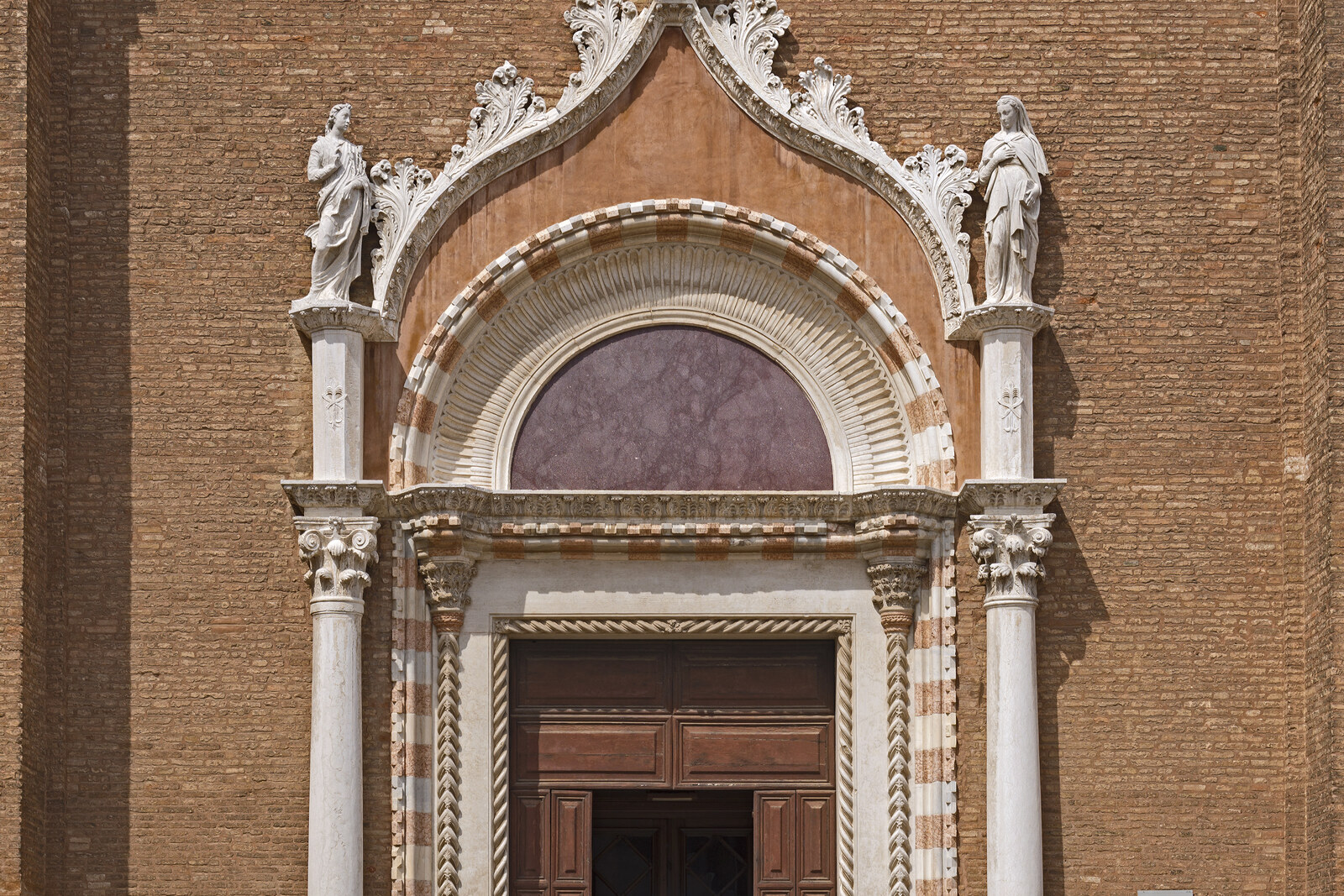
Look around first
What to notice
- Figure of St Christopher above the portal
- Brick façade
- Stone statue of the Madonna in the Cappella di San Mauro
- The master's gravestone
The story of the place
Behind the brick façade of the Church of Madonna dell'Orto is the Cappella di San Mauro. It holds a soft-stone statue left unpainted; for ceremonies, the figure was dressed and adorned with crowns and jewels. In the nineteenth century, the statue was moved here from the third altar in the right nave, and an almost worn-away gravestone of the stonecutter lies in the chapel floor.
Above the main portal stands St Christopher. His figure recalls the church's first name: in the middle of the fourteenth century, monks of the Humiliati were building it as San Cristoforo. Its present name came from the neighboring garden.
The stonecutter Giovanni de Santi received a commission for a statue of the Madonna and Child for another Venetian church—Santa Maria Formosa. According to the traditional account, the rector disliked the work and rejected it before it was even finished. For a master who lived on commissions, this meant going unpaid for stone he had already worked. De Santi placed the statue in the garden beside his house.
In thirteen seventy-seven, townspeople began attributing miracles to it. Pilgrims and processions began coming to the garden. The Bishop of Castello, head of the Diocese of Castello, demanded that worship on private property cease: the statue was to be taken indoors or moved to a church.
De Santi offered it to the monks of San Cristoforo, but he had no intention of giving the work away. He set three conditions: to receive payment, to be buried before his statue, and to have a daily requiem Mass said for him after his death. The monks agreed to the burial and commemoration, but they could not pay. The Confraternity of St Christopher collected one hundred fifty ducats. On June eighteenth, thirteen seventy-seven, the statue was ceremonially transferred from the garden to the church.
Townspeople began calling it the Statue of Madonna dell'Orto—the Madonna from the garden. The former dedication to St Christopher remained, but the popular name drove it out of everyday use. In fourteen fourteen, the Council of Ten authorized the official use of this name.
The Statue of Madonna dell'Orto is inside, in the Cappella di San Mauro. In the nineteenth century, it was moved here from the third altar in the right nave. The soft stone was never painted; for ceremonies, the figure was dressed and adorned with crowns and jewels. On the floor of the same chapel lies de Santi's gravestone, bearing the date of his death—thirteen ninety-two. The master's image on it is almost worn away. The words “dell'Orto” preserve the address of his workshop: the garden where he brought out the rejected commission.
Useful on site
Art viewing is listed from Monday to Saturday 10:30—17:00, with last admission ten minutes before closing. Sunday and holidays are primarily for services; check the church's page before visiting.
Checked: June 28, 2026. Check the official source before visiting.Access to the church is needed to see the paintings and the burial site, so check it in advance. Inside, keep quiet and do not disturb worship.