 Guide On Map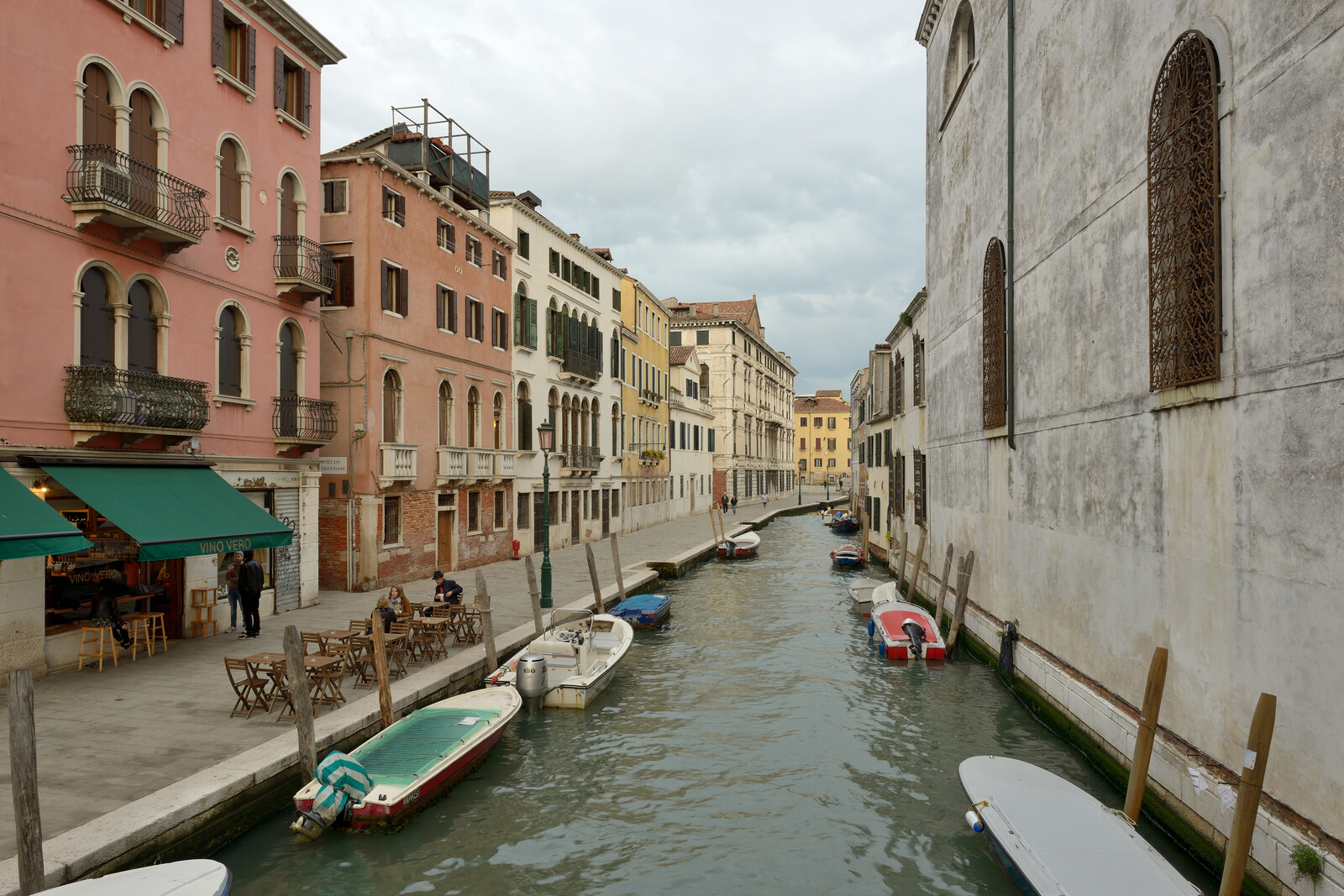
Look around first
What to notice
- The Paradiso Perduto sign
- The doors of house 2540
- Long tables inside
- The canal in front of the building
The story of the place
The stone-paved waterfront runs along the canal in front of the houses, leaving the water very close to their doors. The bank received the name Misericordia from the confraternity and its buildings at the eastern end. Above one entrance hangs the sign “Lost Paradise,” and long tables stand behind the doors.
In house two thousand five hundred forty, the rowers of the Remo d'Oro association—“Golden Oar”—once gathered. The premises right by the water suited them quite literally: boats went straight out into the canal. At the turn of the nineteen seventies and eighties, another group took it over—students who decided to open an osteria with live music. Among them was Maurizio Adamo, the future chef and longtime owner of the establishment. He planned to make money from the kitchen and spend part of the proceeds on good musicians.
The osteria was named Paradiso Perduto—“Lost Paradise.” Adamo bought fish at the city market, made homemade pasta, and changed the menu according to the catch. Jazz was played here once a week. Profits remained small: the owners admitted that making a living would have been easier without concerts and musicians' fees. But it was the music that brought in people who had previously not looked for evening entertainment on Venice's northern edge.
In the spring of nineteen eighty-seven, after a Carnival concert, visitors stayed past two in the morning. Police checked documents, and municipal officials ordered the osteria closed for ten days—right over the busy Easter weekend. The owners asked at least to postpone the beginning of the punishment for a concert that had long been scheduled. They were granted a two-day reprieve. They seriously discussed whether to close for good: music brought in almost no money, yet giving it up would deprive the establishment of its reason to exist.
The osteria did reopen. Concerts, readings, and performances continued here; among the performers was jazz trumpeter Chet Baker. Paradiso Perduto became one of the first establishments in Venice to stay open late. Other bars and bistros then appeared along the water, and the long waterfront became an evening meeting place for students and city residents.
Venetians call such a paved bank along a canal a fondamenta. They gave this one the name Misericordia after the confraternity and its buildings at the eastern end of the waterfront. And the present-day use of this waterfront began at the doors of the old rowing association: the Paradiso Perduto sign still hangs on house two thousand five hundred forty, but long tables now stand behind its doors instead of boats.
Useful on site
The waterfront is open as a public urban space. Establishments keep their own schedules; check the specific place before stopping for food.
Checked: June 28, 2026. Check the official source before visiting.The waterfront remains a noisy public space. Do not occupy moorings or passageways for a long stop.