 Guide On Map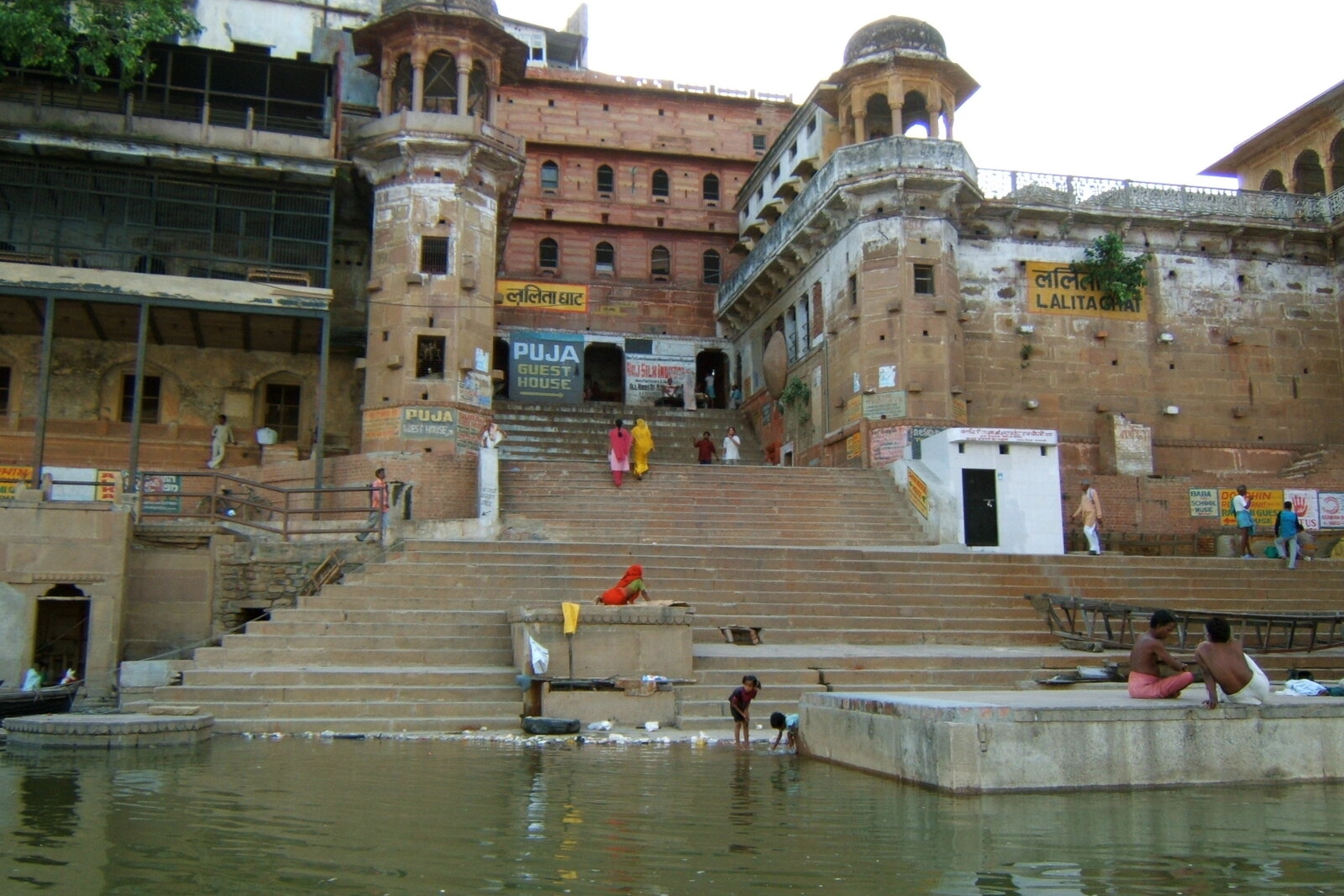
Look around first
What to notice
- Tiered roofs
- Carved wooden supports
- Smooth, dense brick
- The dharmashala building
The story of the place
Under this sanctuary’s multi-tiered roof, the carved wooden columns stand out sharply from the stone temple architecture familiar in Varanasi. The walls are built of specially made smooth, dense brick, and beside it stands a dharmashala where pilgrims from Nepal found overnight lodging. Inside, Shiva is worshiped as Pashupatinath, while the lower chamber by the bank preserves images of Lalita Devi, Varanasi Devi, and Bhairava.
In eighteen forty-one, Samrajya Lakshmi Devi, the senior queen of Nepal and mother of the heir to the throne, was brought to Varanasi to die. Her family chose this city because of the belief that death in Varanasi frees a person from further rebirths. Before her death, the queen asked for a temple to Shiva and a dharmashala—a shelter for pilgrims—to be built at Lalita Ghat in her memory.
Her husband, Rajendra Bikram Shah, who ruled Nepal, and their son, Crown Prince Surendra Bikram Shah, were to fulfill the request. They sent Nepali craftsmen here. Most of the materials were also brought from Nepal; a smooth, dense brick called teliya-it was made separately for the walls. The builders worked for two years and completed the temple in eighteen forty-three.
Pashupatinath Temple in Kathmandu served as the model. That is where the tiered roofs, wooden supports, and carving come from, all unusual among the stone towers of Varanasi. The dharmashala beside it was part of the same commission: Nepali pilgrims received their own temple and a place to spend the night by the Ganges. In the sanctuary, Shiva is worshiped as Pashupatinath, so the building continues to serve precisely the function for which the queen asked it to be erected.
Samrajya Lakshmi did not see the completed temple. Rajendra and Surendra preserved her name in its official name—Samrajyeshwar Mahadev. The commissioners’ names have almost disappeared from common use: it is usually called the Nepali Temple. The dead queen’s name remained in the name of the Shiva worshiped here.
Lalita in the ghat’s name is a different figure. The steps are named after the goddess Lalita Devi; her image stands in the lower chamber by the passage along the bank, together with images of Varanasi Devi and Bhairava. Below, the name of the goddess Lalita is preserved, while above it stands a temple named in memory of Samrajya Lakshmi.
Useful on site
The ghat is open as a riverside space. The official city portal gives approximately 05:00–22:30 for the Nepali Temple; the interior may close for services and temple maintenance.
Checked: June 28, 2026. Check the official source before visiting.View the carving from accessible areas, and do not enter rooms if they are closed to visitors; watch for processions on the steps.