 Guide On Map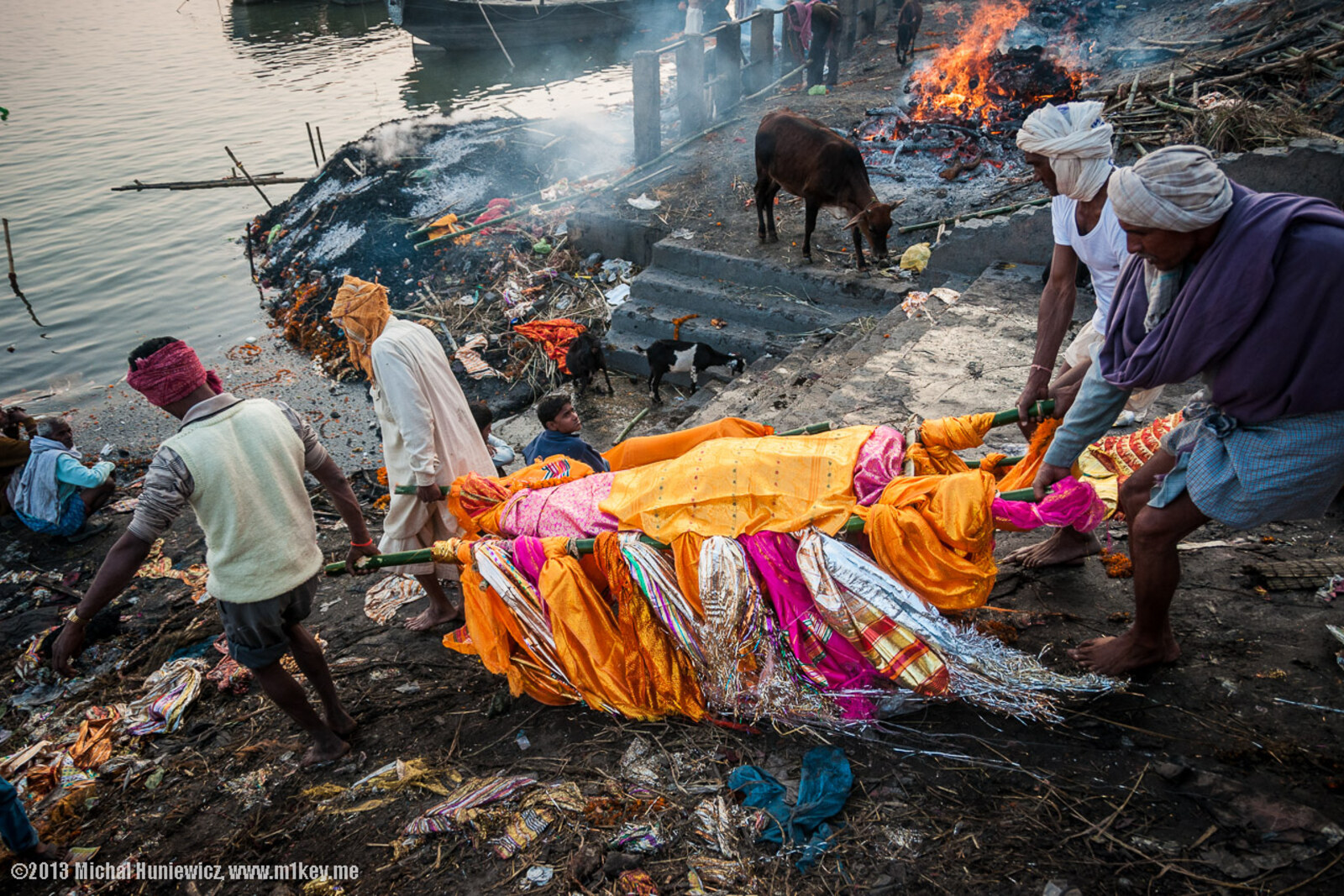
Look around first
What to notice
- The raised Punjabi Chabutra
- Manikarnika Kund
- The Charan Paduka stone
- Stacks of firewood
The story of the place
The bank of the Ganges at Manikarnika Ghat is used for Hindu cremations. Death here is associated with moksha, the release of the deceased from the cycle of new births. The old Manikarnika Kund pool survives above the riverbank, and nearby Charan Paduka, a stone bearing the imprint of Vishnu's foot, is revered. Traditions about the reservoir and a lost ear ornament explain this ghat's name.
Manikarnika is arranged as several neighboring areas with different rights and duties. Pyres are assembled on the cremation grounds; above and behind them, firewood is stored and sold, while rites are performed by the river. A body is usually lowered briefly into the Ganges, then carried to the pyre. The relative conducting the ceremony receives fire from the Dom families, who hold hereditary rights to manage the grounds. The Dom family on duty that day provides the flame, accepts the fee, and oversees the cremation. Firewood is bought separately. After the cremation, the remains are carried into the river.
The fee for fire once became the reason for purchasing an entire stretch of the riverbank. Ethnographers recorded this as a local tradition, not as a transaction confirmed by a surviving contract.
In the eighteenth century, the wealthy Punjabi merchant Lala Kashmiri Mal brought his mother's body to Harishchandra Ghat, Varanasi's other cremation site. The attendants demanded an amount he considered excessive. It was a difficult moment for the family: while the sides argued, the mother's final rite remained unfinished. Lala Kashmiri Mal could have paid—the merchant's trade had made him wealthy—but he did not want to leave the managers the right to set any price they chose.
He carried the body to Manikarnika Ghat and bought a place here for cremation. According to tradition, his money became the measure of the plot: the merchant covered part of the riverbank with gold coins. On the acquired land, his mother was finally cremated, and Lala Kashmiri Mal secured the ground for his community.
This is how Punjabi Chabutra, also called Punjabi Chabutra, came into being: a raised cremation platform for people from Punjab and members of the Khatri merchant community. Both Hindus and Sikhs used it; later, Sindhis associated with them were also admitted. The right to a separate platform outlived both the merchant himself and the coins with which, according to the stories, he measured out the land. The Khatri Samaj association manages the platform: for funerals, it is unlocked with a key.
Lala Kashmiri Mal sought a place specifically at Manikarnika Ghat because cremation here is associated in Hindu tradition with moksha—the release of the dead from new births. It is believed that Shiva speaks the Taraka Mantra into the ear of the deceased, helping them pass beyond earthly existence. That is why the fire maintained by the Dom families is bought as a necessary part of the rite, rather than as an ordinary burning brand.
The ear also appears in the ghat's name. “Mani” means a precious stone, and “karnika” an ear ornament. Traditions differ in their details. According to one, Vishnu dug a sacred reservoir here with his discus and performed ascetic practices; when Shiva bowed his head, his ornament fell into the water. Another version calls the lost earring an ornament of Parvati or Sati. These are religious stories, not an established history of the name's origin. Their physical markers are Manikarnika Kund, an old pool above the cremation grounds, and Charan Paduka—a stone revered as the imprint of Vishnu's foot.
There are no gold coins of Lala Kashmiri Mal on the riverbank. Their place has been taken by the locked Punjabi Chabutra: the right bought for one mother's funeral is still opened with a key for subsequent funeral processions.
Useful on site
The ghat is open as a cremation space; the official city portal states that cremations take place around the clock. Visitor access is restricted by rituals, work, flooding, and police orders.
Checked: June 28, 2026. Check the official source before visiting.Keep your distance from bodies, relatives, and workers; do not photograph the rites, obstruct the carrying of firewood, or bargain for a closer view.