 Guide On Map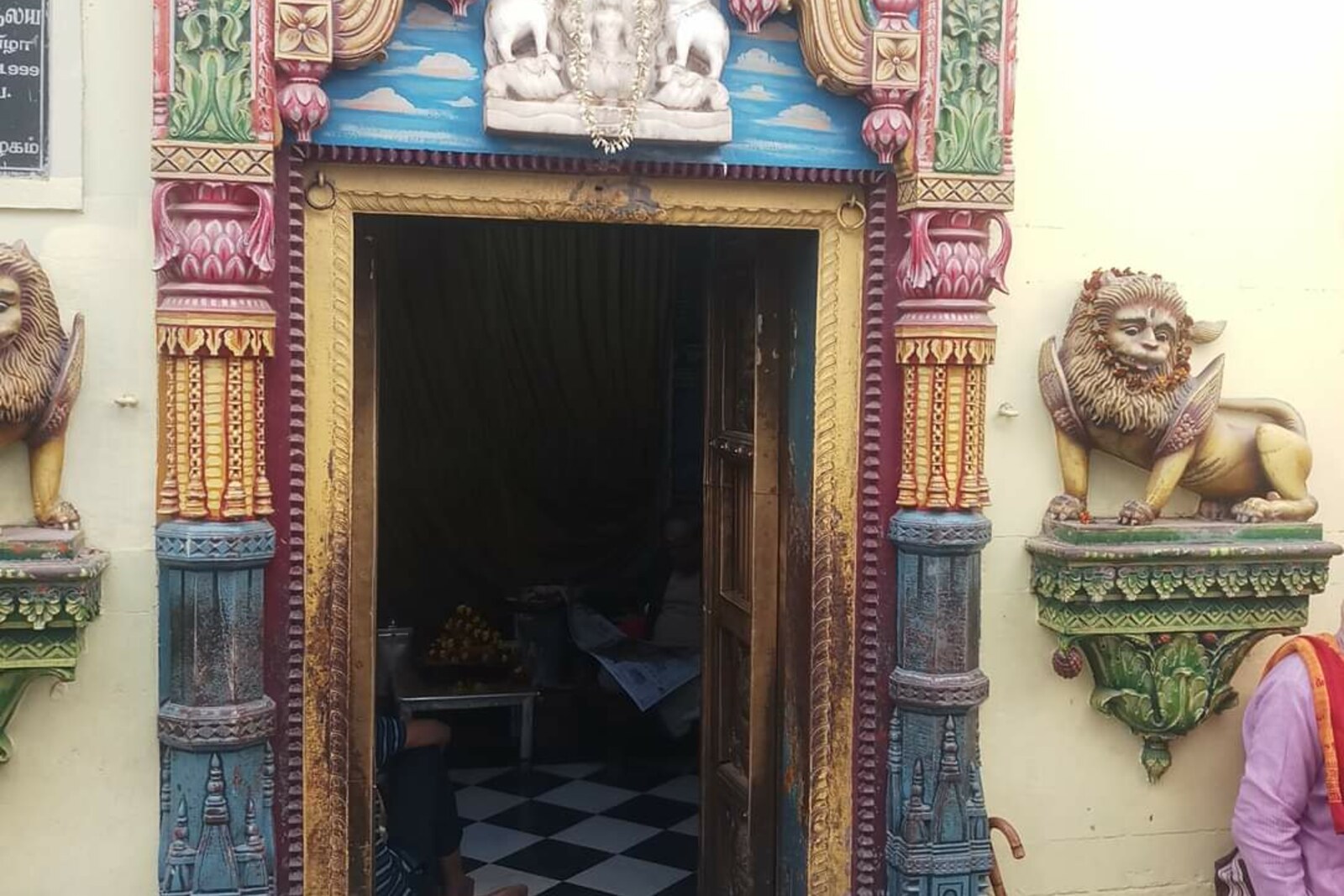
Look around first
What to notice
- Large black-stone figure
- Small Adi Vishalakshi
- Multi-tiered gopuram
- Tamil inscriptions
The story of the place
Above the entrance rises a low stepped temple tower covered with figures of deities; inscriptions in Tamil script remain on the walls. The present shrine was erected in the late nineteenth century by the Nagarathars, Tamil merchants and bankers from Chettinad. Part of the income from their offices in Kolkata and Burma went toward maintaining such temples, and providing lodging and food for pilgrims. Here, according to temple tradition, a jewel from Sati's earring fell, so this place is revered as a shaktipitha.
Two images of the same goddess stand in the shrine. The larger black-stone figure is at the front, and behind it to the left is the small Adi Vishalakshi, the original Vishalakshi. This arrangement appeared after an error made here in nineteen seventy-one.
During abhisheka, the ritual bathing of the goddess, a priest damaged a finger of the old figure. For the attendant responsible for the rite and the safety of the shrine, this was a serious incident: a consecrated murti is considered the bodily image of a deity, and damaged figures are usually replaced through a special ritual. The attendants placed a new Vishalakshi in front of it but did not remove the old one. Both remained in the shrine, and both are shown to pilgrims during darshan—an encounter in which a believer sees the goddess and comes before her gaze.
The name Vishalakshi means “wide-eyed.” It is one of the names of Parvati, Shiva's wife. Temple tradition links this site with another of her forms, Sati. After Sati's death, Shiva carried her body, and Vishnu cut it apart to end the wandering of the god driven mad by grief. The temple version says that a jewel from Sati's right earring fell here. This is a tradition, and different lists of sacred places also name her ear or face. Because of this story, the temple is revered as a shaktipitha—a place where the female divine principle is present. The present building was erected in eighteen ninety-three by the Nattukottai Nagarathars, originally from Chettinad, a Tamil community of merchants and bankers from Chettinad. They lived by trade and lending; they directed part of the profits from their offices in Kolkata and Burma toward lodging and meals for pilgrims, temple offerings, and the upkeep of shrines in Varanasi. Vishalakshi was especially important to them. Tamil believers place her alongside Kamakshi of Kanchipuram and Meenakshi of Madurai: the three goddesses, whose names are connected with sight, form a pilgrimage triad, and its northern point is here.
The Nagarathars built the temple around an already venerated image and left their mark at the entrance: a small multi-tiered gopuram, figures of deities, and inscriptions in Tamil. Their community continues to maintain the temple and provide everything needed for the rites. So the abhisheka during which the old Vishalakshi's finger was once broken is still performed here today. The new figure receives offerings at the front, while the damaged Adi Vishalakshi remains behind her left shoulder.
Useful on site
The official city portal states a daily window of approximately 06:00 to 22:00; actual access depends on the queue and worship services.
Checked: June 28, 2026. Check the official source before visiting.The interior is small: do not hold up the queue, and do not try to settle discrepancies in the legend by arguing with the attendants.