 Guide On Map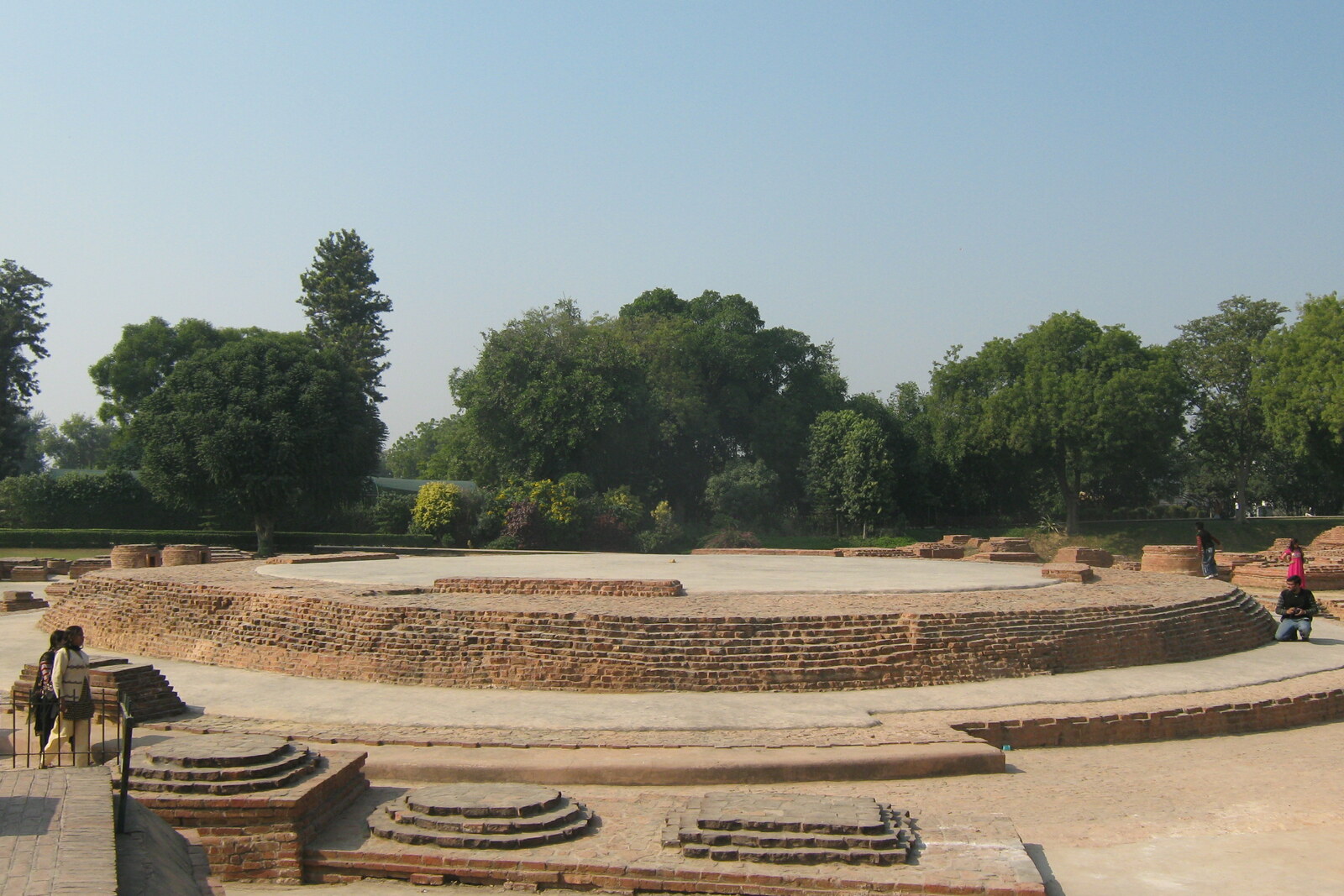
Look around first
What to notice
- The circular base of the stupa
- Concentric rings of brick masonry
The story of the place
The low circular foundation with concentric bands of brick masonry remains from a stupa erected where the place of the Buddha's first teaching was already revered. Such structures had no hall for people inside: people walked around the solid brick core, venerating the relics enclosed within it. Archaeologists date the original core to the time of Ashoka, who marked Buddhist holy places with monuments for bodily remains.
In January seventeen ninety-four, Babu Jagat Singh's men were dismantling an ancient brick mound here. Jagat Singh came from a family of Benares rulers and governed the districts of Shivpur and Katehar; Sarnath was among the lands under his authority. His position and income depended on managing land. He now needed material for a new market in Benares—the name used in documents of that time for Varanasi. The workers loaded the old bricks and took them to the construction site of the future Jagatganj, named after the man who commissioned it.
When the upper part of the structure had already disappeared, the workers reached a stone chamber. A massive sandstone box stood inside it, with a cylindrical casket of green stone within. It contained human bones, decayed pearls, sheets of gold, and small ornaments.
The find explained exactly what they had been dismantling. The stupa had no chamber for visitors: it was a solid reliquary monument, around which people performed ritual circumambulation. Archaeologists date its original brick core to the time of Ashoka. In the third century BCE, the emperor marked Buddhist holy places with structures for the bodily relics of the Buddha; in Sarnath, such a stupa appeared where the place of the first teaching was already revered.
The name “Dharmarajika” means “belonging to the King of Dharma.” This title is interpreted in two ways: it was applied to the Buddha, whose relics the stupa was meant to hold, and to Ashoka himself, patron of the Buddhist community. No one had time to examine the bones found by the workers, so it is impossible to confirm that they belonged to the Buddha. They were committed to the Ganges. The green casket was handed over to the British resident Jonathan Duncan; later, it disappeared.
One of those involved in the dismantling, Sankar, was a boy at the time. Forty-one years later, the now elderly Sankar showed Alexander Cunningham where the outer stone box had been left. Cunningham excavated it and gave it to a museum; it is now kept in Kolkata.
Before you are the low circular foundation and concentric rings of masonry. Jagat Singh's workers took the upper part away for the market, the human remains were lowered into the Ganges, and the green reliquary is lost. The name Jagatganj is still borne by a district of Varanasi built from the materials for which the stupa was opened.
Useful on site
The open ASI ruins are accessible under the monument's controlled-access rules; check the current entry and ticket rules on site.
Checked: June 26, 2026. Check the official source before visiting.Stay on the path: the surviving outline is easy to mistake for a platform, but it is a fragile part of the structure. As you read the sign, note which verb is used to describe the find of 1794.