 Guide On Map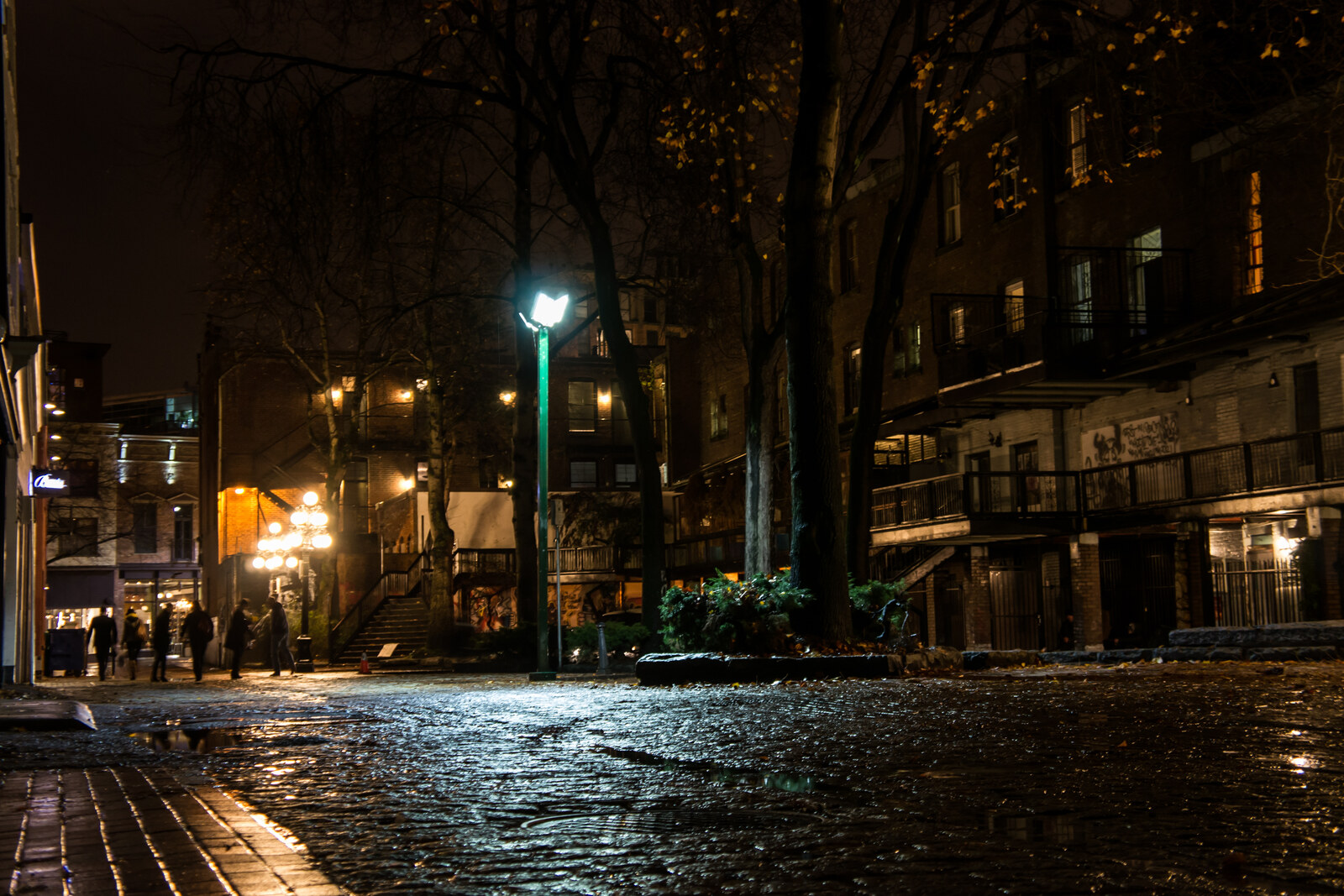
Look around first
What to notice
- Open square
- Brick paving
- Granite paving sections
- Stage and permanent seating
The story of the place
Today's square took shape from the rear portions of hotel lots that the city bought in the late sixties. Earlier, a narrow service passage remained between the hotels and a garage: beer parlor doors opened onto it, and noisy patrons were led away from the main entrances. When the garages were demolished, the former pocket was opened toward the street, paved with brick and granite, planted with trees, and fitted with lamps. A stage and permanent seating now stand here, and the paving includes preserved pieces of old cobblestone and brick.
The open area here is today's Blood Alley Square. In early September nineteen sixty-four, Charles Davidson, a former merchant seaman, was found after a fight in the narrow passage behind the Stanley Hotel and the New Fountain Hotel. His skull was fractured. Nine days later, Davidson died.
He ended up here because the back doors of the hotel beer parlors opened onto this passage. Staff led drunken or quarrelsome patrons out through them, leaving the main entrances on Cordova Street quiet. Between the hotels and a garage was a tight pocket, hidden from the main street. Two years before Davidson's death, two other men had already died here.
Ormond Turner, a columnist for The Province, was the first to bring these deaths together into one story. Two days later, reporter Ian Todd continued the investigation and called the passage Blood Alley—supposedly the name used by local drunks and brawlers. No earlier printed mentions of this name have been found. So it is unknown whether Todd recorded a real nickname or gave the newspaper article its needed grim color himself. After his publication, the expression did not disappear.
In the late sixties, real estate owner and district promoter Larry Killam sought to turn Gastown into a tourist historic district. The newspaper nickname was useful to him, but its recent origin did not sound imposing enough. Killam began saying that butchers had worked here and that blood from slaughterhouses had run down the alley. This is a legend: there were no slaughterhouses here. The nearest early butcher kept a shop on Water Street and slaughtered animals at False Creek. The story about gallows also remained an unconfirmed legend.
In nineteen seventy-one, municipal planners bought the rear portions of the hotel lots. Workers demolished the garages, and the following year they began creating an open square and officially named it Blood Alley Square. The brick paving, granite, trees, and lamps with round globes were added during this reconstruction. A recent renewal brought a stage, permanent seating, and new trees; some of the cobblestones and brick were reused.
Charles Davidson was found not in today's spacious square, but in the passage squeezed between the hotels' back doors and the garage. The garage is gone: the open part of the square appeared precisely in its place.
Useful on site
The passage is open as a public space; after reconstruction, the square and alley may be used for performances, seating, loading, and city programs. The surface remains uneven.
Checked: June 30, 2026. Check the official source before visiting.Do not turn poverty and other people's vulnerability into a photo subject; during work or an event, limit yourself to looking from the edge.