 Guide On Map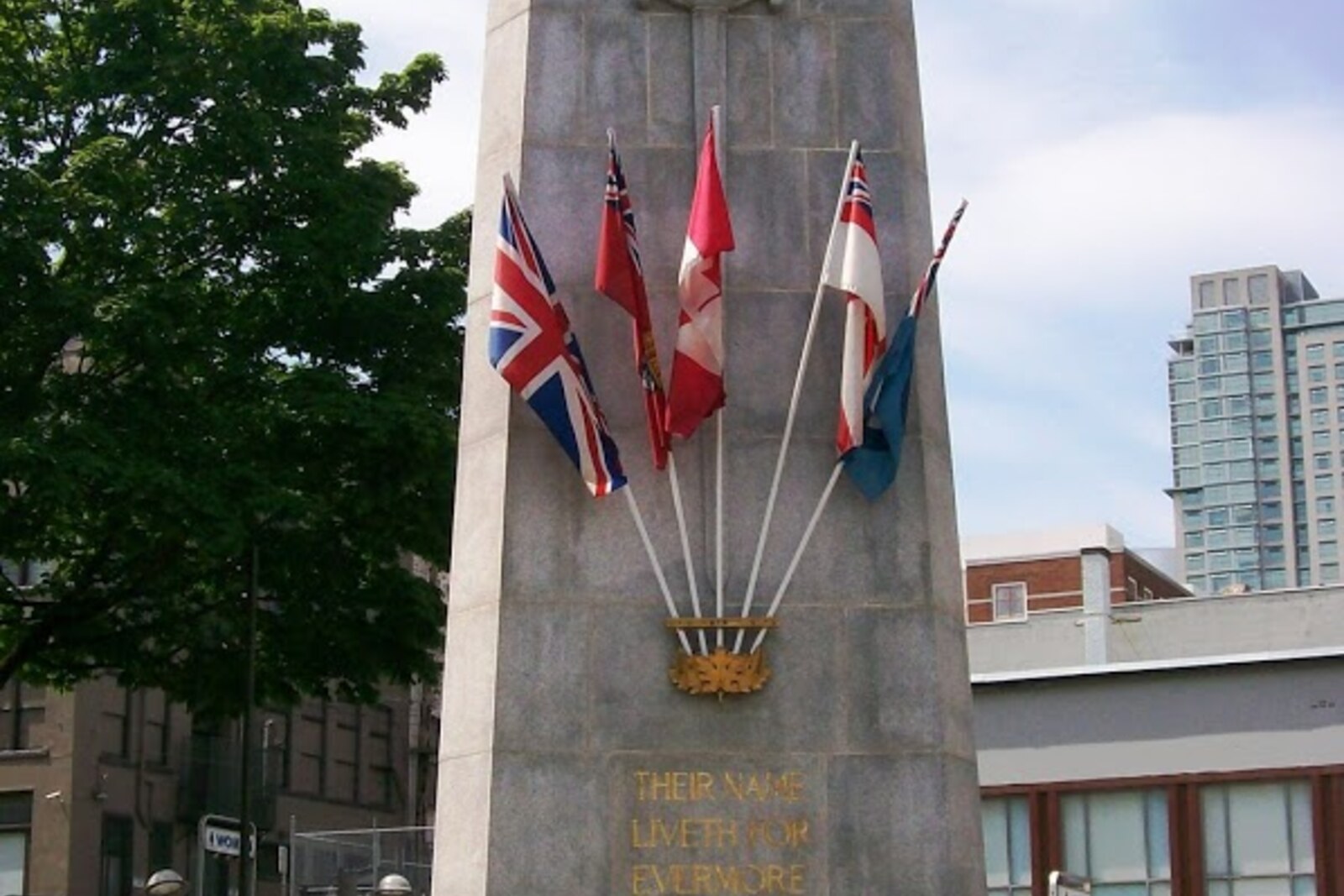
Look around first
What to notice
- Three-sided granite cenotaph
- Three stone helmets
- Inscription on the obelisk
The story of the place
At the center of Victory Square stands a three-sided granite obelisk, placed where Vancouver’s first provincial courthouse once stood. After the courthouse was demolished, the site was used by the military and then preserved for a memorial to those killed in the First World War. Three stone helmets lie at the obelisk’s corners; there is no grave here, and the names on the stone are not listed individually. On November eleventh, the square hosts the city’s main memorial ceremony.
In the summer of nineteen eighteen, a dollar was charged here for entry into a trench. It had been dug by soldiers returning from the front and arranged as they knew how from their own experience: with sandbags and barbed wire. The money was given to the widows and families of fallen comrades. After the death of the breadwinner, they had to live without his earnings, and government support was often not enough.
The place was then called Government Square. Before the war, Vancouver’s first provincial courthouse stood here, but it was dismantled in nineteen thirteen. On the cleared site, the military set up recruiting tents and tables. Volunteers enlisted here for service overseas. A few years later, surviving soldiers dug a training trench on the same ground from which other men had been sent to real trenches.
When losses among Canadian units began to rise, city residents demanded that the site be preserved for a war memorial. After the armistice, the city and the province gave it a new name—Victory Square—in memory of the victory of Canada and its allies in the First World War. The Canadian Club of Vancouver and the city war memorial committee collected donations for a monument to the fallen.
The project was assigned to the architect and front-line officer George Lister Thornton Sharp. He made the granite obelisk three-sided, in the shape of the square itself. Stone copies of steel soldiers’ helmets rest at its corners. On April twenty-seventh, nineteen twenty-four, the monument was unveiled before twenty-five thousand members of the armed forces, veterans, and city residents.
This is a cenotaph—an empty tomb for people buried elsewhere. Their names are not listed individually on the stone; the inscription speaks of them together: “Their name lives forever.” Every November eleventh, the city’s main memorial ceremony takes place here. The recruiting tents and the trench dug by veterans have long been gone. In their place remain three stone helmets and an obelisk without a grave.
Useful on site
City parks are usually open from 06:00 to 22:00, unless otherwise indicated on site. During memorial ceremonies, rallies, and city work, movement through the square may be restricted.
Checked: June 30, 2026. Check the official source before visiting.This is an active memorial: do not climb onto the base or disturb ceremonies or people who have come to honor the fallen.