 Guide On Map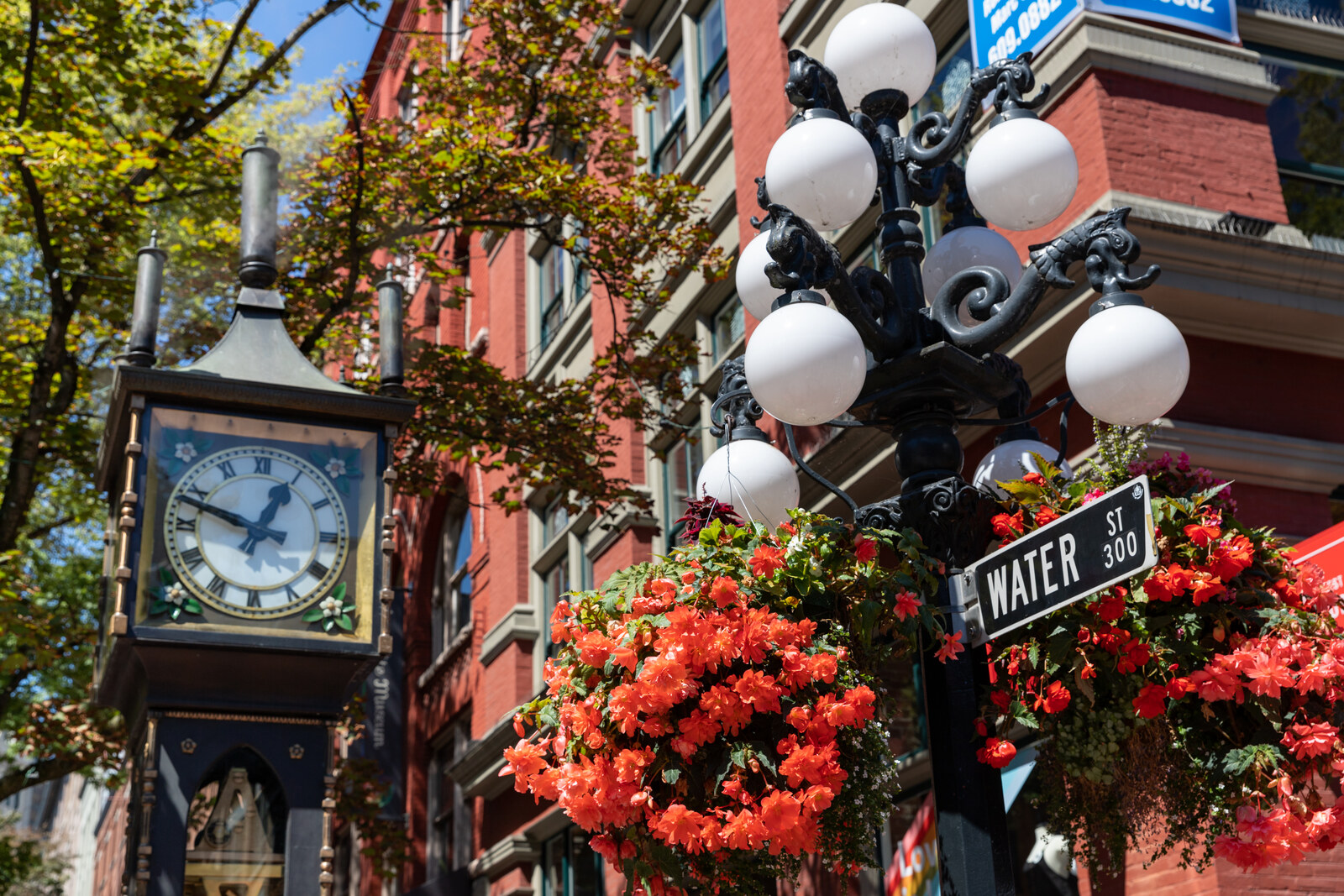
Look around first
What to notice
- Bronze casing
- Steel balls beneath the glass
- Pendulum mechanism
- Steam whistles
The story of the place
Water Street was named for the water: it was laid out along the southern shore of Burrard Inlet. Later, fill and railway tracks appeared between the street and the inlet. The red paving and black streetlamps were installed in the nineteen seventies, when local businesspeople and building owners were turning the former commercial-and-warehouse district into a historic area for visitors. The Gastown Steam Clock was added last—in nineteen seventy-seven.
On this corner stood the ventilation grate of an underground chamber belonging to a district-heating company. The company sent steam through pipes to buildings downtown. Elsewhere, the grates were covered with concrete planters containing small trees, but John Ellis, an employee of the city planning department, was looking for a more conspicuous solution for the renewed Water Street. He proposed placing a clock above the grate that would be wound by that same steam.
Ellis called clockmakers from Vancouver to Toronto. Some refused; others ended the conversation: damp steam near steel parts meant condensation, rust, and inaccurate timekeeping. Then one of Ellis's colleagues remembered a newspaper item about Ray Saunders—a clock repairman who ran his own workshop and made metal clock sculptures. The address in the item proved outdated. About a week later, Ellis tracked Saunders down and offered him a commission already rejected by specialists with much larger businesses.
Saunders agreed. Then he had to hear the same response himself: English manufacturers of clock mechanisms did not want their products installed beside a steam engine. Only Gillett & Johnston agreed. Its craftsmen made the mechanism to an eighteen seventy-five design, and Saunders coated the steel parts with lacquer, leaving only the teeth of the gears exposed.
Construction took two years. The clock was initially estimated at twenty-five thousand Canadian dollars. The bronze casing alone cost almost twenty-two thousand, and the estimate was raised to forty-two thousand. Businesspeople, property owners, and private donors raised the money. Saunders had to ask them for contributions again while a sign above the grate promised that the clock would appear soon.
By the opening, expenses had reached fifty-eight thousand dollars; Saunders's own labor and profit were not included in that sum. Because of the cost overrun, he left some of the brass trim and the interior lighting unfinished. An anonymous donor provided the missing money. On September twenty-fourth, nineteen seventy-seven, the clock was unveiled and handed over to the city.
The experiment needed to continue. The original pressure made the whistles roar too loudly, and after complaints, Saunders lowered it and retuned the pipes. When the mechanical melody player began to jam, the clockmaker replaced it with an electronic device. The city signed a separate contract with him to maintain the clock, and Saunders later built several more steam clocks for other cities.
Inside the present casing, a steam engine raises steel balls. At the top, they move onto another chain and, through their weight, drive the pendulum mechanism; an electric motor helps the system keep time. Every quarter hour, five steam whistles play the Westminster Quarters, and on the hour, steam emerges from the upper section.
Saunders later admitted that the plaque at the base should have been worded more precisely. He called his structure the world's first steam-powered clock, although here the steam primarily winds the weight-driven mechanism and powers the whistles. The steel balls he devised still rise beneath the glass, while the original, bolder title remains on the bronze.
Useful on site
The street is accessible at all times; the Gastown Steam Clock stands outdoors. The chimes, steam, and accuracy depend on the condition of the mechanism, maintenance, and city work around it.
Checked: June 30, 2026. Check the official source before visiting.It is crowded around the clock: do not stand in the roadway, and let others see the mechanism after the signal.