 Guide On Map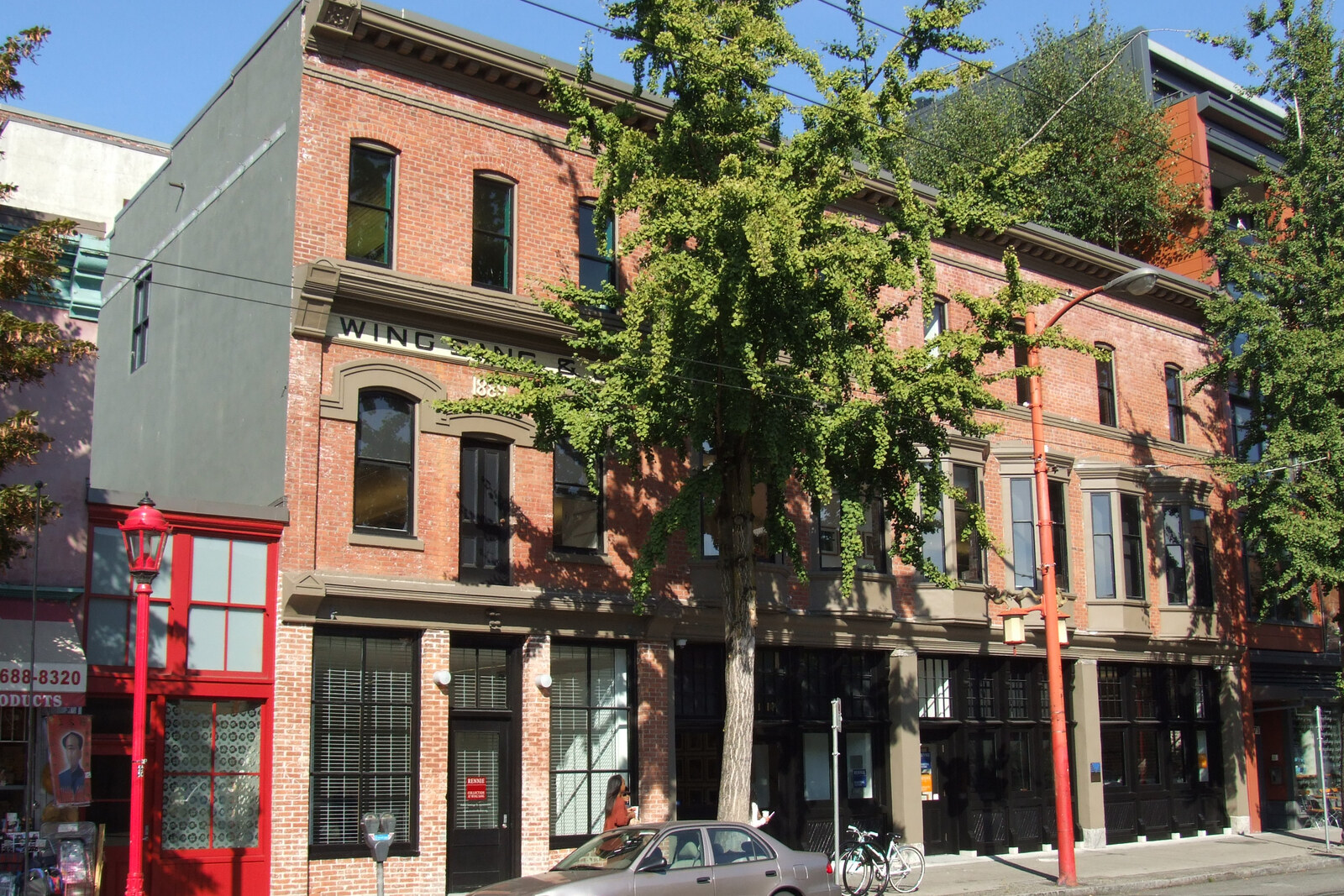
Look around first
What to notice
- Brick facade
- Second-story opening for lifting goods
- Chinese Canadian Museum sign
The story of the place
The brick Wing Sang Building was built for a company that hired workers, sold places aboard steamships, traded with China and Japan, and transferred money across the ocean. The lower floor combined an office and shops; goods were stored and people lived above, while the courtyard structure housed a large family, a Chinese school, and meetings. Above the entrance, a tall opening is visible in the brick wall, through which goods were lifted to the warehouse. The building is now occupied by the Chinese Canadian Museum.
In one of the letters left in this house, Liang Xian'en's family tried to convey several pieces of news at once. The twenty dollars he had sent were received, but more than half had to be spent on treatment for a grandson. His parents, already over eighty, asked Liang to return soon. His son reported that he had left school and was looking for work, but there was still not enough money for rice. The letter never reached its addressee.
At the time, Canada Post could not deliver envelopes if the address was written only in Chinese characters. In addition, many Chinese workers moved between construction projects and work sites without a permanent address. So they gave the address of Yip Sang's firm. Mail arrived here for collection; from here, letters were sent across the Pacific Ocean with cargo. Through the same office, workers sent their earned money to their families.
Yip Sang understood well the value of such mediation. He had previously washed dishes, cooked, mined gold, and sold coal door to door, then became an accountant and cashier during the construction of the Canadian Pacific Railway. He paid Chinese workers their wages and negotiated with employers on their behalf. In eighteen eighty-eight, Yip opened his own firm: he hired people, traded with China and Japan, sold steamship tickets, and accepted remittances and letters.
A year later, he built a brick building for the firm on Pender Street. The name “Wing Sang” belonged to the company and translated as “eternal life.” The first floor held offices and shops, with a warehouse and living quarters above. When business began to grow, Yip expanded the building in nineteen oh one, and in nineteen twelve he erected a six-story structure in the courtyard. His three wives, most of his twenty-three children, and other relatives lived there. The premises were used for meetings and Chinese school classes.
By the end of the nineteen eighties, the Yip family still owned the building but made little use of it. Before the renovation, Randall Yip, the family representative, called the city archives: papers remained inside that he wanted to preserve. Five archivists carried more than forty boxes out of here in three days. The doors of a large safe had rusted shut and had to be cut open with a torch. Of the eleven boxes found there, seven were ruined by leaks and mold; the remaining documents were frozen, dried, and cleaned.
Among the rescued papers were more than six hundred undelivered letters from the early twentieth century. They are now kept in the city archives and digitized. In two thousand twenty-three, the Chinese Canadian Museum opened in the building itself. Above its entrance, the second-story opening is still visible, through which goods were lifted to the warehouse of the company that carried other people's family letters alongside them.
Useful on site
The museum is open Wednesday through Sunday 10:00–19:00; Monday and Tuesday are closed. Basic adult admission is 18 Canadian dollars.
Checked: June 28, 2026. Check the official source before visiting.The facade is accessible for exterior viewing, while the museum requires a separate visit; check admission requirements in advance and do not assume the entire complex is open.