 Guide On Map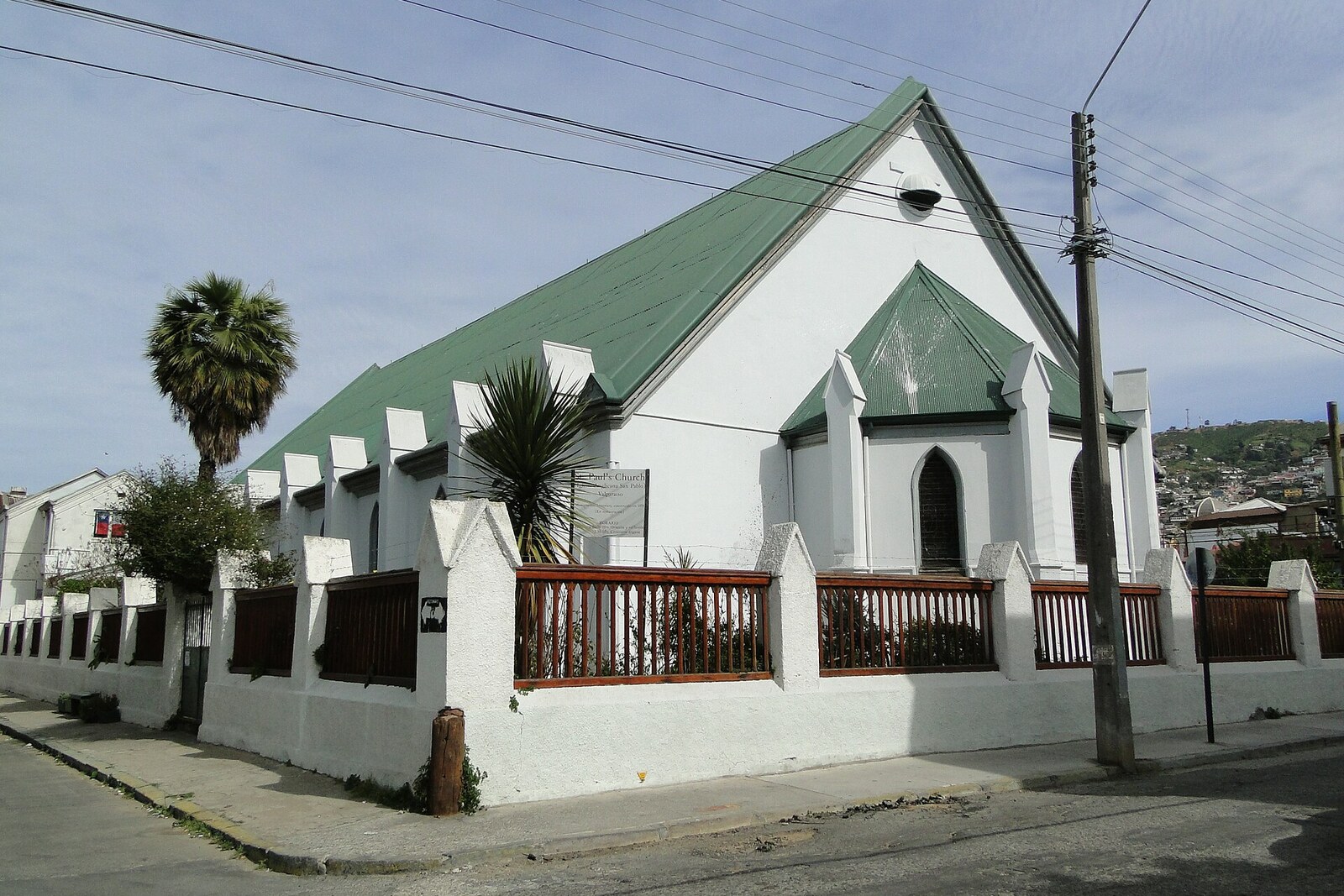
Look around first
What to notice
- Low structure
- Small windows
- Side entrances
- Stained-glass windows above the altar
The story of the place
Cerro Concepción took its name from La Concepción Fort, built at the end of the seventeenth century to defend the harbor. The fort disappeared, but its name remained with the neighborhood where people from Great Britain and Germany settled in the nineteenth century.
Anglicans gathered here in homes and classrooms. The congregation included captains and merchants, shipwrights, blacksmiths, mechanics and piano tuners—people earning their living in the port city. They had to hide their church: the Chilean constitution recognized Catholicism as the state religion and prohibited the public practice of other faiths.
In eighteen fifty-seven, the British consul William Rouse undertook to raise money and acquire a plot on the hill, near the homes of the congregation. When construction began, newspapers reported that the English were building a Protestant chapel and were therefore violating the constitution.
The fate of the building had to be decided by Manuel Valenzuela Castillo, intendant of Valparaíso—a state administrator of the province. On the eleventh of March, eighteen fifty-eight, he wrote to the Minister of the Interior that he could not stop the work. From outside, the structure did not resemble a church, the intendant explained, and the constitution permitted private gatherings.
That argument saved the construction. The low structure, small windows, absence of a tower, bell tower, exterior cross and main door served as proof that this was supposedly a private premises. Two entrances were placed on the side. The church was completed that same year, and the Anglican community received a permanent place for services, marriages and baptisms. Only seven years later did the law allow non-Catholics to hold worship services inside private buildings—that is, it legalised an arrangement that already existed here.
The church is dedicated to Paul of Tarsus, an early Christian preacher who addressed peoples outside the Jewish community. The Anglicans chose him as the church’s patron, and in eighteen eighty-three they placed stained-glass windows above the altar depicting episodes from his life.
Since the year one thousand sixteen, St. Paul's Anglican Church has served as Chile’s first Anglican cathedral. It still has no tower or ceremonial front door: people enter the cathedral through those same side openings that the intendant cited when he allowed construction to be completed.
Useful on site
Accessible outside as a street; the interior depends on services, concerts and community announcements.
Checked: June 24, 2026. Check the official source before visiting.Do not regard the interior as a guaranteed part of the route. If the church is open, enter quietly; view the organ, stained-glass windows and memorial plaques without disturbing a service.