 Guide On Map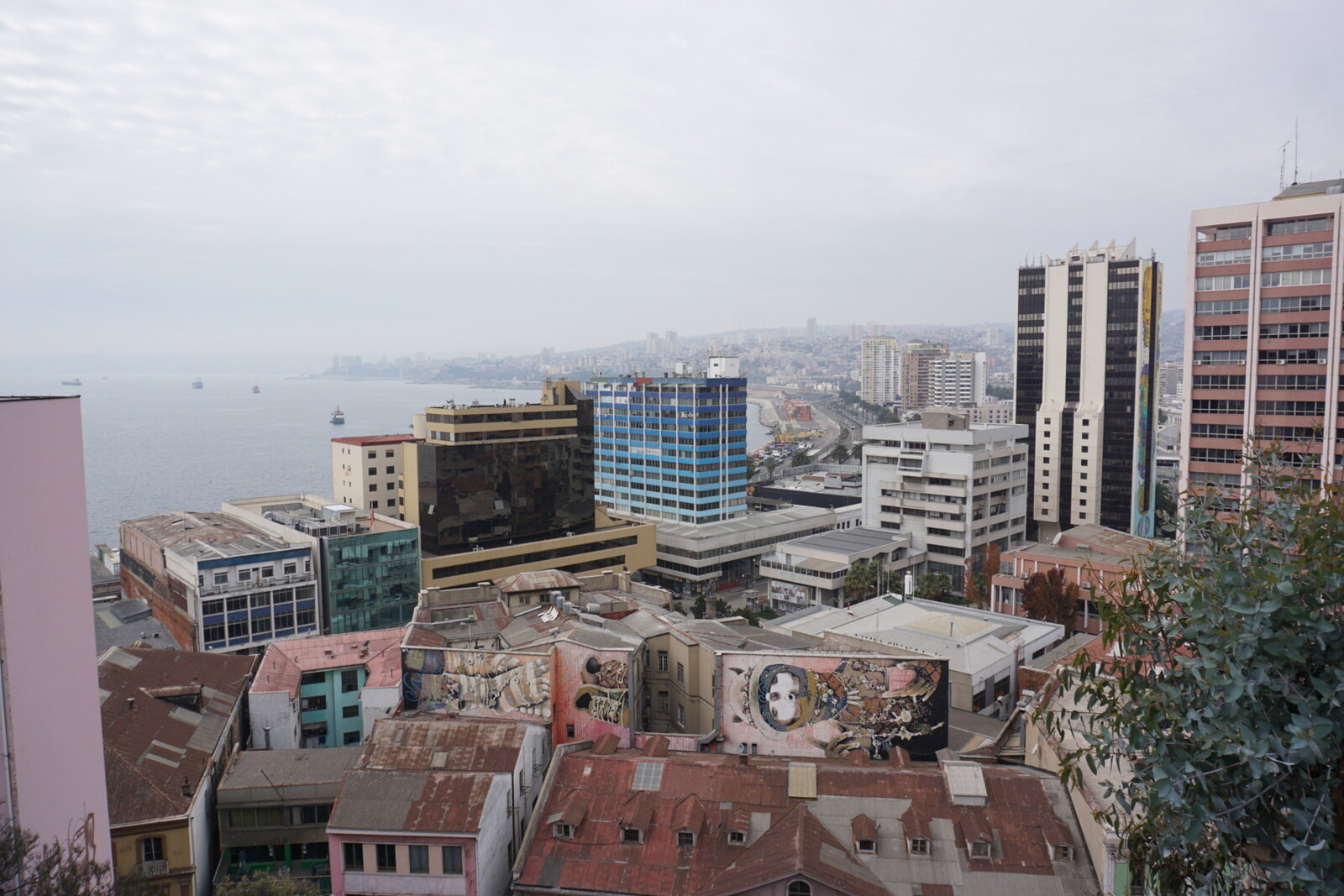
Look around first
What to notice
- Long terrace
- Railing above the port
- Retaining wall
- Escalera Apolo
The story of the place
At the upper station of El Peral, people step out onto a long, level platform, stop at the railing, and look out over the port. This platform exists thanks to a wall hidden beneath the edge of Paseo Yugoslavo (formerly Paseo Americano): it holds the slope in place and takes the pressure of the large house above it.
A pedestrian walkway existed here earlier. By eighteen eighty, it was called Paseo Americano. In nineteen twenty-five, Pascual Baburizza bought the neighboring house — an entrepreneur who needed to protect his new residence from the destruction of the ground.
Baburizza arrived in Chile at the age of seventeen, with no fortune. His first income came from supplying food and goods to nitrate enterprises in the north of the country. He then entered the nitrate business himself and grew wealthy. Part of that fortune now had to be invested in the slope of Cerro Alegre: erosion was undermining the ground, and the heavy house was increasing the pressure on the edge of the plot.
In nineteen twenty-eight, Baburizza ordered a retaining wall to be built along the residence. The top of the wall formed a long terrace above the city. Once the work was finished, the owner handed the terrace over to the city residents. The former walkway became a landscaped public balcony, directly connected to the funicular and Escalera Apolo.
The municipality replaced the name Paseo Americano with Paseo Yugoslavo in honor of the donor's origins. Baburizza was born on the Dalmatian island of Koločep, which now belongs to Croatia. In the interwar years, Croatian settlers in Chile were called Yugoslavs, after the state to which their homeland then belonged.
The name has endured. The exit from El Peral still leads to the top of that very retaining wall, which Baburizza paid for because of his house, then separated from the estate and gave to Valparaíso.
Useful on site
Open as a public promenade; it is best to walk here during the day and before the museum options around it close.
Checked: June 24, 2026. Check the official source before visiting.At the edge of the paseo, do not block the narrow passage for a photograph. In windy weather, hold on tightly to light belongings.