 Guide On Map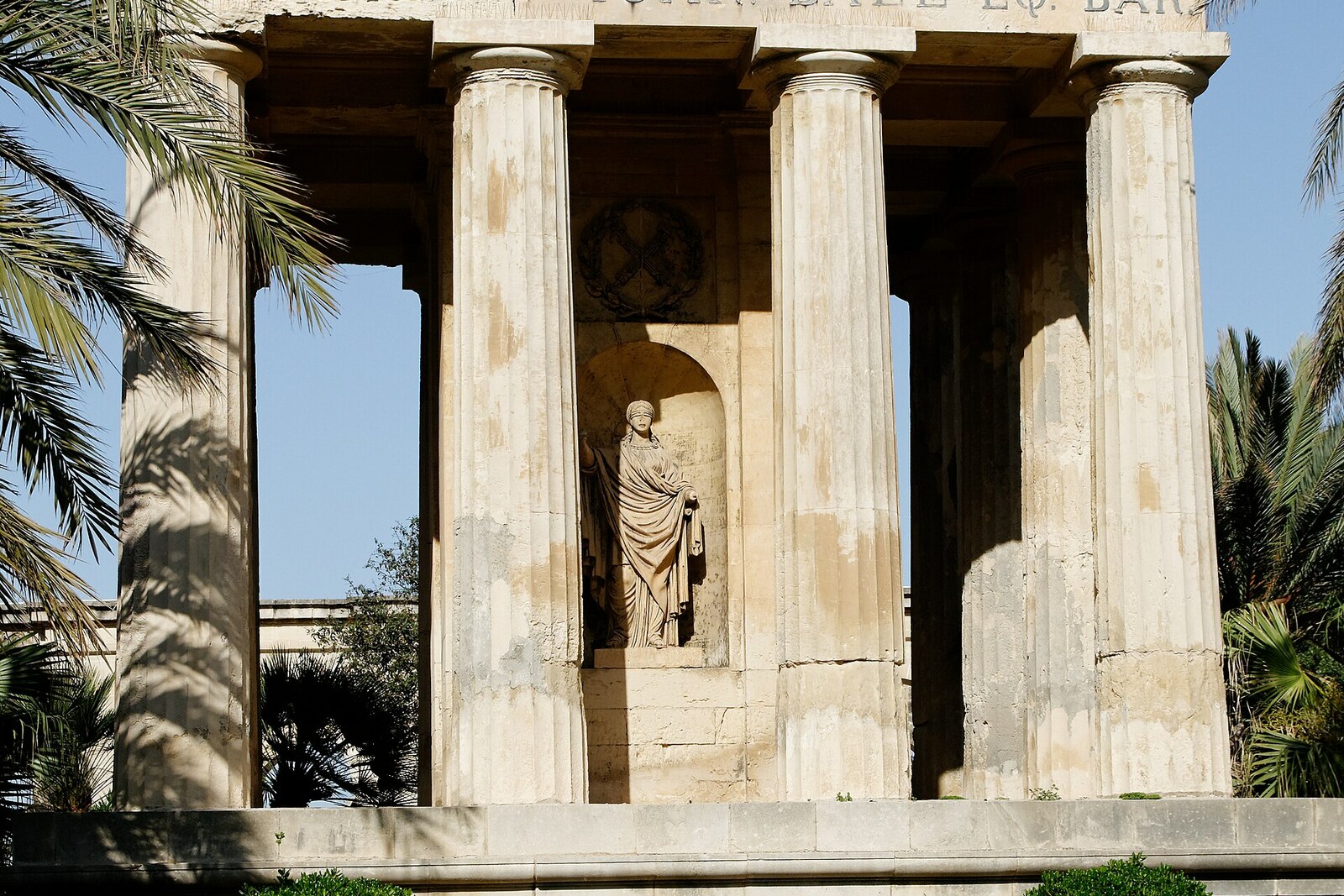
Look around first
What to notice
- Alexander Ball’s cenotaph
- Figures of War, Prudence, Justice, and Immortality
- Latin and English inscriptions
- The entrance to Grand Harbour
The story of the place
From the height of St Christopher Bastion, Lower Barrakka Gardens look directly toward the entrance to Grand Harbour. As early as the middle of the seventeenth century, this site had covered arcades and a place for the knights to rest. The garden was laid out here later and opened to the public in eighteen twenty-one.
At the center of Lower Barrakka Gardens stands a stone temple without an altar. It is a cenotaph—a monument to a person buried elsewhere. Four figures in niches represent War, Prudence, Justice, and Immortality. The name on the structure is Alexander Ball, a British naval officer whom the Maltese asked to coordinate the actions of their detachments during the blockade of the French garrison.
Lower Barrakka existed long before Ball. By the middle of the seventeenth century, St Christopher Bastion already had covered arcades and a place for the knights to rest. This area was called Old Barrakka; the Upper Barrakka Gardens, laid out later and higher up Valletta’s slope, were called New Barrakka. During the French occupation, vegetables were grown here for the besieged city. After the garrison’s capitulation, people again came here for the harbour and the open space.
Ball arrived in Malta in the autumn of seventeen ninety-eight as a captain in the Royal Navy. He left his ship with his first lieutenant and went ashore himself: he distributed the supplies that had been delivered and sought coordinated action from the detachments commanded by the Maltese. For him, this was paid officer’s service. The local participants in the blockade lost their usual income: cotton exports to Spain had stopped, although the cotton economy supported a significant part of the island’s population. Food shortages threatened both the besieged French in Valletta and those holding positions outside.
After the French capitulation, Ball became Malta’s first British civil commissioner and remained in that post until his death. He died on October twenty-fifth, eighteen oh nine. Just a month later, Maltese deputies formed a committee and asked the acting commissioner, Francis Chapman, to provide a site for a public monument. They received no money from the treasury: one hundred thirty-seven people subscribed to the construction.
The site was chosen here. The gardens were a familiar urban gathering place, and the bastion overlooked the entrance to the harbour where Ball had served. In eighteen ten, the cenotaph was erected with the money collected. A garden was then laid out around it, and in eighteen twenty-one Lower Barrakka Gardens were officially opened to the public. A few years later, a neighboring structure that had blocked the monument was even demolished.
By the end of the nineteenth century, sea air and rain had badly damaged the stone. In eighteen eighty-three, British Captain Edward Seymour, then serving in Malta, formed a new committee. The restoration was again paid for by public subscription. Two inscriptions, one Latin and one English, were placed on the base: the monument was erected through donations in eighteen ten and restored by the same means in eighteen eighty-four.
Alexander Ball himself is buried in Fort St Elmo. In Lower Barrakka Gardens, the cenotaph paid for by the townspeople remained, together with the public garden that was laid out only after the monument.
Useful on site
The park’s official listing does not publish opening hours. After a report of a full closure for repairs in February 2026, later indirect signs of access appeared, but no official notice of the resumption of the normal schedule has been found; check the gates on site.
Checked: June 24, 2026. Check the official source before visiting.First check whether the garden gates are open; if they are not, do not go around the fence and use the nearest available view of the harbour.