 Guide On Map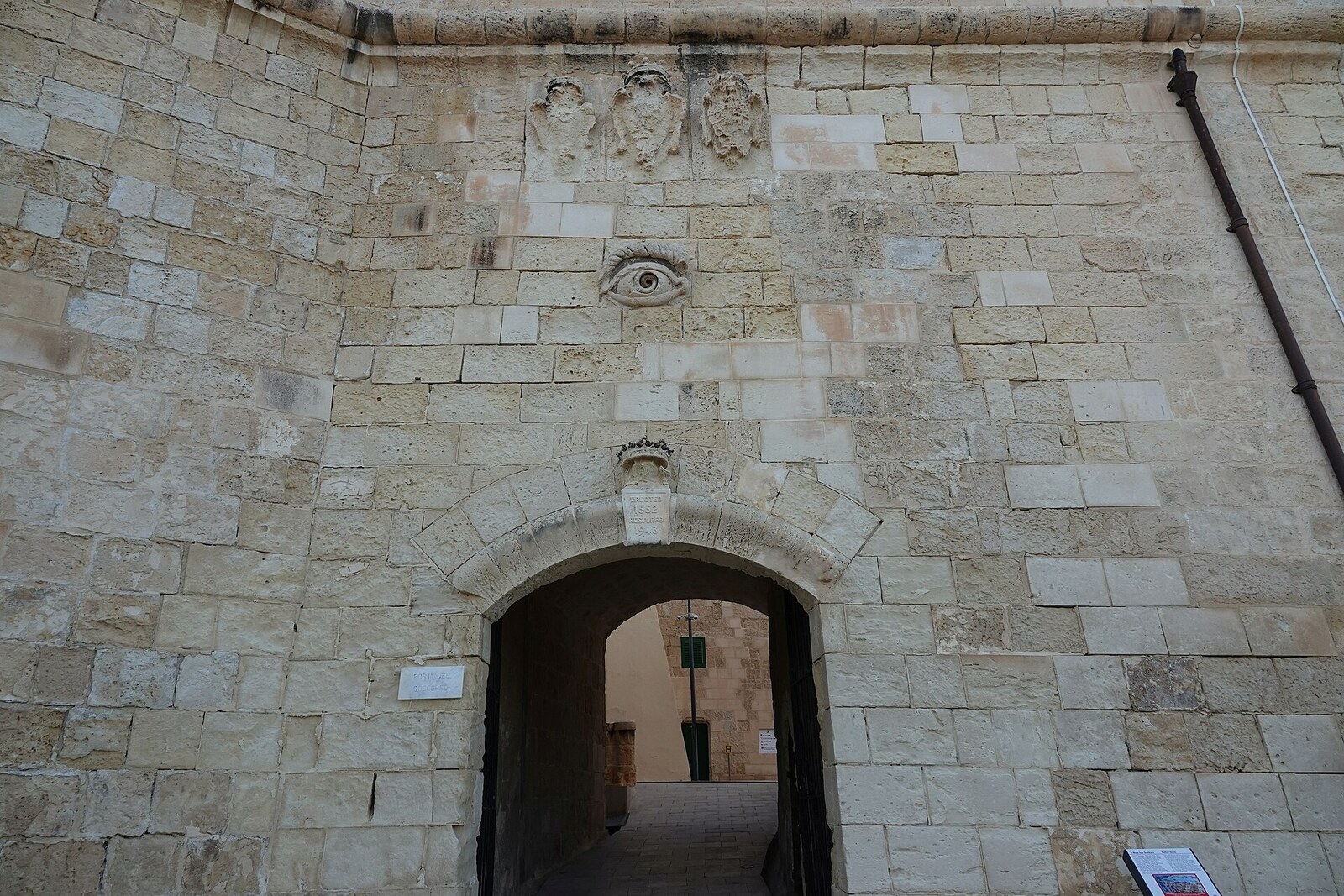
Look around first
What to notice
- Fortress walls
- St Anne's Chapel
- Additional fortifications
- Entrance to the National War Museum
The story of the place
On June eighth, fifteen sixty-five, the defenders of Fort St Elmo sent a letter across Grand Harbour to Grand Master Jean Parisot de Valette—the head of the Order of St John, who was directing Malta's defense from Fort St Angelo on the opposite shore. Ottoman Janissaries had already captured the ravelin, an outer triangular fortification in front of the wall. Breaches were appearing in the walls, and the garrison was losing men faster than it received reinforcements. The letter's authors asked for boats to evacuate them. If there were no boats, they intended to leave the fort and die fighting in the open.
Valletta did not yet exist. At the tip of Mount Sciberras stood a single small star fort. It had been built after the Ottoman raid of fifteen fifty-one: the Grand Master at the time, Juan de Homedes, wanted to block the enemy's access to two harbours at once—Grand Harbour and Marsamxett Harbour.
The Order turned Malta into a base for its war galleys and fought constantly against the Ottoman fleet and North African corsairs. Sultan Suleiman the Magnificent's expedition arrived to destroy this base. The Ottoman fleet needed a protected anchorage in Marsamxett Harbour, and the land army needed Mount Sciberras, from where artillerymen could shell Birgu, Senglea, and Fort St Angelo. As long as the garrison of Fort St Elmo held the cape, the ships could not freely enter the harbour, and the soldiers could not calmly position their guns above the Order's fortifications. The Ottoman command therefore decided to take this particular fort first and expected to do so quickly.
De Valette understood that Fort St Elmo would eventually fall. He needed days. Every night, boatmen brought fresh soldiers and supplies here from Fort St Angelo, and took the wounded back. While this crossing continued, de Valette was strengthening Birgu, Senglea, and Fort St Angelo—positions without which the Ottoman army could not capture Grand Harbour.
After the letter from Fort St Elmo, he sent three knights to the fort to inspect the damage. One of them, Costantino Castriota, was to determine whether the fort could still be defended. Castriota declared that it could, and offered to bring volunteers himself to replace the garrison.
De Valette replied to the defenders that he permitted them to leave as soon as the relief arrived. He added that he would sooner entrust the fortress to men he could rely upon. This was calculated for the Order's own structure. The knights took a vow of obedience and regarded military service as their calling; agreeing to be replaced meant acknowledging that hired soldiers and volunteers were ready to carry out their duty. The professional Spanish and Italian soldiers had different incentives: they lived on their pay, and they had been promised extra money for especially dangerous service at Fort St Elmo.
The garrison withdrew its request for evacuation. De Valette continued sending men, and the fort held out for almost a month. Then the Ottoman batteries cut off the route across the harbour. On June twenty-third, the final assault began. The defenders fought in the breaches and by the old St Anne's Chapel. Almost the entire garrison was killed. Nine Maltese swam to Fort St Angelo and told how the defense had ended.
Ottoman soldiers occupied Fort St Elmo, but de Valette had time to reinforce the other fortifications. The subsequent attacks on Birgu and Senglea did not bring victory to the Ottoman army. In September, reinforcements arrived in Malta from Sicily, and the Ottoman troops left the island.
The fortress before you was mostly built after that siege. The first walls had been almost pulverized by artillery; they were then rebuilt to a design by Francesco Laparelli and later surrounded by additional fortifications. The National War Museum is now housed inside. St Anne's Chapel has preserved the site of the final battle, although it acquired its present appearance during rebuilding in the seventeenth century.
The fort's name is older than its walls. In a military register of fourteen seventeen, the watch post on this cape was already called Santo Eramo. Elmo is a later form of the name of St Erasmus, an early Christian saint whom Mediterranean sailors revered as their patron. Little is known about his life, and the details of his martyrdom came from later traditions. On the cape between the two harbours, the name of the sailors' saint remained even after the first fort had to be rebuilt.
Useful on site
From 1 March to 31 October 2026, daily 09:00–19:00, last entry at 18:30. Part of the exhibition is temporarily closed; a reduced price applies.
Checked: June 24, 2026. Check the official source before visiting.The purpose of the position is clear from outside without a ticket; the museum exhibits and the George Cross are inside and require a separate visit.