 Guide On Map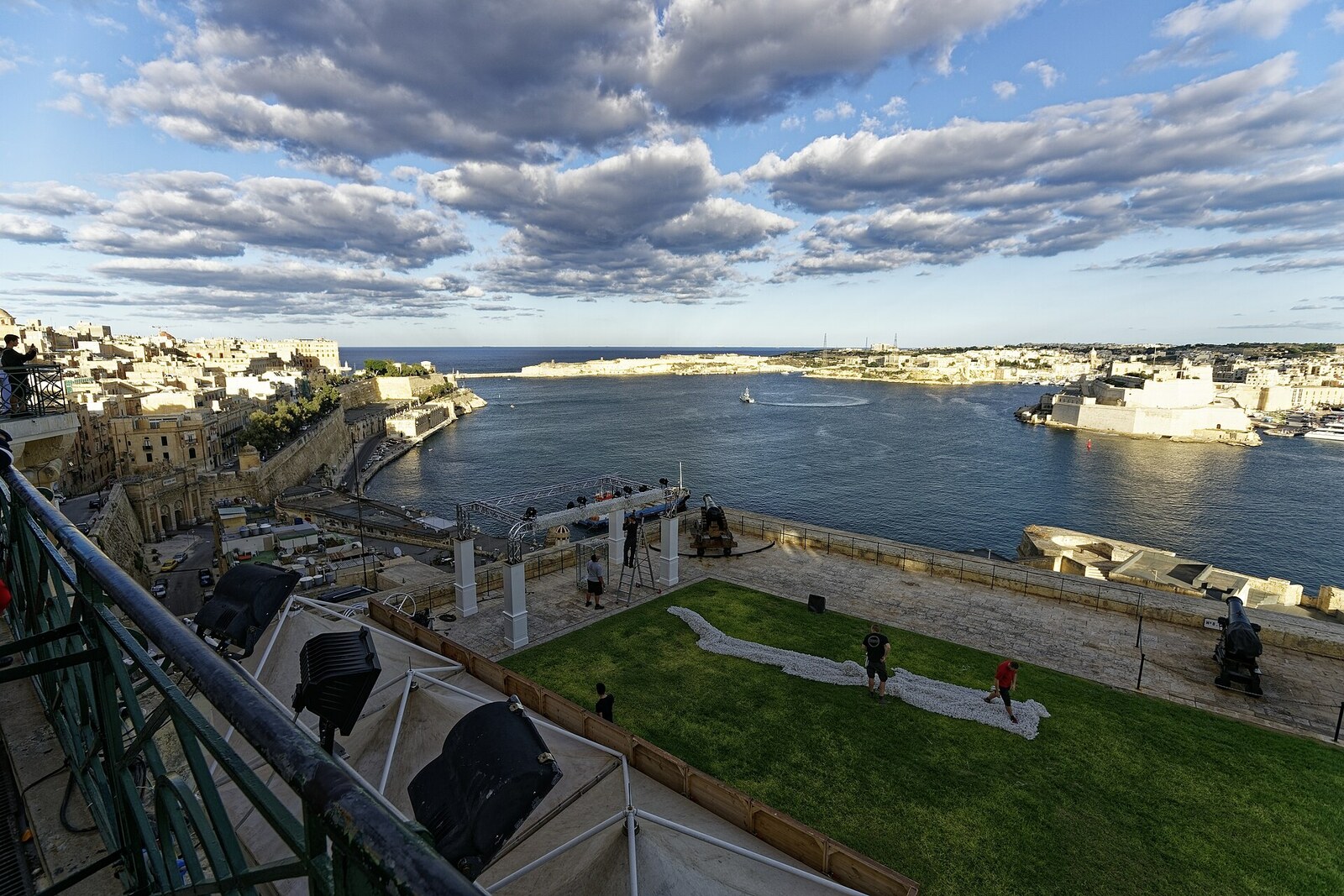
Look around first
What to notice
- Rows of stone arches
- Artillery platform
- Working replicas of old guns
- Grand Harbour
The story of the place
Rows of limestone arches frame the upper terrace of St Peter and St Paul Bastion, above Grand Harbour. An open gun platform survives below, while above, Italian knights rested and played. The arcade was built for them as a covered shelter; the roof disappeared, but the stone spans remained. This part of the fortifications was later opened as a public garden.
In fifteen sixty-five, Ottoman artillerymen stood on the site of Upper Barrakka Gardens. The peninsula where Valletta later rose was then called Mount Sciberras. It was not yet fortified, and the besiegers brought heavy bronze guns—basilisks—up here. From this height, they fired across Grand Harbour at Fort St Angelo.
The headquarters of Grand Master Jean Parisot de Valette was in that fort. He was determined to do one thing: hold out with the knights and the Maltese until help arrived. Losing the fort would open the harbour to the Ottoman army and deprive the defenders of their main stronghold. For several months, de Valette's men lived under fire from guns placed on this very promontory.
On the eighth of September, the Ottoman army lifted the siege and left. The very next year, de Valette began building a fortified city on the peninsula occupied by the enemy. Francesco Laparelli, the military engineer sent by the pope, assigned this edge a new role: St Peter and St Paul Bastion appeared here, with a broad artillery platform. Its guns could cover almost all of Grand Harbour. The height from which Ottoman artillerymen had shelled the knights was no longer to fall into the hands of the next besieger.
The bastion is arranged on two levels. The lower one was left to the guns, while Italian knights chose the upper one for rest and games. In sixteen sixty-one, the knight Flaminio Balbiani paid for a covered arcade for his companions. The Italian word “barrakka” meant a shelter or canopy, and the gardens retained their name from it. The roof was later dismantled, but the rows of stone arches remain. In eighteen twenty-four, the knights' former place of rest was opened as a public garden.
The lower platform was called the Saluting Battery because its crews greeted ships and important guests with volleys, marked military victories, a monarch's accession to the throne, or the monarch's death. But the most useful shot was intended for people the artillerymen might not even be able to see.
From that same year of eighteen twenty-four, the crew fired exactly at noon. Captains of vessels in the harbour set their marine chronometers by the volley. At sea, a navigator compared the time kept by the instrument with local solar time and calculated longitude from the difference. An error in the clock became an error on the map; for it, a captain risked the ship, the cargo, and the lives of the crew. So a blank charge from the bastion was part of the port's navigational equipment.
In November nineteen twenty-three, the gun was replaced by a telegraph signal from the Royal Observatory, Greenwich. The battery was closed for good in nineteen fifty-four, and the platform stood empty for several decades. A Maltese heritage preservation foundation restored it in two thousand four, and later installed working replicas of the old guns in order to preserve the original cannon.
Now the crew once again comes out to the parapet and fires a blank charge at noon and at four o'clock. The working guns here are modern replicas. The noon shot repeats the signal by which captains once checked their clocks before leaving Grand Harbour.
Useful on site
The garden has separate public opening arrangements; the Saluting Battery is open Monday to Saturday 10:00–16:30, last entry at 16:00. Demonstration firings are at 12:00 and 16:00.
Checked: June 24, 2026. Check the official source before visiting.The garden and the battery are on different levels; it is worth checking the ceremony and access to the platform separately.