 Guide On Map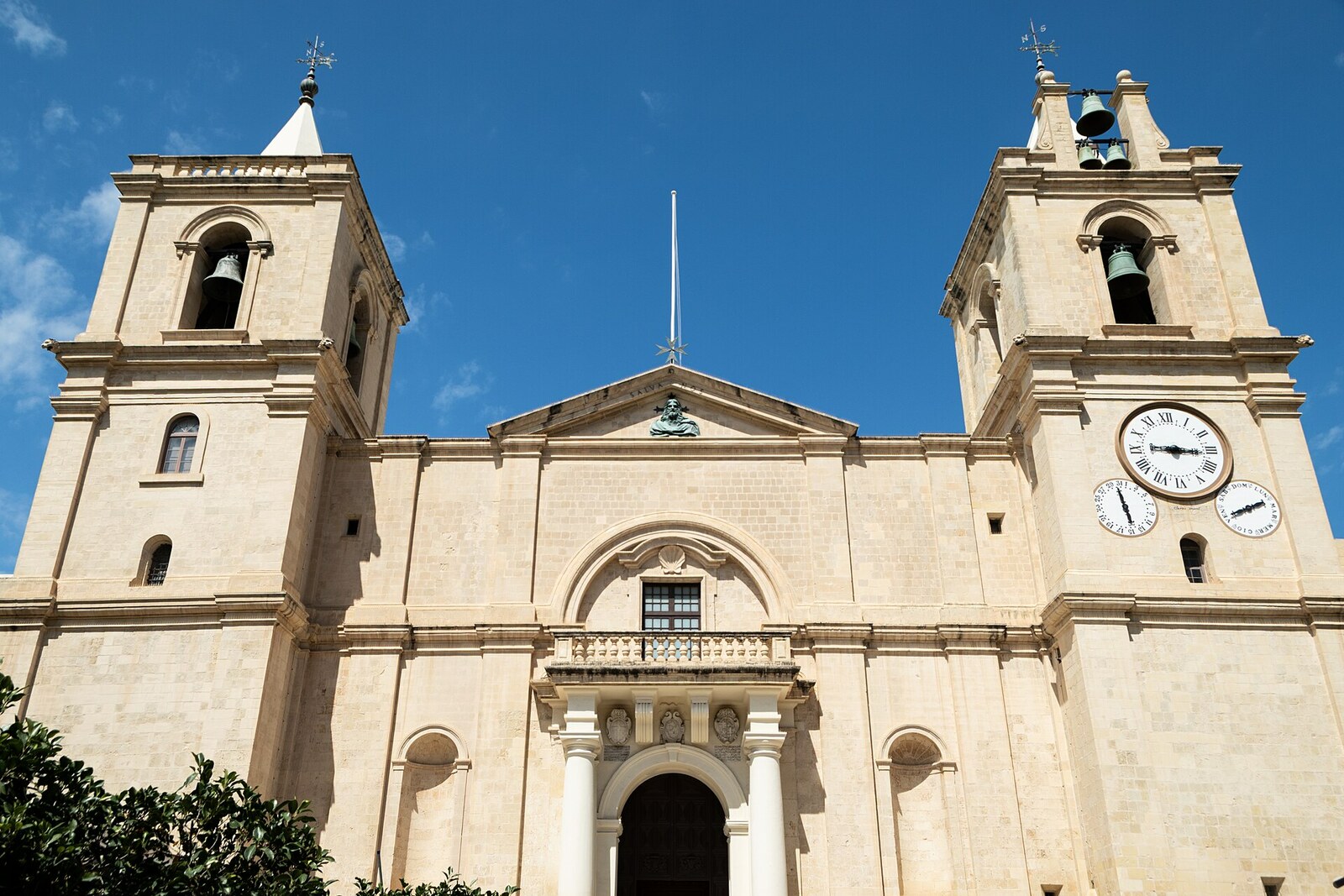
Look around first
What to notice
- The canvas “The Beheading of Saint John the Baptist”
- The red signature on the canvas
- The altar wall of the oratory
The story of the place
When Valletta was the knights' capital, this church gathered the entire order: services were held here, new brothers were received, and the dead were buried. Its co-cathedral status came later, and now the church shares the cathedral role with the church in Mdina; its name preserves the link with St John the Baptist, patron of the brotherhood that grew out of a Jerusalem hospital. Behind the altar wall, the oratory holds a vast canvas more than five meters wide, where the saint lies on the floor before the executioner, and the artist's name is hidden in the red trace of the wound.
On the first of December, sixteen oh eight, the knights gathered in the Oratory of St John's Co-Cathedral to expel from the order a man whose painting filled almost the entire altar wall before them. Michelangelo Merisi da Caravaggio himself was not in the room: the artist had already escaped from their prison and left Malta.
For the knights, this was their principal conventual church—the order's shared church, where they held services, received new brothers, and buried the dead. It became a co-cathedral later; now it shares the cathedral role with the cathedral in Mdina. The John in its name is St John the Baptist, the order's patron saint. The brotherhood grew out of a Jerusalem hospital dedicated to this saint, and then carried his name to Valletta. According to the Gospel account, St John the Baptist baptized Jesus and openly condemned the marriage of the ruler Herod Antipas, for which he was imprisoned and beheaded. It was this execution that Caravaggio painted for the local oratory.
In Malta, the artist was seeking a way out of his own death sentence. In May sixteen oh six, he killed Ranuccio Tomassoni in a sword fight in Rome and fled. The road home depended on a papal pardon, and that could be obtained only through powerful patrons. Caravaggio lived on commissions: while the Roman court demanded his head, cardinals and princes still wanted his paintings.
On the island, such a patron was Alof de Wignacourt, the order's Grand Master, who wanted to acquire the celebrated painter. The fugitive's past stood in the way of his admission, but Wignacourt secured special permission from the pope. On the fourteenth of July, sixteen oh eight, Caravaggio became a knight of obedience—a member of the order obliged to obey the Grand Master.
For the oratory, where young knights of obedience were instructed and initiations were held, the new knight painted “The Beheading of Saint John the Baptist.” The canvas, more than five meters wide, was installed here on the twenty-ninth of August, the feast day of the saint's execution. Caravaggio depicted not a completed execution, but the executioner's work: St John the Baptist still lies on the floor, while the killer reaches for a knife to finish cutting off his head. In the red paint flowing from the wound, the artist left his name. This is the only known painting signed by him.
By the time it was installed, Caravaggio's own position had already collapsed. Five weeks after he was invested, he took part in another armed fight; several knights were injured. The artist was imprisoned in Fort St Angelo. He was to be judged by his own brothers in the order, but Caravaggio escaped and reached Sicily.
Those who remained had to finish the case without the accused. At the December meeting in the oratory, he was declared in absentia a “rotten and stinking member” and stripped of his knighthood. Two years later, Caravaggio died without ever reaching Rome. His name was struck from the order; in the oratory, it remained at the feet of the beheaded patron saint—in the red trace on the painting before which he was expelled.
Useful on site
Monday–Saturday 09:00–16:45, last entry at 16:00; tourist entry is closed on Sundays and public holidays.
Checked: June 24, 2026. Check the official source before visiting.The painting and the crypt are inside; a separate entry is required for the visit, and it is best to check access rules in advance.