 Guide On Map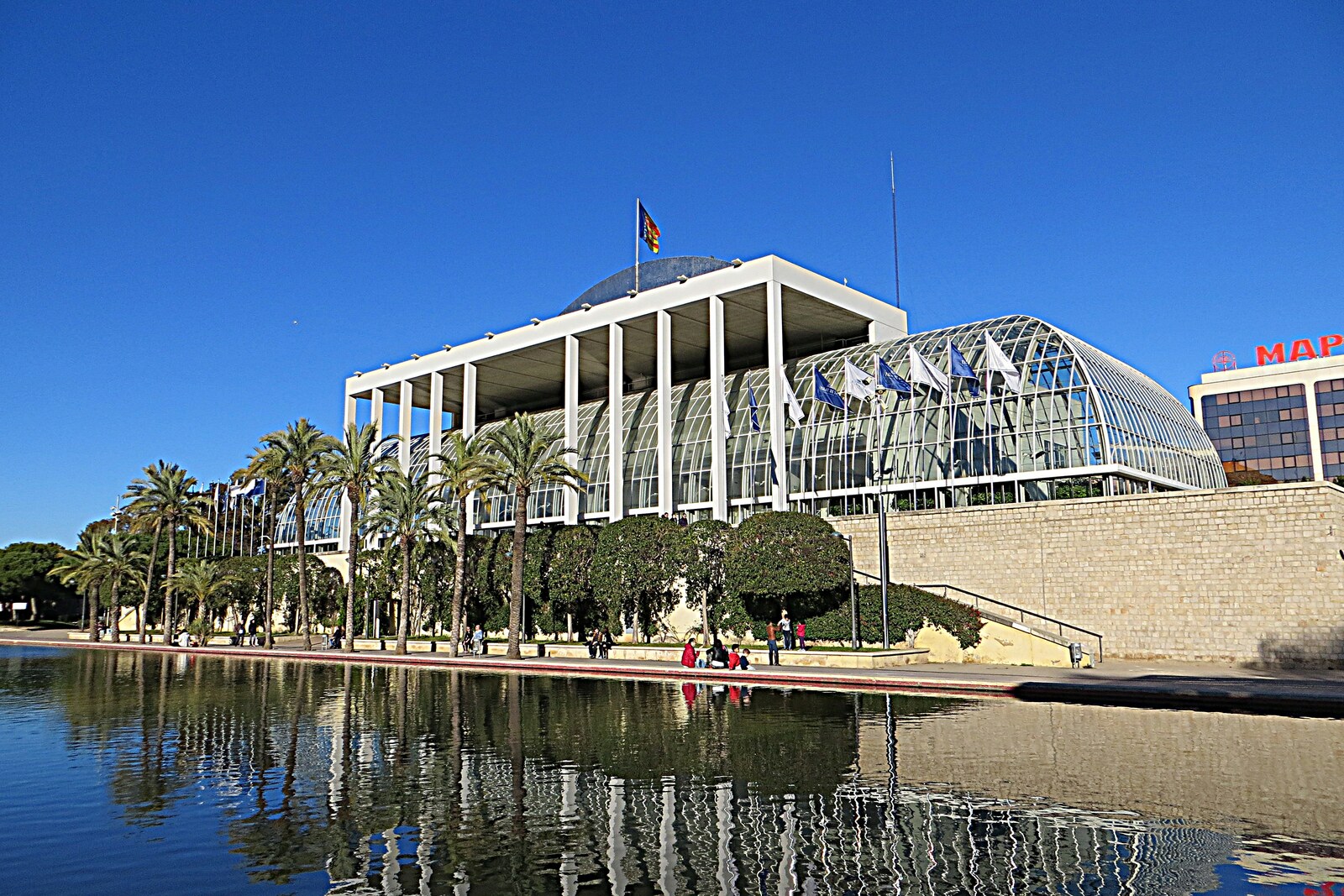
Look around first
What to notice
- Glass façade
- Broad foyer
- Main Hall
- Chamber hall
The story of the place
Along the former Turia River riverbed, the city assembled a chain of cultural buildings, and this concert hall was placed at the edge of the garden, where a neglected industrial outskirts once stretched. The glass façade faces the greenery, and the broad foyer links the park with the two halls inside. The Main Hall holds one thousand seven hundred eighty-one listeners, with a chamber hall beside it. The Valencia Orchestra works here permanently, while the program combines symphonic evenings and operas in concert performance.
On the evening of April twenty-fifth, nineteen eighty-seven, musicians first took the stage of the Main Hall at Palau de la Música. Their conductor, Manuel Galduf, had been seeking a permanent venue for the Valencia Orchestra. Now he had to find out whether the newly built hall was suitable for the work it had been built for.
The orchestra had existed since nineteen forty-three. The city council paid the musicians: they were to perform symphonic music regularly for the city. Yet they rehearsed in different venues and gave concerts, among other places, at Teatro Principal—a theater designed primarily for stage productions. The orchestra had already performed in France and England, but for forty-four years it had remained without its own concert hall in its home city. Galduf took charge of the ensemble in nineteen eighty-three and continued the struggle for a permanent stage.
Mayor Ricard Pérez Casado wanted to place a chain of cultural institutions along the riverbed turned into a garden. For Palau de la Música, city planners chose the vacant lot of La Azufrera at the edge of the garden—a part of what was then a neglected industrial outskirts. Architect José María García de Paredes was commissioned to fit a large symphonic hall here and achieve clear sound for one thousand seven hundred eighty-one seats. He turned the glass façade toward the garden: the broad foyer became a passage between the concert halls and the former riverbed.
About one thousand six hundred invited guests gathered for the opening. Galduf stood at the podium, the orchestra sat before him, and the National Choir of Spain performed with it. In Concierto de Aranjuez, guitarist Narciso Yepes had to carry the sound of a single instrument through a full orchestra and a huge hall. They listened critically: the orchestra's years of effort could have ended in an expensive venue unsuited to music.
The reviews were not unanimous. One critic heard warm sound and a clear separation of instruments; another thought the hall amplified echoes and gave some passages unnecessary heaviness. But there was no acoustic failure. The first evening was followed by a series of sixty concerts, and the Valencia Orchestra stopped moving between other venues. Galduf remained its chief conductor until nineteen ninety-seven and conducted one hundred seventy concerts here.
Behind the glass foyer, the Valencia Orchestra still has its permanent stage. The Main Hall hosts symphonic concerts and operas without sets, in concert performance, while a chamber hall operates next door. The posters change, but the ensemble that tested this venue with its first notes still comes here to work.
Useful on site
According to the official source, ticket offices are open Tuesday through Sunday from 10:00 to 14:00 and from 17:00 to 21:30; closed Monday; check before integration, because the tourist source gives a different interval.
Checked: June 28, 2026. Check the official source before visiting.The stop's history can be understood from outside; a concert and access to the halls require separate planning based on the current program.