 Guide On Map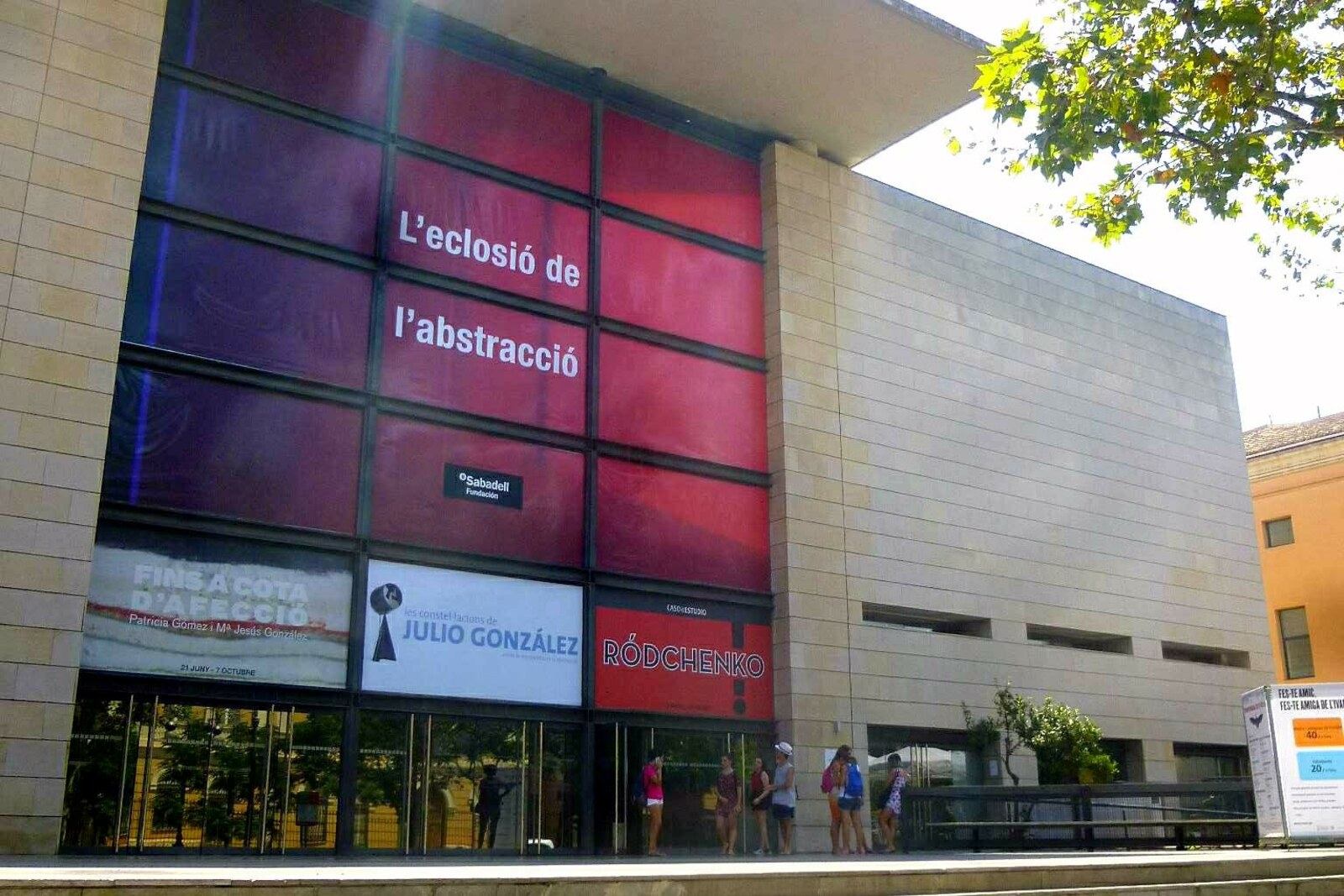
Look around first
What to notice
- The museum's broad façade
- The inscription “Centre Julio González”
- The main entrance
- The building's rectangular volumes
The story of the place
The broad façade with rectangular volumes leads into the galleries of IVAM – Valencian Institute of Modern Art, where art of the twentieth and twenty-first centuries is preserved and studied, and where exhibitions, lectures, and workshops are held. Above the main entrance, the name Centre Julio González remains. Inside, a permanent gallery has been set aside for his sculptures: rods and sheets of metal are joined in them so that empty space, too, becomes part of the figure.
In late February nineteen eighty-five, Carmen Martínez and Viviane Grimminger came to Valencia to inspect the site of a museum project that did not yet exist. Construction on Guillem de Castro Street had not even begun. But the two women already had what a museum could be created around: hundreds of works by the González family.
Martínez and Grimminger were friends and heirs of the painter Roberta González. After the death of her father, the sculptor Julio González, Roberta divided her time between her own painting and arranging his retrospectives and donations to museums. When she died in nineteen seventy-six, her friends continued the work she had begun.
On the other side of the negotiations were Ciprià Císcar, the regional minister of culture, who was pushing to establish a museum of modern art in Valencia, and the art historian Tomás Llorens, who had been commissioned to form its collection. In June nineteen eighty-five, they signed an agreement in Paris: the administration bought one part of the collection and received the other as a gift. The purchase cost four hundred seventeen million pesetas—most of the five hundred million allocated that year to acquire works of art.
The heirs set precise conditions. The works could not be sold, and the main part of the collection had to remain permanently in specially designated galleries. So the future museum received its contents and its name before builders raised its walls: the new venue was immediately named Centre Julio González.
González himself was not Valencian, and he died forty-three years before this agreement. He grew up in a family of Barcelona metalworkers. Iron was initially both his craft and his livelihood: Julio worked in his father's workshop, practiced jewelry-making, and after the First World War worked at a French enterprise, where he mastered oxyacetylene welding. Later, he began joining rods and sheets of metal so that empty space remained part of the figure. This experience turned the former craftsman into one of the leading sculptors of the European avant-garde.
At the end of nineteen eighty-six, Corts Valencianes legally established IVAM – Valencian Institute of Modern Art. On February eighteenth, nineteen eighty-nine, its director Carmen Alborch opened the new building. Among the first exhibitions was the González collection itself, for which Martínez and Grimminger had come to inspect the still-empty project.
Today, art of the twentieth and twenty-first centuries is preserved and studied here, and temporary exhibitions, lectures, and workshops are held. Above the entrance, the name “Centre Julio González” remains, and inside there is a permanent gallery for his works: the very separate space that the heirs required to be included before construction began.
Useful on site
The façade is accessible regardless of the exhibitions, but the González collection and temporary projects can be seen only by visiting the museum. Before you come, check which galleries are open.