 Guide On Map
Sidi Bou Said: the white hill from station to sea
From the station through the old village to the lighthouse and marina
Guide On Map on your phone
Open the walk like a regular app
It takes about 10 seconds to install. No app store needed.
The whole path
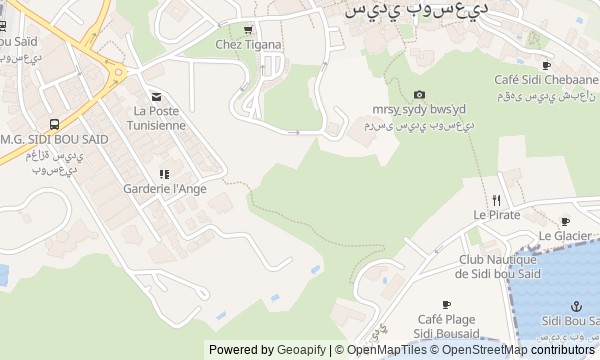
Route map
About the walk
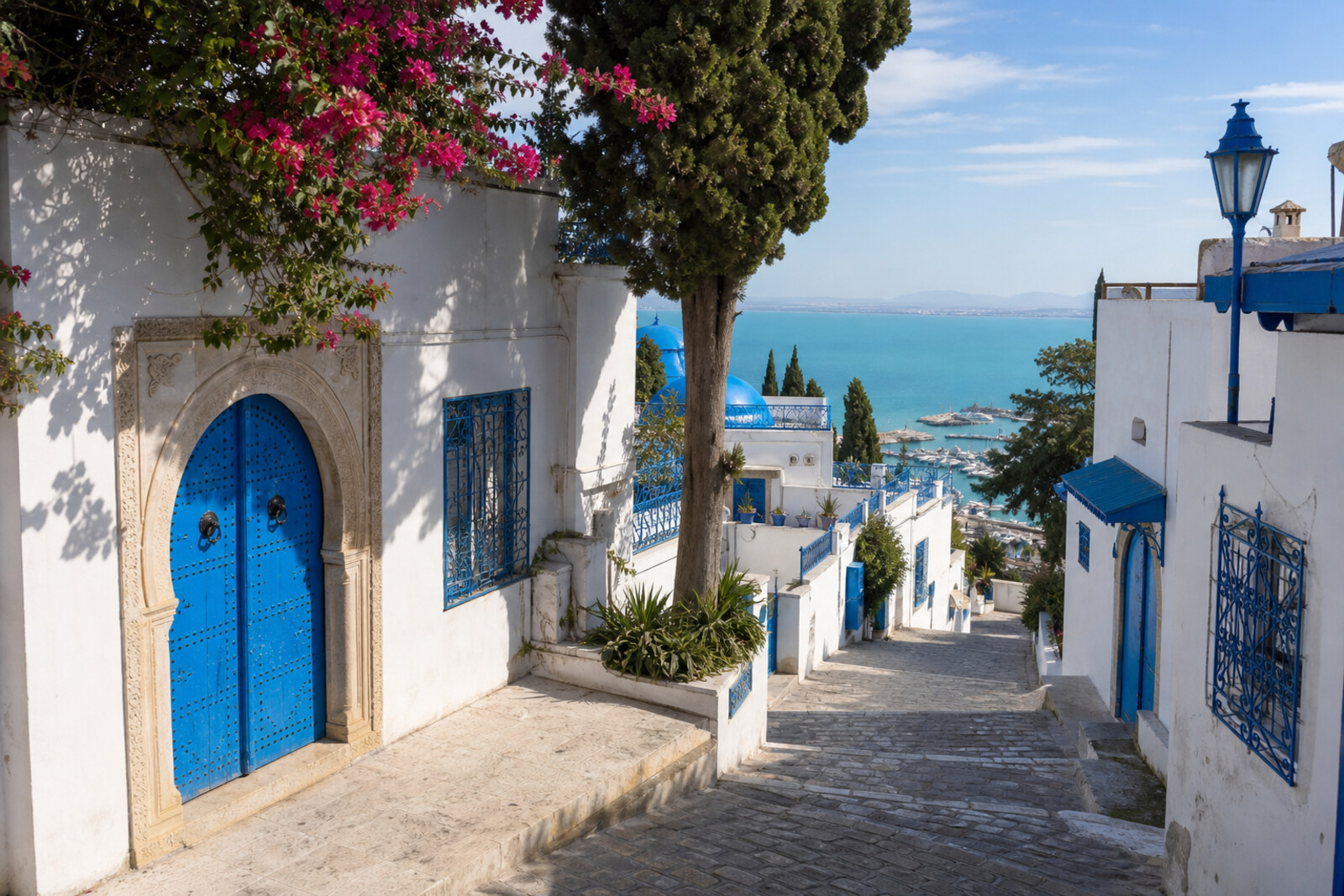
You will begin by the tracks at the foot of the hill, then climb the main shopping street toward old Sidi Bou Said. Ahead are a broad staircase with cafés, a family home where the museum has not pushed out its residents, and a palace above the sea. From the upper terraces, you will reach the low lighthouse, then head down to the yacht berths.
First comes an unbroken row of whitewashed facades. Then you will learn why owners were forbidden to alter their own homes, why an artist needed two versions of the same café, and how musicians began recording what had once been passed on by ear. The answers appear only within the stops. The story stays calm and specific, without resort-town excitement.
By the end, you will be able to point out what Sidi Bou Said preserved almost unchanged and what it demolished entirely—from the whitewashed facades above to the place where stilt houses once stood by the water.
Why this order
The station comes first because the tracks reach the foot of the hill, so from there you will head upward. Habib Thameur Street naturally continues the climb and brings the decree-protected facades into close view; it also leads to the mosque and the café on the broad staircase. After the public threshold by the shrine, you will enter Dar El Annabi, a private home where rooms behind the protected facade reveal a museum alongside everyday living. Next comes Ennejma Ezzahra: from a family home, you move to a residence where private work became the foundation of a music center. This also continues the d'Erlanger thread begun on the shopping street. Then you reach the terraces by the lighthouse, where the hill's height helped sailors. The final descent to the marina shows the opposite way of treating a place: facades were preserved above, while stilt houses below were demolished for the harbor.
Those who want to understand how Sidi Bou Said works, not just photograph its facades People who enjoy stories about homes, painting, and music Those who like a route with a climb up a hill and a finish by the water
Those expecting a level walk without climbs or descents Those uninterested in domestic interiors and music archives Those looking for a short overview without detailed stories
Before you go
Wear shoes with good grip and bring water: stone on the climbs can be slippery, and open stretches offer almost no protection from the sun. Check access to Dar El Annabi and Ennejma Ezzahra separately before setting out—these are independent visits, not guaranteed by the route itself. At cafés, do not block the passage on the shared staircase, and ask about the rules on site. By the lighthouse, stay on public terraces; at the marina, do not enter closed berths, service buildings, or crew work areas.
When to go
It is easiest to start in the first half of the day, so you can make the main climb before the heat becomes intense and leave time for the palace or house museum. A version with exterior viewing only is noticeably shorter; interior visits, tea at a café, and pauses on the terraces can easily turn the route into a walk lasting most of the day. The final descent is best done in good daylight.
Backup plan
If Dar El Annabi is closed, take in its restrained street facade and keep the theme of the private home alive through neighboring doors, grilles, and blank walls—do not try to look into courtyards. If Ennejma Ezzahra is unavailable, walk around the accessible outer edge of the estate and continue to the lighthouse: the story of preserving music still works without going inside, though the interiors will remain unseen. If the café is closed, linger at the foot of the staircase without obstructing the passage. If access through the marina is restricted, watch the breakwaters and masts only from the open waterfront.
Route conditions
Elevation. Ascent — 60 m; descent — 121 m
OpenStreetMap extract of June 18, 2026: database data, not a check on the ground. Data © OpenStreetMap contributors, ODbL licence
Walk plan
Open in maps ↗- 1
Sidi Bou Said Station
Here you will understand how a railway entrance came to be at the foot of the hill. - 2
Habib Thameur Street
Here you will see how a legal ban fixed the layout of the main ascent and its façades. - 3
Café des Nattes
This stop connects the staircase to the sanctuary with a painting made after the artist’s short trip. - 4
Dar El Annabi
This private museum shows a family home where the public display has not displaced everyday life. - 5
Ennejma Ezzahra
Here the route will reveal how a private residence became a workplace for preserving malouf. - 6
Viewing Terraces by Sidi Bou Said Lighthouse
This stop explains why a sea marker on a high headland needed a short tower. - 7
Sidi Bou Said Marina
The finale will compare the present-day berths with the completely vanished coastal buildings.
Route features
Everything you need stays in the browser
Progress, saves and your trip plan are stored on this device.
Add Guide On Map to your home screen so the walk opens outside the browser.
How we handle sources, maps and corrections: our editorial standards