 Guide On Map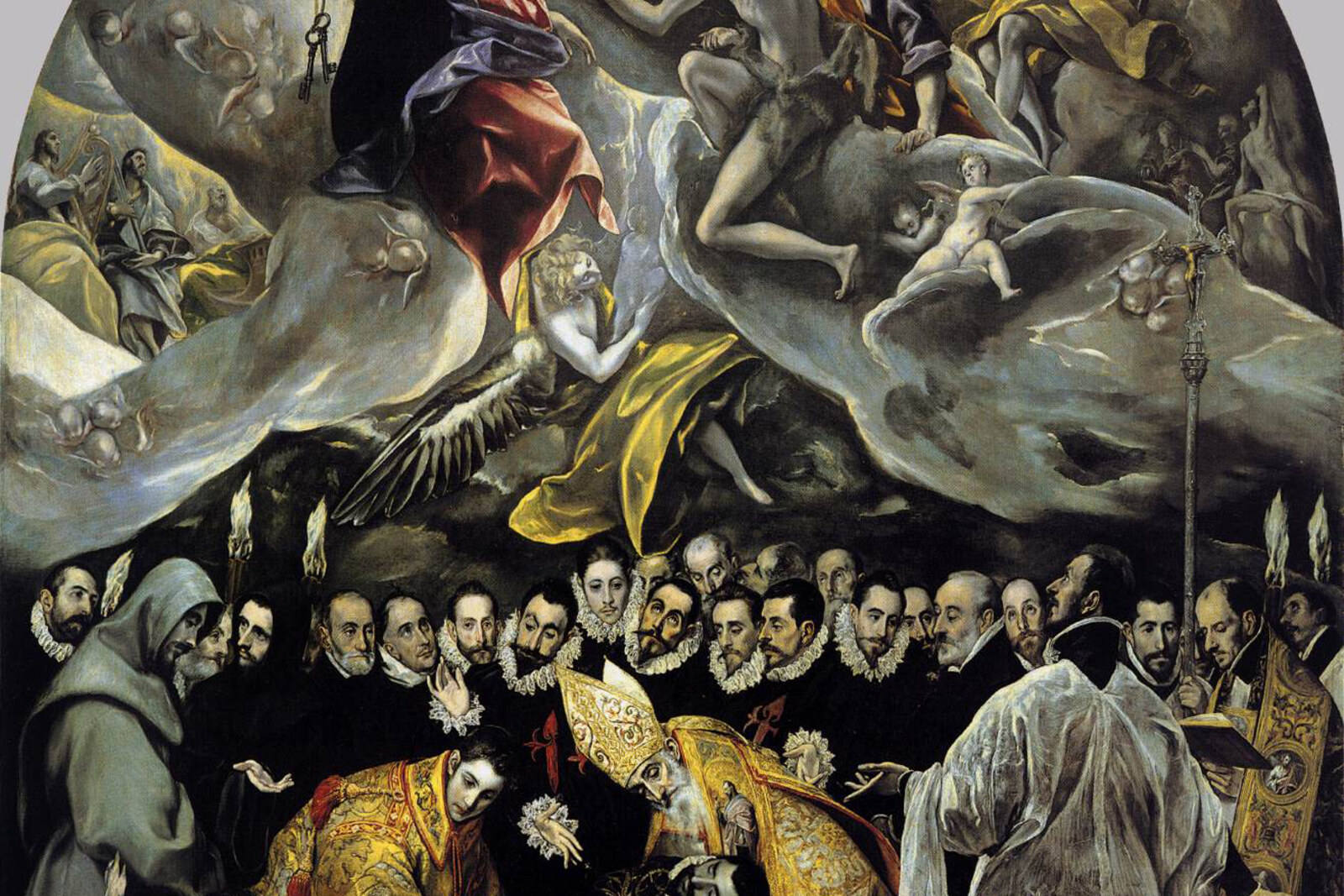
Look around first
What to notice
- El Greco’s painting above the grave
- The grave of Gonzalo Ruiz de Toledo
- The Latin epitaph
- The image of Saint Thomas the Apostle on the main altar
The story of the place
In fifteen sixty-four, the parish priest of Santo Tomé, Andrés Núñez de Madrid, began suing the residents of the town of Orgaz. El Greco’s painting, which now brings visitors here, did not yet exist. The priest sought to make the residents resume the old payments to his parish.
This obligation had been left to them by Gonzalo Ruiz de Toledo, lord of Orgaz and a benefactor of Santo Tomé. At the beginning of the fourteenth century, he paid for a major rebuilding of the church and chose a place here for his grave—in the last and most modest chapel. Under his will, Orgaz was to send two rams, sixteen chickens, two wineskins of wine, two bundles of firewood, and eight hundred maravedís every year. Everything was intended for the support of the priests and aid to the parish poor.
Gonzalo died in thirteen twenty-three, while the work was still under way. His body was temporarily placed in the neighboring Church of Saint Stephen at the Augustinian monastery, then moved here four years later. According to parish tradition, Saint Augustine and Saint Stephen appeared during the funeral service and lowered the deceased man into the grave themselves. Their presence in the legend is connected with Gonzalo’s act: at his own expense, he built the Church of Saint Stephen for the Augustinians. This is a tradition; the Church recognized the miracle only in fifteen eighty-three.
By the sixteenth century, the residents of Orgaz had stopped carrying out the will of their former lord. Andrés Núñez pursued the case for five years at the Royal Chancery of Valladolid and won in fifteen sixty-nine. After the trial, he commissioned a Latin epitaph: it recorded both the story of the saints and a reminder of the payments recovered. When Church judges recognized the miracle, the parish priest decided to place an image of it above the grave as well.
In March fifteen eighty-six, he signed a contract with Domenikos Theotokopoulos (El Greco), as the people of Toledo called him. The artist lived in the same parish, a few steps from the church. The client listed in detail what the painting was to show: priests performing the burial rite, Augustine holding the deceased by the shoulders, Stephen by the feet, witnesses standing around them, and heaven opening above them.
El Greco undertook to pay for his own work, the canvas, and the paints. The advance was one hundred ducats; the artist was promised the rest after the painting was completed and appraised. By the beginning of fifteen eighty-eight, the painting was finished. The appraisers set its price at one thousand two hundred ducats, but the parish priest considered it excessive. Now El Greco went to court. His petition says that he had spent much time and his own money on the painting, and that the delayed payment was causing him harm.
On May thirtieth, fifteen eighty-eight, the council of the Archbishop of Toledo ordered the parish to pay the artist the full appraised amount. The settlement took more than the nine days set by the court: El Greco received part of the money in silver and coin, and the parish transferred part directly to his creditors. The latest receipts date from fifteen eighty-nine.
The man in armor in the lower part of the painting is Gonzalo Ruiz de Toledo. He is often called the Count of Orgaz, although during his lifetime he was lord of Orgaz; the comital title came to his family later. The painting still hangs above his grave, beside the epitaph that preserves the story of the first lawsuit.
The full dedication of Santo Tomé is to Saint Thomas the Apostle. The main altar depicts the episode that explains its name: Thomas believed in Christ’s resurrection when he saw his wounds. Since nineteen seventy-two, a separate museum entrance has led to El Greco’s painting, arranged so that the flow of visitors does not interfere with parish services. Beneath the painting remain Gonzalo’s grave and the Latin inscription, which records side by side the story of the miraculous burial and the lawsuit over rams, chickens, wine, firewood, and eight hundred maravedís.
Useful on site
Daily 10:00–18:45; individual ticket 4 euros; the ticket office closes 10 minutes before closing time.
Checked: June 24, 2026. Check the official source before visiting.The main reason to enter is the painting itself; view it in sections, then step back after looking closely so as not to block the view for others.