 Guide On Map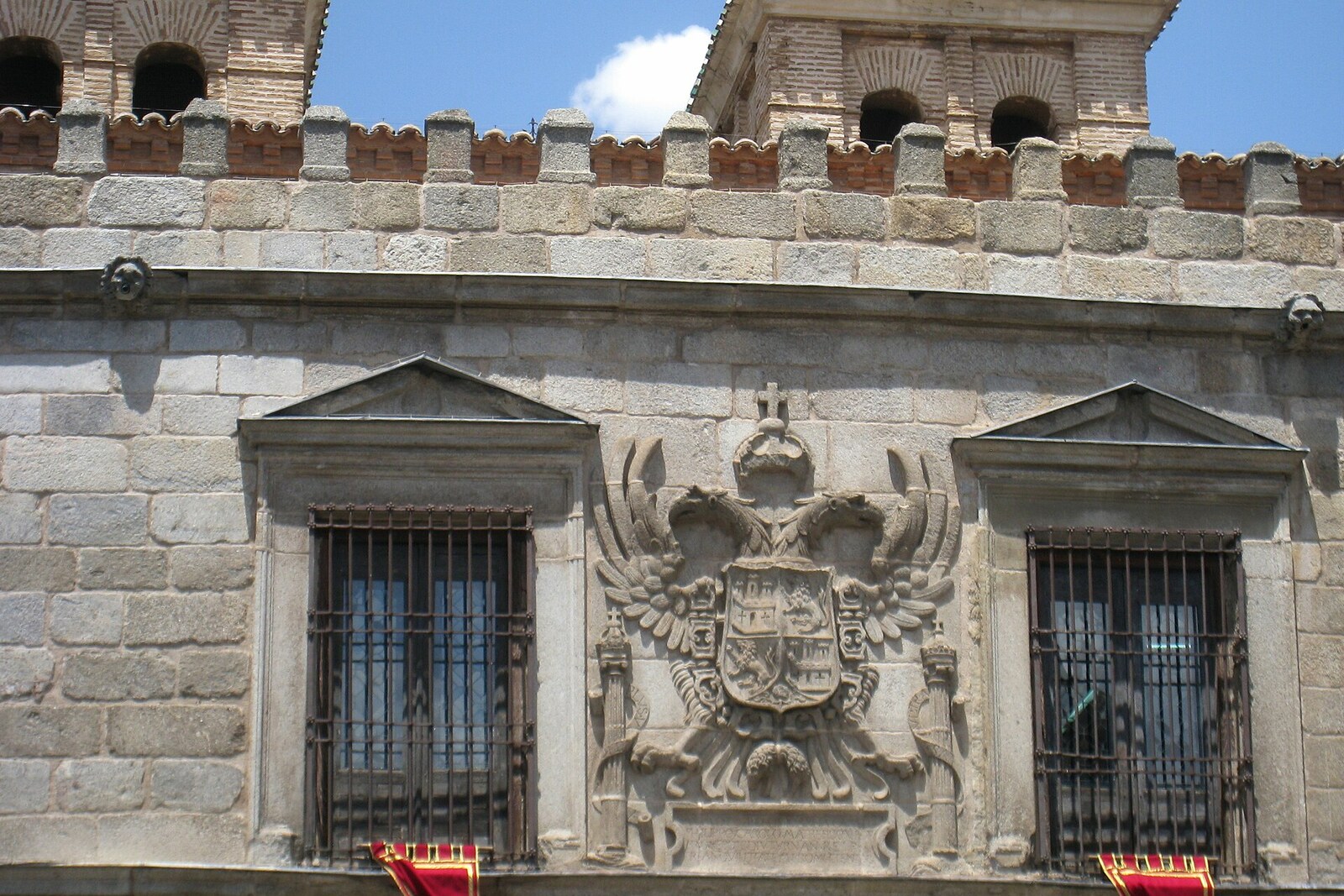
Look around first
What to notice
- Double-headed eagle
- Enclosed courtyard between the arches
- Granite slab with an inscription
The story of the place
Beyond the outer arch is an entire checkpoint corridor: a ceremonial facade with a double-headed eagle, an enclosed courtyard, and a second passageway. Carts, livestock, and travelers were stopped in this courtyard, incoming goods were inspected, and a fee was charged for entering. The city council replaced the dangerously dilapidated gate structure with a new double passage. Inside, a granite slab survives concerning those allowed through without payment; everyone else was held up here.
The name Bisagra has nothing to do with door hinges. It is derived from the Arabic “Bab Shaqra,” meaning “gate of Sagra,” the plain north of Toledo. The road to the city approached from there through the Tagus valley, which is why the main entrance was built on this side of the wall.
Its present appearance dates from the sixteenth century. The old gates were threatening to collapse, so the city council rebuilt them to a design by Alonso de Covarrubias. On the road side, this created a triumphal facade with the double-headed eagle of Emperor Charles the Fifth; behind it lay an enclosed courtyard and another arch. The two barriers were needed for more than defense. Here, people and animals were held up, incoming goods were inspected, and portazgo—a duty for entering and trading in the city—was collected.
In eleven eighty, Alfonso VIII, King of Castile, decided where half the revenue from this duty should go. His kingdom was at war with the Muslim states of the Iberian Peninsula, and people on both sides of the border were taken captive. Their release usually depended on ransom: if a family or benefactors could not raise the money, captivity could last for years.
Alfonso assigned the gate's revenue to the Toledo hospital of the Order of Santiago. A medieval hospital did more than provide treatment: this institution was created, among other purposes, to ransom captive Christians. The royal charter valued half of the local portazgo at three hundred gold coins. At the time, ten coins were allocated for each captive person—so the levy at Puerta de Bisagra was expected to buy freedom for about thirty people a year. This was a calculation, not a surviving list of those freed each year: documents do not name most of them. But the hospital's administrators were expressly forbidden to spend this money on other needs.
Eleven years later, Alfonso reduced the number of people exempt from the duty in order to increase the revenue. Later kings reaffirmed the grant, and ransoming captives remained the hospital's main activity until the end of the fifteenth century. Thus, the routine inspection of carts at the northern entrance kept adding money to a very specific fund for decades: it paid for bringing people back from captivity.
Inside the gate, a granite slab survives with an inscription translated as: “Exempt from portazgo are the inhabitants of Toledo, its mountains, and its dependent places.” It lists those whom the collector was to let through without payment. Everyone else was stopped here.
Useful on site
Exterior viewing is available around the clock; the upgraded approach through La Vega Park opened 19 June 2026.
Checked: June 24, 2026. Check the official source before visiting.The main story can be read from outside and while passing through the gate; for an overall view, step back from the facade without obstructing traffic.