 Guide On Map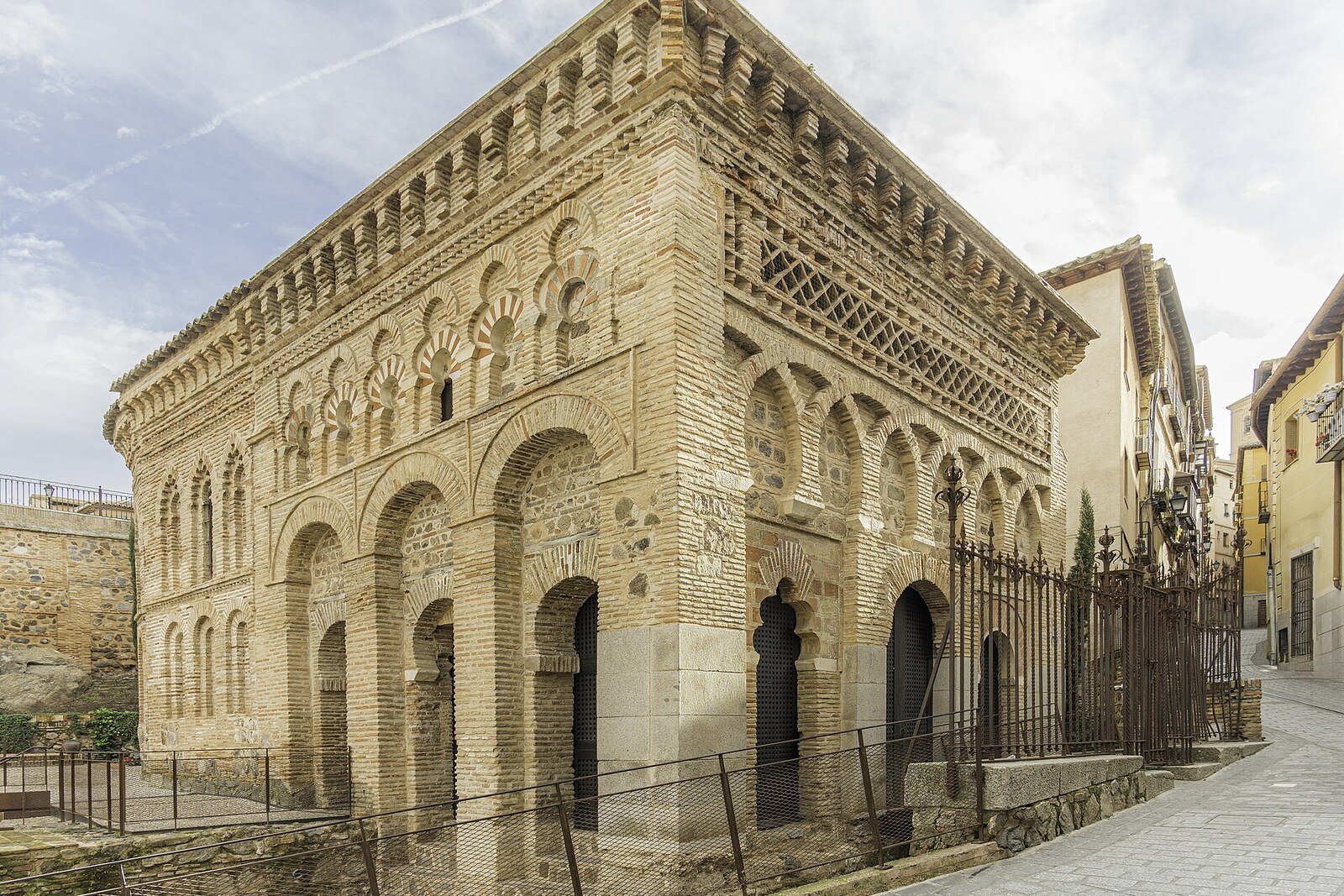
Look around first
What to notice
- Kufic brick inscription
- Trefoil arches
- Lattice of bricks laid on edge
- White stone in the pavement
The story of the place
Beneath its current Christian name, the small mosque of Bab al-Mardum survives, named after the neighboring Walled-Up Gate. Four old columns divide its square prayer hall into nine bays, each topped by its own vault. After it was transferred to the Knights Hospitaller, an altar section with a semicircular apse was added to the hall, but the old space was not rebuilt. That is why the Islamic hall here continues into a Christian altar.
In February eighteen ninety-nine, workers were repairing the caretaker’s rooms, which had been added to the old chapel. Beneath a thick limewash coating, an Arabic brick pattern appeared. They continued clearing it away and uncovered an entire façade: trefoil arches, a lattice of bricks laid on edge, and a long inscription in angular Kufic letters.
No one had budgeted money for this discovery. The estimate covered an ordinary repair and was nearly exhausted. Fully uncovering the façade meant dismantling the caretaker’s home and building him another one, then buying out the neighboring private additions that rested against the ancient walls. Toledo’s monument preservation commission began requesting funds from the province and the government. Its members sought protection for the building before another alteration covered or damaged what had been found.
The inscription revealed what had not previously been known for certain. At the end of nine ninety-nine, a wealthy man from Toledo, Ahmad ibn Hadidi, paid from his own funds for the construction of this mosque, expecting to receive a reward from God in return. What Ahmad himself did is unknown; his family later gave Toledo’s rulers judges and ministers. Musa ibn Ali and Sa'ada directed the work. Their names were not carved on a separate slab: the builders made the text from the same bricks as the façade.
The mosque was called Bab al-Mardum, after the neighboring city gate, whose name means “the Walled-Up Gate.” Four reused columns divided the prayer hall into nine bays with different vaults. In the early eleven eighties, the Archbishop of Toledo transferred the former mosque to the Knights Hospitaller. They preserved the square hall but added to it a Christian altar extension with a semicircular apse. This created the arrangement that remains here today: the Islamic prayer hall ends in a Christian altar.
After the discovery, the commission sent drawings, photographs, and requests for protection to Madrid’s academies. In March nineteen hundred, the queen regent Maria Christina, who ruled the country during the minority of Alfonso XIII, approved national monument status. For the workers, the clearing began with whitewash in the caretaker’s room; for Ahmad ibn Hadidi, it ended with his name being restored after nine centuries. The brick line still runs along the upper part of the façade.
The modern name is explained by another story connected with a hidden wall. Cristo de la Luz means “Christ of the Light.” According to a later Christian legend, in ten eighty-five King Alfonso VI, having just taken Toledo, rode past the mosque. His horse dropped to its knees and refused to go farther. The king’s men dismantled part of the wall and found a crucifix before which a lamp was still burning: supposedly, Christians had hidden them there before the Muslim conquest several centuries earlier.
There is no documentary confirmation of this scene. Moreover, specialists date the wooden figure of Christ associated with the legend to the fourteenth century. It is now kept in the city’s Museum of Santa Cruz. The mosque retains the name Cristo de la Luz and a white stone in the pavement marking the place where, according to the legend, the royal horse knelt.
Useful on site
Daily 10:00–18:45; individual ticket 4 euros; the ticket office closes 10 minutes before closing time.
Checked: June 24, 2026. Check the official source before visiting.The inscription can be viewed from outside, but the difference between the building’s two parts becomes clear only through a careful look at the interior.