 Guide On Map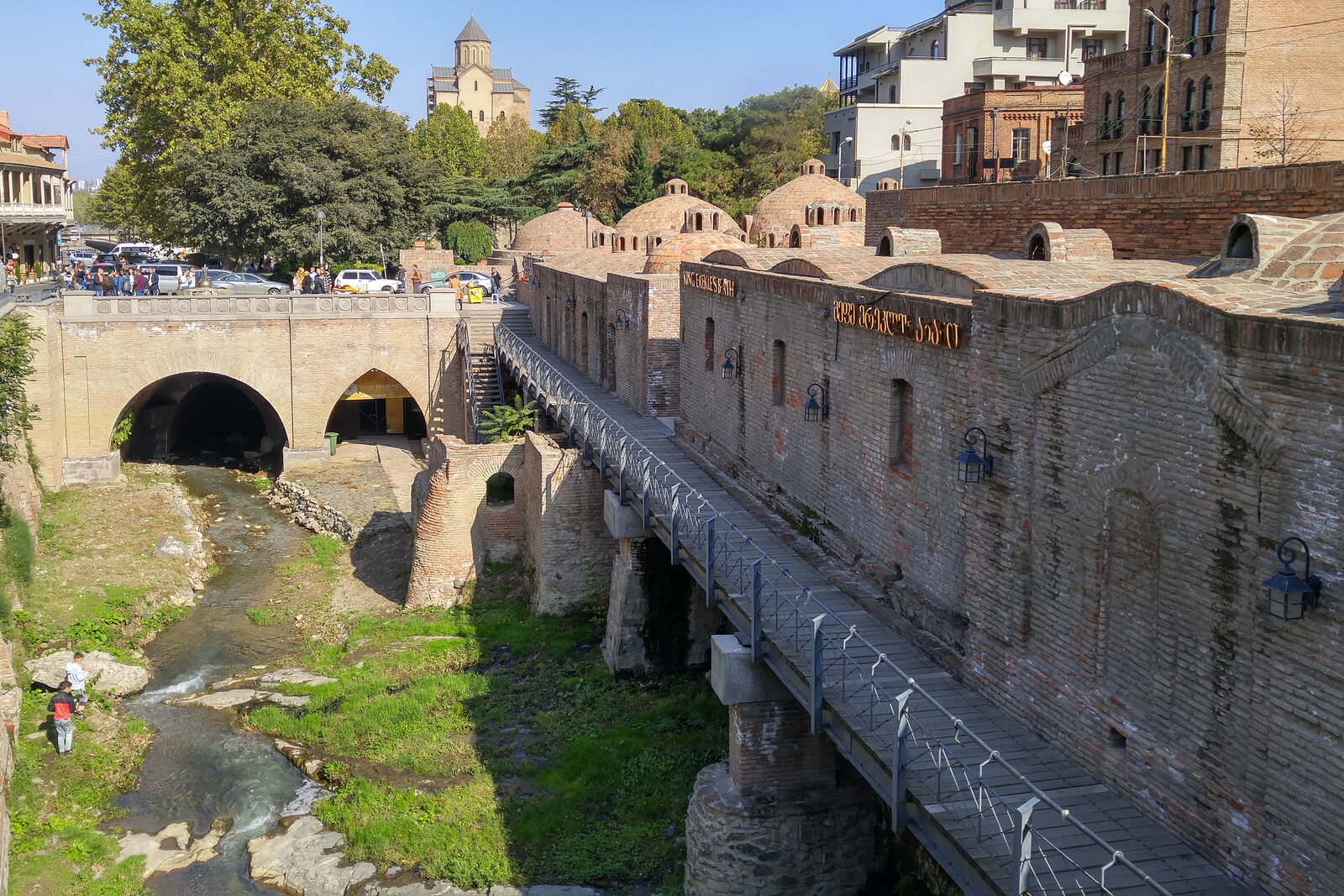
Look around first
What to notice
- The bed of Tsavkisistskali
- The waterfall
- The gorge’s rock walls
- The path above the river
The story of the place
Leghvtakhevi means “Fig Gorge”: it was named after the fig trees that grew here. Old sources also mention another name—Dabakhana, meaning a leather workshop. It explains why people occupied this narrow bank.
Tanners set up workshops on the city’s outskirts, near flowing water. Tsavkisistskali then marked the boundary of built-up Tbilisi, while the sulfur-alkaline springs opening into the gorge helped process hides. That is how the trade came to be here, between the river and the baths.
Dabakhana usually occupied a two-story building. Hides were worked on the ground floor, while a supply of finished leather was kept upstairs. The hides were cleaned, their hair removed with a curved iron knife, then tanned, dried, softened, and dyed. Different operations required lime, ash, salt, alum, bran, and oak bark. Until all this work was complete, the raw material brought the tanner no money. Other workshops and trading dukans accepted the finished leather—only then did the master receive payment for his goods.
It was the tanners who turned the name of the workshop into the name of an entire part of the gorge. Their trade is also confirmed by old photographs of Dabakhana: a leather factory and separate workshops with shutters stood on the bank.
The waterfall ahead is formed by Tsavkisistskali, descending from the direction of the Tbilisi Botanical Garden; sulfur water emerged from local springs farther down the gorge. There are no tanneries left on the present-day path between the waterfall and the baths. The river remains, and on old maps and in descriptions, the second name—Dabakhana—still appears alongside Leghvtakhevi.
Useful on site
An open city passage to the gorge and waterfall; after rain, repairs, crowds, or temporary restrictions, access may change.
Checked: June 27, 2026. Check the official source before visiting.Stay on the open path, step carefully on wet stone, and do not go beyond temporary barriers.