 Guide On Map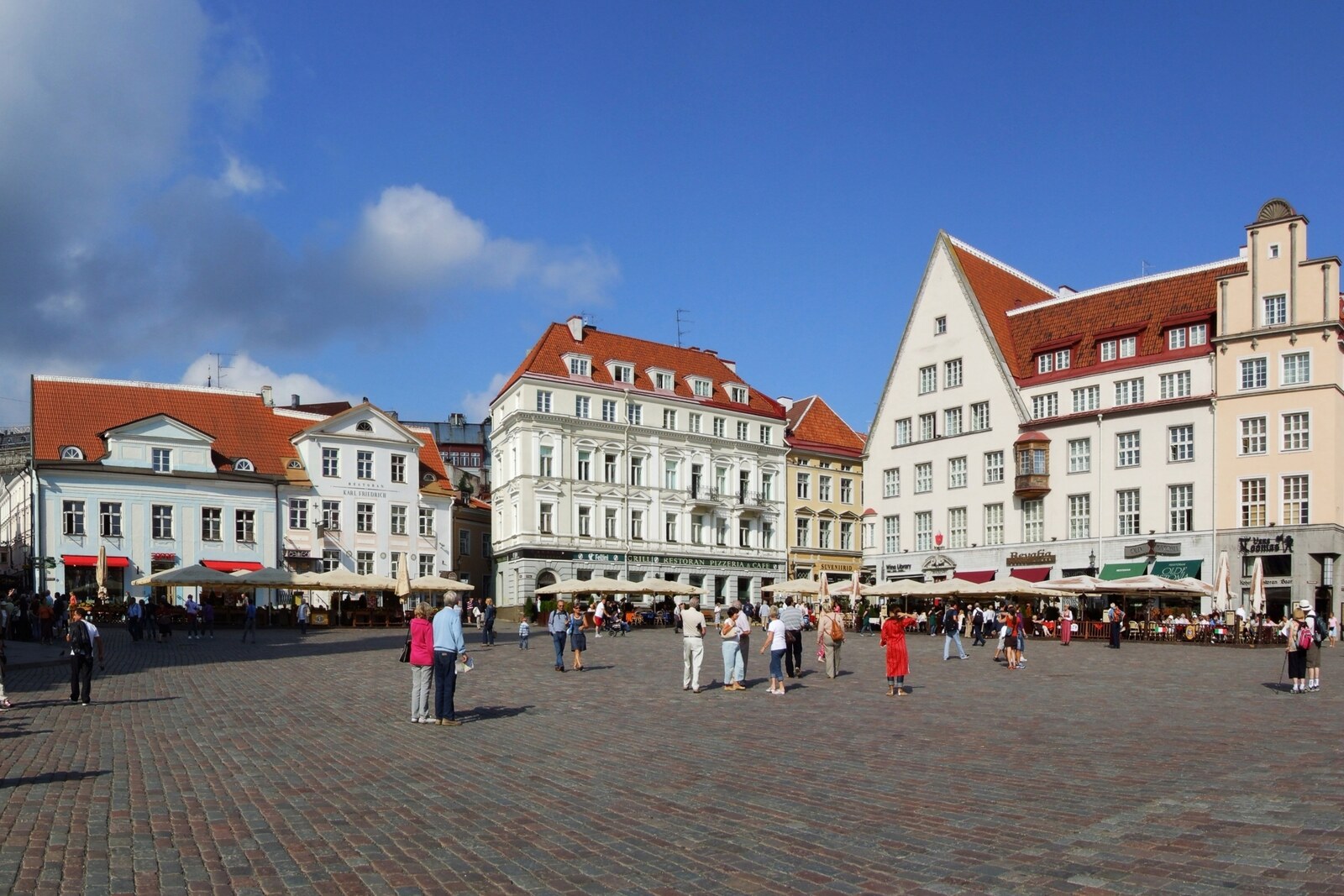
Look around first
What to notice
- The Gothic facade of Tallinn Town Hall
- The courtroom
- The square's open space
The story of the place
Town Hall Square hosts fairs, concerts, and city celebrations because, as early as the Middle Ages, the open space in front of Tallinn Town Hall was the main market of the Lower Town. Goods were sold and weighed here, and beyond the square's southern edge, the councilmen—members of the city council—settled disputes and passed sentences. Tallinn Town Hall gave the square its present name.
On January twenty-fourth, fifteen thirty-five, Nikolai, a paver, came here. He earned his living laying stone on the city's streets and sought a trial against Johann von Üxküll, the owner of Riisipere Manor. Üxküll had killed Nikolai's brother, Mattis of Suurepere, a peasant dependent on him.
Later retellings describe Mattis as a fugitive who took refuge in the city. The surviving court records do not confirm this: it is unknown where the killing took place or what started the quarrel. But what Üxküll himself admitted is known. He ordered Mattis stripped, shackled, and left out in the frost for two nights. When the prisoner's legs froze, the manor owner beat his feet and head with a log until he died.
Nikolai demanded that Üxküll be deprived of his city safe-conduct certificate. Such a certificate temporarily guaranteed an accused person's safety and allowed him to negotiate compensation. The council granted the paver's request. Üxküll came to the city nonetheless, and the judicial vogt—an official responsible for criminal cases—took him into custody.
At Tallinn Town Hall, the manor owner confessed without torture, then tried to settle the matter by payment. He offered the city's almshouses an entire village and about two tons of rye every year for the rest of his life, and the city council one thousand marks. The scale of the offer shows how much land and grain stood behind his position. The councilmen refused. In the court book, they wrote that the rich should be treated in the same way as the poor.
On May seventh, fifteen thirty-five, Johann von Üxküll's head was cut off with a sword. The exact place of execution is unknown. The chronicler Balthasar Russow wrote that the sentence was carried out between the city gates; later Tallinn tradition linked it to Harju Gate. The executed man's wife was given back his body, the sword, and the belongings found on him. The clothes in which he went out to the executioner went to the executioner.
The Gothic building at the edge of the square is the very Tallinn Town Hall where Nikolai the paver brought his complaint against the manor owner. The courtroom survives on the main floor, and in front of the facade there is still open space for the market and the whole city.
Useful on site
The square is open around the clock. The interior of Tallinn Town Hall is open seasonally; in 2026, the summer schedule is listed from 1 June to 31 August, with last admission 30 minutes before closing.
Checked: July 1, 2026. Check the official source before visiting.First take in the square as a whole, then look closely at the paving details; during events, some markers may be covered by structures or tables.