 Guide On Map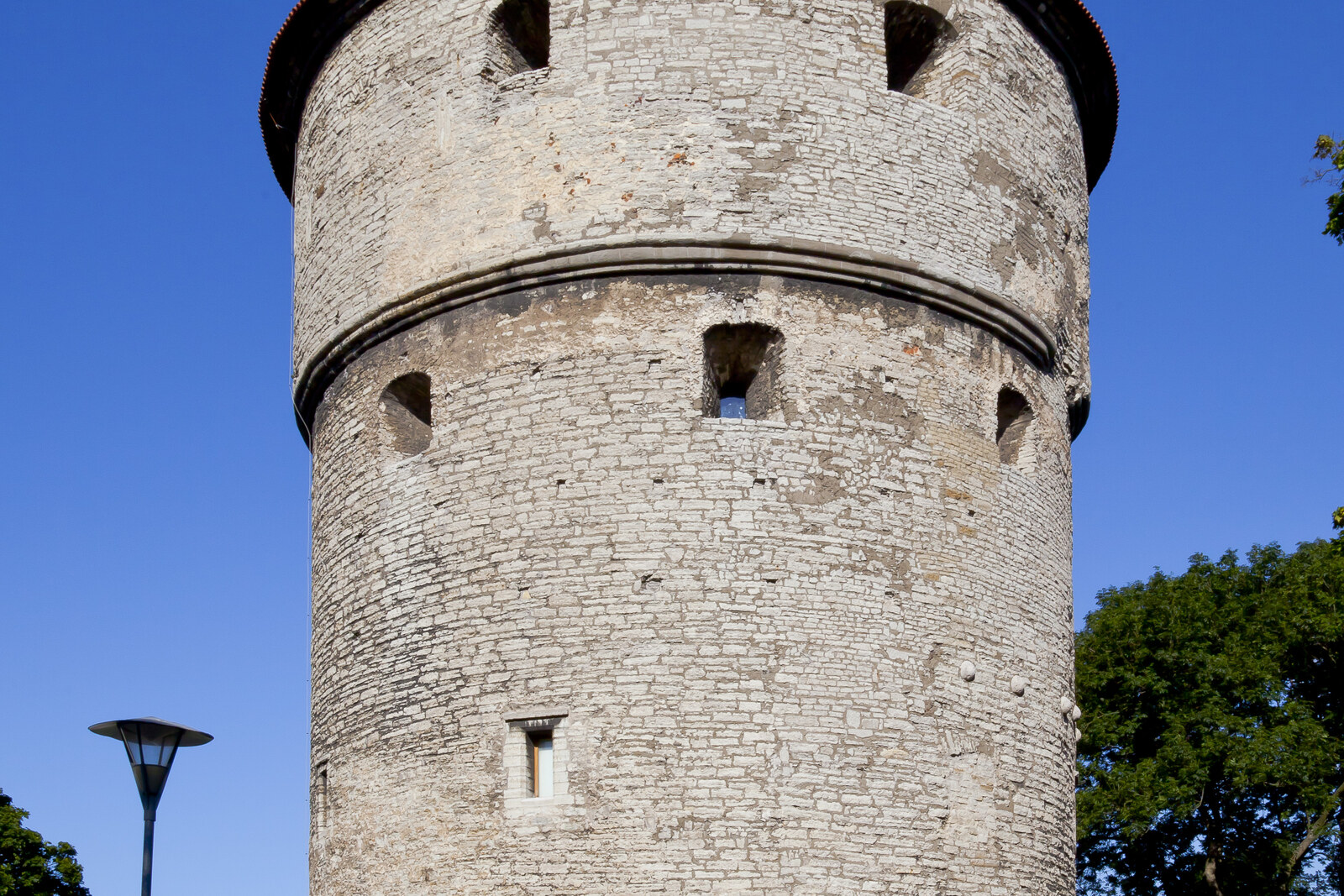
Look around first
What to notice
- Stone cannonballs in the southern wall
- A cross of iron cannonballs
- The tower's stone cylinder
- The earthen bastion
The story of the place
In peacetime, Hans Schulte was a shoemaker. In the winter of fifteen seventy-seven, he commanded the garrison of Kiek in de Kök and was to hold the southwestern corner of Reval during the siege.
By then, the Livonian Order had collapsed, Reval had passed under the Swedish Crown, and the army of Tsar Ivan the Terrible was trying to take the city. Kiek in de Kök was built specifically for cannons: its embrasures made it possible to fire on almost all approaches to the wall. The besiegers suffered losses from this artillery and decided to suppress the tower with concentrated fire.
The cannons were set up on Tõnismägi hill, roughly where Kaarli Church now stands. Stone and iron cannonballs flew from there day and night. In front of the tower, the city builders had raised a high rondel in advance—an round earthen fortification that protected the lower floors. The Russian gunners therefore had to aim higher, at the middle of the stone cylinder.
They did manage to make a hole through which, according to a contemporary, a pair of oxen could have passed side by side. One of the cannonballs killed Hans Schulte. Yet the garrison continued firing and did not surrender the tower, and on March thirteenth the besiegers burned their camp and left Reval. Schulte did not live to see that outcome.
After the siege, men from the peasant cavalry detachment of Ivo Schenkenberg, one of the commanders of the city's defense, brought logs and sand here for repairs. The outer wall and the top of the tower were fully restored only at the beginning of the following century. Later, Swedish engineers enclosed this section with a new earthen bastion: about twelve meters of the body of Kiek in de Kök are still hidden inside the embankment, and the museum's underground galleries run through its mass.
The tower's name was first recorded precisely in the account of the siege of fifteen seventy-seven. In Low German, Kiek in de Kök means “peek into the kitchen.” The nickname was explained in two ways: from the upper floors, the guards could look into the kitchens of the houses below, and the enemy positions on Tõnismägi were called its “kitchen”—from here, it was possible to see what was being prepared there for the next bombardment.
The breach was filled in long ago. On the southern wall, the masons left six real stone cannonballs and arranged a cross of iron ones beside them. The cannonballs mark the approximate site of the destruction. Documents confirm the death of Hans Schulte, the shoemaker and tower commander; the claim that the iron cross was placed specifically in his memory remains a legend.
Useful on site
Official museum hours: October–April Tuesday–Sunday 11:00–18:00, May–September daily 11:00–18:00. The complex is historic and is not adapted for wheelchairs. Tickets and holiday exceptions should be checked before entry.
Checked: July 1, 2026. Check the official source before visiting.The cannonballs are easier to find in good daylight. The museum rooms and underground passages are visited separately and may be inconvenient for people with limited mobility.