 Guide On Map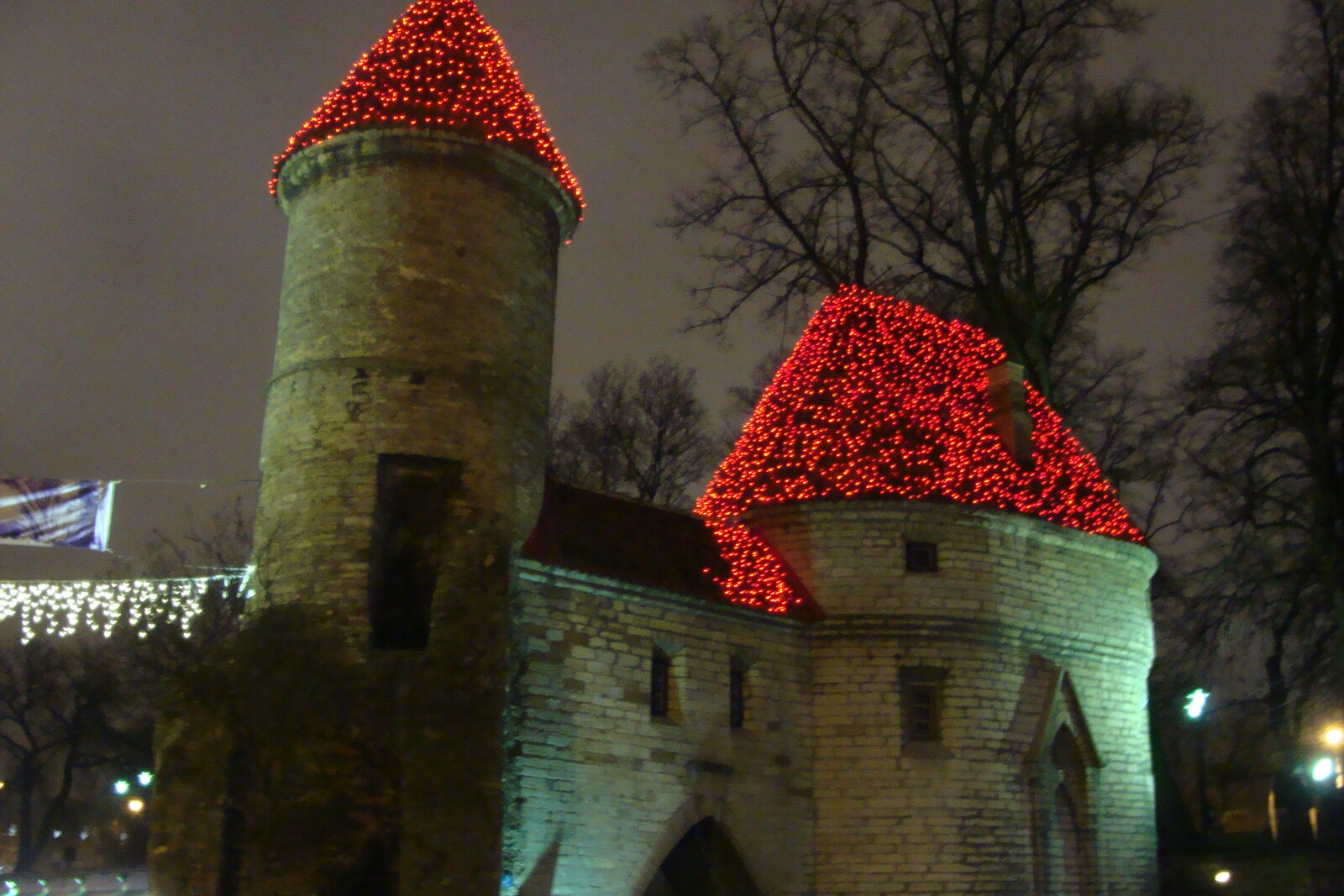
Look around first
What to notice
- Two round towers
- The dark outline of the main tower in the paving
- The broad passage between the towers
The story of the place
The surviving towers of the old city gates stand at the edges of a pedestrian street. Dark stones in the paving outline the base of the central tower, which is no longer here. When the former passage became too narrow for the city, the tower was removed, and the earthen barrier between the market and the suburbs was cut through more widely. What remains of the defensive complex is an open city passage.
All that remains of Viru Gates are two round towers of the outer gate. The medieval entrance was longer: a traveler passed through an outer fortification, then through the main five-story tower structure, and only after that entered the Lower Town. At first, townspeople called this passage the Clay Gate: clay pits lay in front of the wall. The name “Viru” indicated a direction: the road eastward, to the historic region of Virumaa, began here.
By the nineteenth century, the gates no longer had a military purpose, and the narrow passage hindered traffic. In eighteen forty-three, the city council ordered the main tower demolished. The outer gate and the earthen bastion, however, still blocked the direct route from the Old Market to the suburbs.
The passage was finally opened up for Tallinn's first tram. Tallinn was then officially called Reval. On March twenty-third, eighteen eighty-eight, the city council granted a concession to three local entrepreneurs: the barons Nikolai Fersen, Johann Girard-de-Soukanton, and Arved Rosen. They received the right to build and operate a horse-drawn railway, collect fares from passengers, and return all equipment to the city after forty years. Before them, other entrepreneurs had declined: the three planned lines seemed unprofitable.
The barons began with the route to Kadriorg, a popular summer resort. The first cars ran from the Russian Market—today's Viru Square. But the Old Market lay within the walls, and the contract required the tracks to reach it. The builders of the horse-drawn railway dismantled the central part of the outer gate, cut a passage through the bastion, and extended Viru Street outward. The two round side towers remained at the edges of the new route.
The calculation proved successful. A ticket cost five kopecks, a car held twenty-four passengers, and in its first month the horse-drawn railway carried more than one hundred thousand people. The Kadriorg line became the most profitable, and that same autumn the entrepreneurs opened the next one ahead of schedule. The gates that had obstructed their route were not restored.
There have been no tracks between the towers for a long time, and the street has become pedestrian-only. Dark stones in its paving mark the outline of the main tower, demolished back in eighteen forty-three. The broad passage between the two surviving towers occupies the site of the outer gate, which the builders of the horse-drawn railway removed in eighteen eighty-eight.
Useful on site
The street passage is accessible around the clock; the towers are viewed from outside.
Checked: July 1, 2026. Check the official source before visiting.Stay out of the flow of pedestrians and view the towers from the side: the middle of the passage is occupied by constant traffic.