 Guide On Map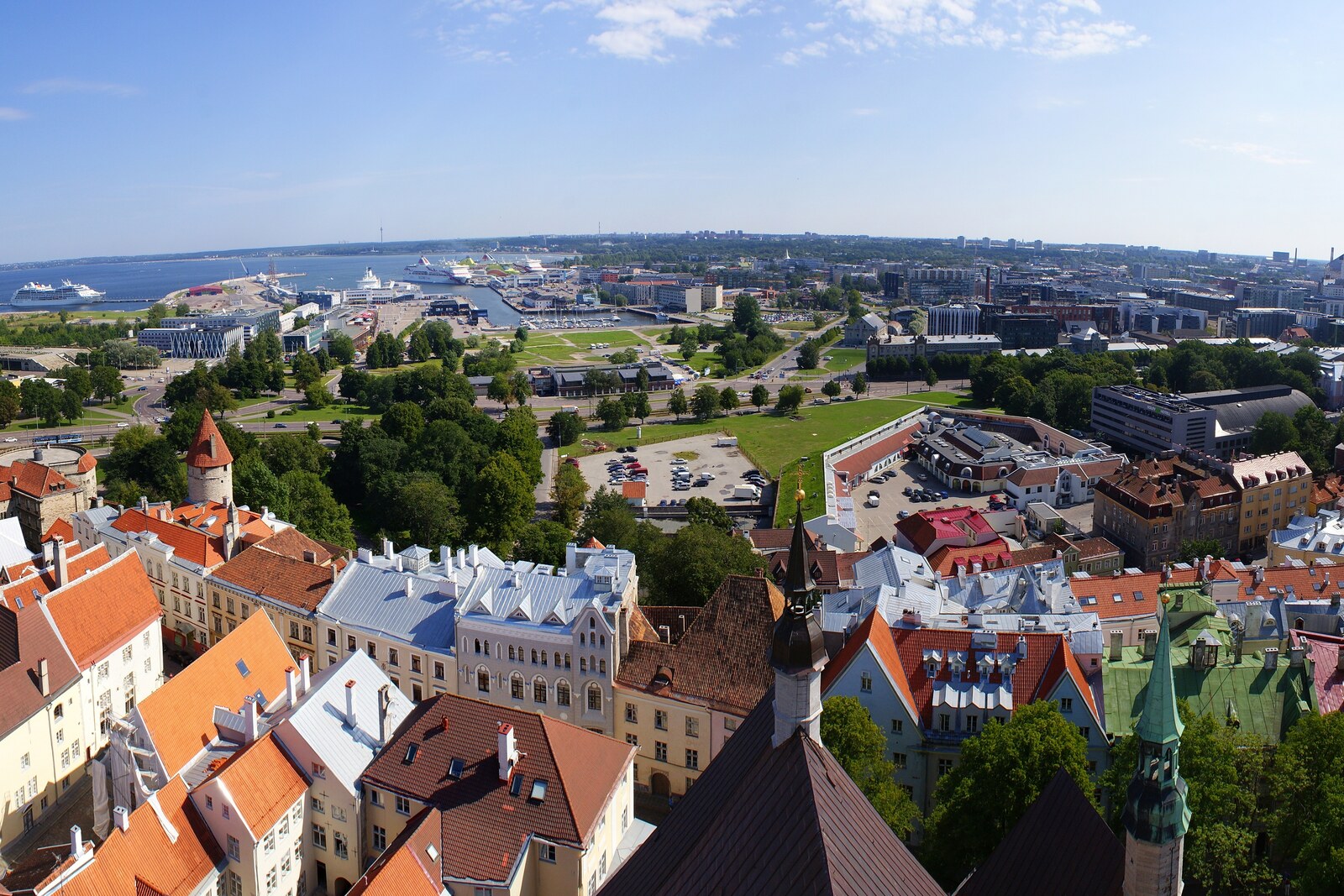
Look around first
What to notice
- Tall spire
- Corner turrets of the spire
- Stone walls
- Viewing platform beneath the spire
The story of the place
Today, the Evangelical Christian Baptists community worships beneath the spire, and there is a viewing platform at a height of sixty meters. The church is named after Olaf Haraldsson, the Norwegian king who died in one thousand thirty while trying to regain the throne and was soon canonized. Researchers link the early church to a Scandinavian trading yard located somewhere here even before the present building appeared. This is a likely but as yet unproven theory. It is reliably known that the cult of St. Olaf spread along the shores of the Baltic Sea, and the tower here served as a landmark for sailors.
The tall spire showed the way and took lightning strikes. On the night before June sixteenth, eighteen twenty, one of its corner turrets caught fire. Twenty to thirty young townspeople were ready to climb up and extinguish it. They risked ending up on a tower already on fire, but there was still a chance to stop the blaze: at first, the flames spread slowly.
The city officials directing the firefighting remembered another fire that had happened here almost two centuries earlier. Then the fire had spread from the tower to neighboring houses. This time, the officials decided to save the residents of the quarter and ordered the evacuation of all the nearby buildings. The young people were not sent up.
While the townspeople were leaving their homes, the flames reached the other turrets and then engulfed the main spire. It collapsed onto the church attendant's house, after which the church itself caught fire. The fire lasted four hours. Metal objects inside melted, tombstones cracked from the heat, and even the stone supports were damaged. The walls and the library remained: the books were beneath the vaults of the room beside the altar area, where the fire did not reach.
The parishioners were without a church for twenty years. Emperor Alexander I supported the restoration; after his death, work continued under Nikolai I. The builders began raising the church from the ruins only in eighteen twenty-eight. Three years later, lightning set the tower on fire again, but that fire was extinguished, and the spire was completed according to the original design.
Services resumed on June sixteenth, eighteen forty—exactly twenty years to the day after the fire. Above the medieval walls now rises the spire, built during that restoration, one hundred twenty-three meters and seventy centimeters high.
Useful on site
The official viewing platform page lists the season as April 1–October 31, daily 10:00–18:00, with last entry to the tower at 17:30; in winter, the church and platform are closed to visitors. A ticket to the tower costs 10 euros, and a reduced ticket costs 5 euros.
Checked: July 1, 2026. Check the official source before visiting.It is best to step back outside, otherwise the spire will not fit in your field of view. Climbing the tower may be seasonal and requires readiness for a steep staircase.