 Guide On Map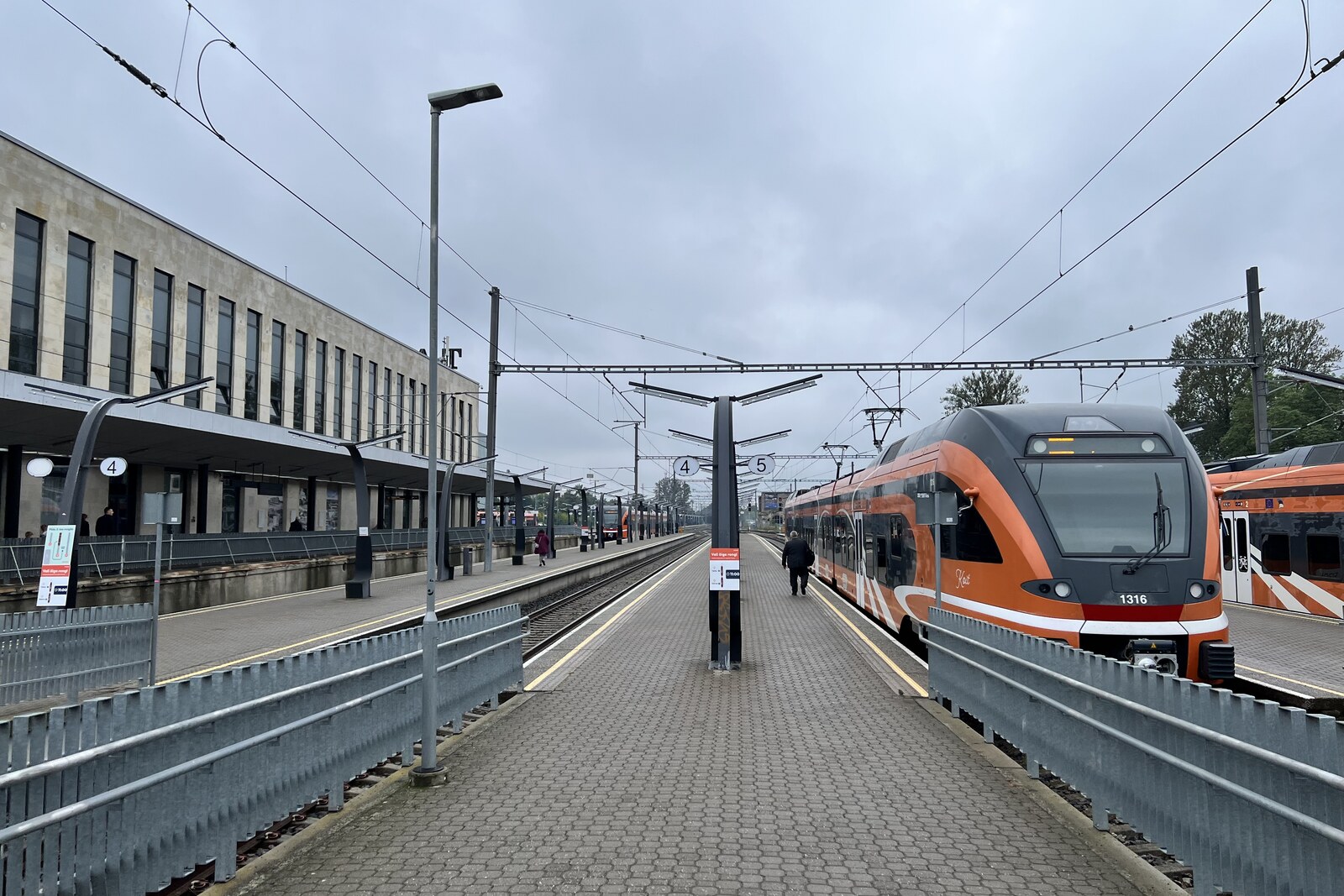
Look around first
What to notice
- Limestone walls of the old station
- Three limestone warehouse buildings
- Grocery rows
- Antique counters
The story of the place
In the spring of eighteen sixty-nine, Steinheil, the chief engineer of the Baltic Railway, ordered a site for Tallinn’s station to be laid out. Excavators prepared to dig the foundation, and cart drivers unloaded stone and timber. But this was happening not here, but two kilometers farther south—near what is now the Lilleküla platform.
Steinheil began work without waiting for a decision in the drawn-out dispute. Baron Alexander von der Pahlen, chairman of the Baltic Railway Company, was seeking to build a line from the ice-free port of Paldiski through Tallinn to Saint Petersburg. He and his associates wanted to place the main station closer to the point where the tracks turned toward Paldiski. Tallinn was then officially called Reval, and its city council consisted mainly of major merchants. They needed a station by Tallinn Old Town and the declining harbor: freight and passengers had to reach the trading quarters directly.
The sides took the matter to the Ministry of Railways, but received no decision. So Steinheil began building in Lilleküla. The city councilors could either admit defeat or openly stop the work and put the entire railway at risk.
A month later, they reached an agreement. The city transferred land to the company free of charge for tracks from the Paldiski junction to the old Monastery Gate near what is now Nunne Street. The council undertook, at its own expense, to move the materials already unloaded in Lilleküla. Steinheil stopped construction there and paid the hired foremen and excavators for their enforced downtime. Pahlen received a free corridor for the rails, and Reval’s merchants got the station where they wanted it.
On November fifth, eighteen seventy, the main station of the Paldiski–Tallinn–Narva–Gatchina line, linked to the railway to Saint Petersburg, opened here. The name Baltic Station derives from the Baltic Railway.
Workshops, a depot, and warehouses were immediately needed nearby. Sidings were laid on the site of today’s market, and in the eighteen seventies three long limestone buildings for goods were constructed. When the warehousing operation disappeared, the buildings remained. On October first, nineteen ninety-three, a market opened in them, selling groceries, clothing, tools, old things, and almost anything for which a buyer could be found. When the market was rebuilt in two thousand seventeen, the buildings were preserved and incorporated into the new market hall.
Now grocery rows and ready-to-eat food counters operate downstairs, while clothing and antiques are sold upstairs. The market got its name from the station, and its premises from the railway warehouses. Inside the modern station building, the limestone walls of the first station still stand, and opposite them are the warehouses that appeared after the city council agreed to bring the rails here free of charge.
Useful on site
Station platforms are accessible according to the train schedule. Market: Mon–Sat 09:00–19:00, Sun 09:00–17:00; a separate grocery store is open daily 08:00–22:00; street food has separate hours.
Checked: June 30, 2026. Check the official source before visiting.The market remains a busy working space: listen to the story away from the passageways and do not linger by the entrances to the pavilions.