 Guide On Map
Kalamaja and Noblessner: From the Station to the Sea
From Baltic Station through Telliskivi to Noblessner harbour
Guide On Map on your phone
Open the walk like a regular app
It takes about 10 seconds to install. No app store needed.
The whole path
Route map
About the walk
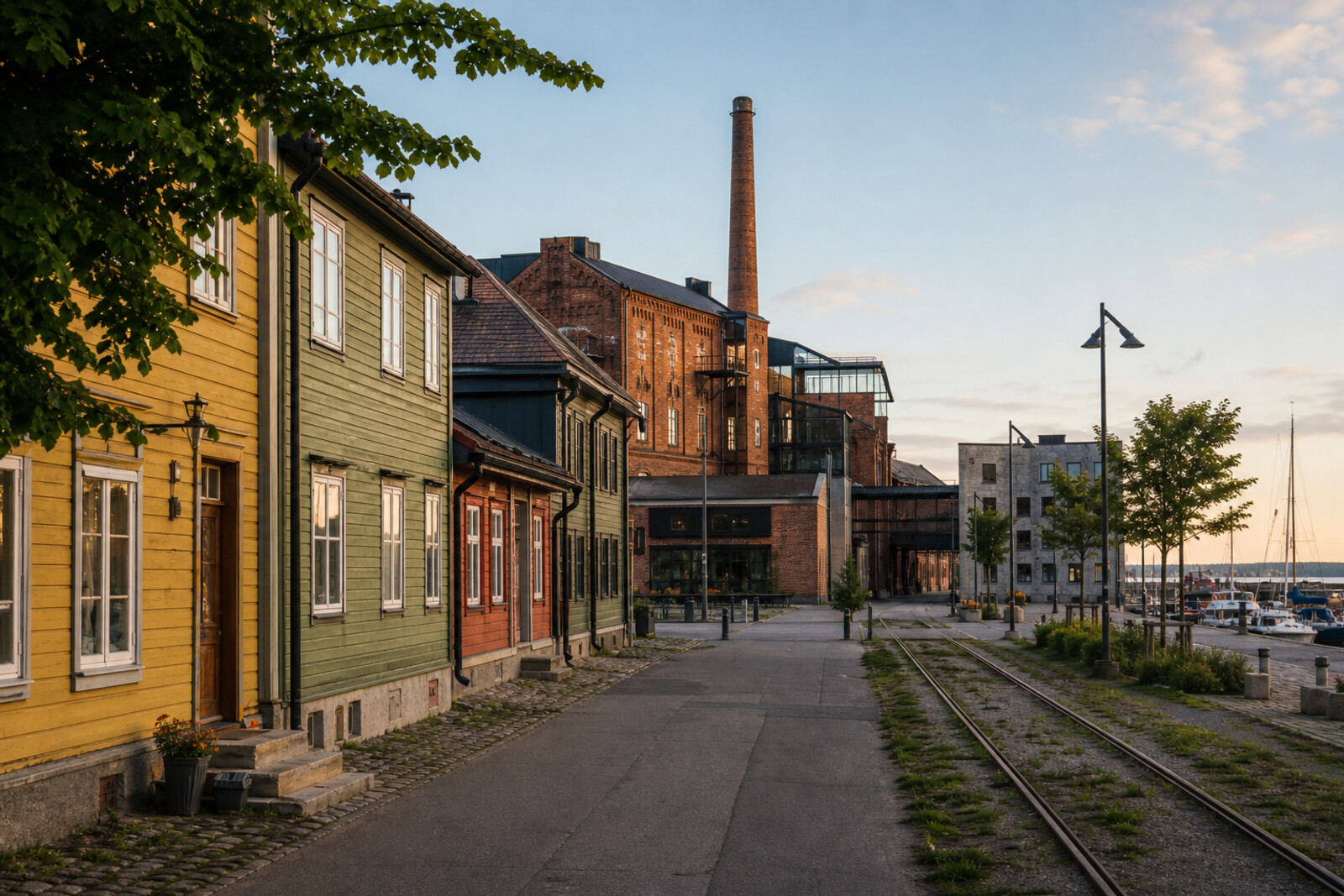
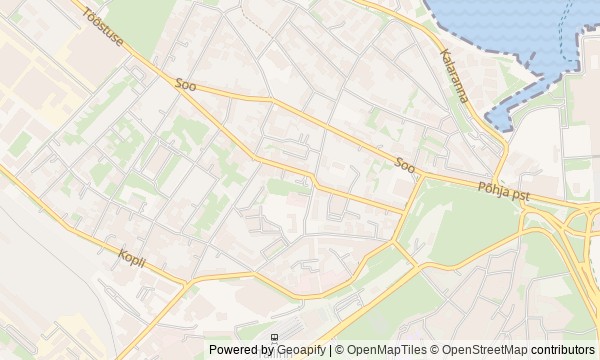
You will begin at Baltic Station, where trains, the market, and Tallinn Old Town meet beside the same tracks. Then you will pass through the factory yards of Telliskivi and come out onto Vana-Kalamaja Street. Wooden houses will alternate with brick stairwells, and beyond them the road will turn toward a former cemetery and the structures by the sea. At the shore, the scale changes: a fortress arc, concrete domes, a submarine, and a shipyard.
Why did building materials for the main station once end up somewhere else? How did moss grow across the floor of a future office? Why did a museum take plaster casts of ears? The story moves through small clues like these—without promotional cheer or ready-made legends.
After this walk, you will recognize northern Tallinn by its working logic: where the rails brought housing, and a maritime order brought an entire shore of factories.
Why this order
At the station, it becomes clear why Kalamaja grew beside the railway; that is why the Telliskivi workshops, which arose along the same tracks, come next. From the factory quarter, you will step out to the houses of Vana-Kalamaja Street: after the workplace, it is time to see the homes of people who earned their living from the railway and the port. Nearby stands Kalamaja Museum, where the neighborhood's outward form gives way to residents' testimony. The street then leads into Kalamaja Cemetery Park: after the gathered memory of its inhabitants, you will encounter a place from which the earlier markers were removed. Beyond the park begins the maritime section. Patarei shows how a military structure became a prison; nearby Seaplane Harbour offers the opposite turn—here, the military building and its machinery were preserved for a museum. West of the hangars lies Noblessner, where the route completes its industrial line: from railway workshops to a shipyard and ships being launched into the water.
Those who want to see Tallinn beyond Tallinn Old Town Lovers of industrial architecture and wooden neighborhoods Those who value human stories without a ceremonial tone
Those looking only for medieval streets and cathedrals Those who prefer lighter stories without military and prison history Those who do not enjoy industrial buildings and working-class neighborhoods
Before you go
Decide in advance which buildings you want to see from the inside: Kalamaja Museum, Seaplane Harbour, and the spaces of Noblessner can noticeably extend the walk, so check their official visiting hours separately. Treat Patarei primarily as an exterior stop unless access inside has been confirmed. Wear comfortable shoes: the route runs along city streets, through a park, and beside the open shore. In the residential part of Vana-Kalamaja Street, view the houses from the street and do not enter private courtyards for a photograph. By the sea, an extra layer of clothing is useful even on a clear day.
When to go
It is easiest to start in the first half of the day, so you do not have to rush at the market and still have daylight left for the shore. If you plan a full visit to Seaplane Harbour or another museum, treat it as a separate block of time rather than a short stop between stories. A later start also works for a walk limited to the exterior sites, but it is best to save the ending for daylight.
Backup plan
If the neighborhood museum is closed, look at the house from outside and focus on how its residential scale differs from that of a familiar museum building. Seaplane Harbour can also be understood from outside, through its domes and the layout of the former military grounds, without adding a museum visit. In strong wind or rain, finish the walk after Patarei or Seaplane Harbour, and leave Noblessner for another outing. If you have less energy than expected, do not skip the difficult stops just to reach a quick finale: it is better to finish earlier and return to the shore later.
Route conditions
Surface. Paved — 2.3 km (data covers 64% of the route)
Facilities. Toilets — 5; drinking water — 1
Elevation. Ascent — 6 m; descent — 19 m
OpenStreetMap extract of June 18, 2026: database data, not a check on the ground. Data © OpenStreetMap contributors, ODbL licence
Walk plan
Open in maps ↗- 1
Baltic Station and Market
This is where we will begin talking about how the railway determined Kalamaja’s location and future growth. - 2
Telliskivi
This stop explains how empty workshops were filled with tenants without a ready-made project or city subsidies. - 3
Vana-Kalamaja Street and Tallinn houses
From the facades, you will see how an inexpensive apartment building was adapted to fire regulations and workers’ needs. - 4
Kalamaja Museum
Here, the district will appear not as a collection of dates, but as a home that its residents filled with their things and voices. - 5
Kalamaja Cemetery Park
The surviving gates help you read the park as the grounds of an old necropolis, rather than an ordinary city garden. - 6
Patarei
The story of one teenager will connect the stone complex with the only French convoy sent to the Baltic states. - 7
Seaplane Harbour
Two rescue operations come together here: repairing thin concrete shells and lifting a submarine onto land. - 8
Noblessner Port
The final stop will restore the route’s industrial scale and show what order this harbor was created for.
Route features
Everything you need stays in the browser
Progress, saves and your trip plan are stored on this device.
Add Guide On Map to your home screen so the walk opens outside the browser.
How we handle sources, maps and corrections: our editorial standards