 Guide On Map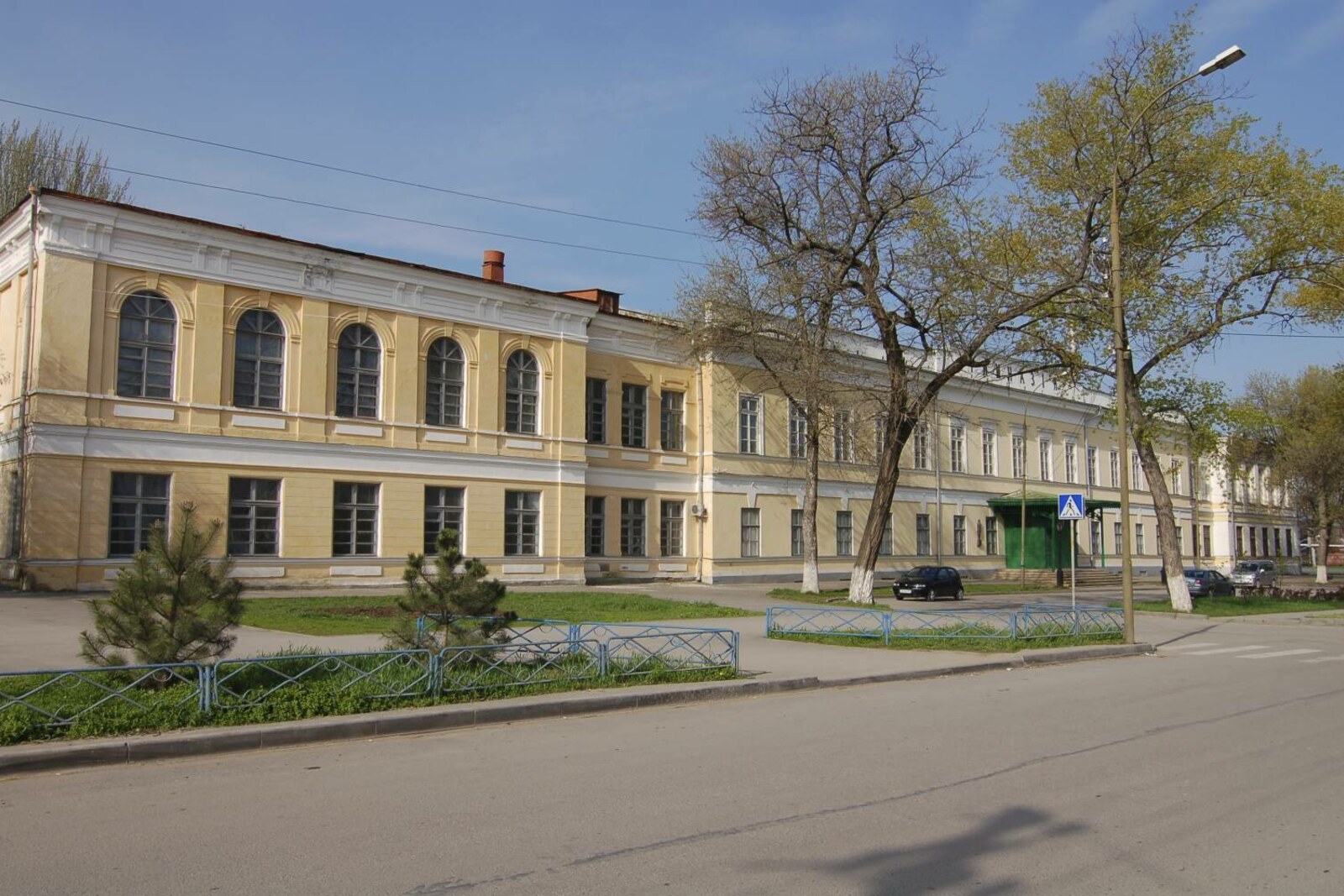
Look around first
What to notice
- A classroom with desks
- A gymnasium uniform
- The avenues of Gymnasium Garden
- A memorial marker to unnamed victims
The story of the place
A literary museum now operates in the old school building. Based on the recollections of former students, the entrance hall, a classroom with desks, the assembly hall, the punishment cell, and the second-floor corridor have been recreated here. Gymnasium Garden has been laid out again behind the building: the former plantings did not survive, and among the new avenues stands a memorial marker to unnamed victims of the Nazis, found in the garden after the war.
Before us stands the building of the Taganrog Boys' Classical Gymnasium. Anton Chekhov studied here for eleven years—from eighteen sixty-eight to eighteen seventy-nine. Fyodor Pokrovsky, the teacher of the Law of God, liked to alter his students' surnames and called him Antosha Chekhonte. Later, Chekhov used this school nickname to sign humorous stories and his first two collections—Tales of Melpomene and Motley Stories. Thus a familiar nickname from a gymnasium classroom found its way onto book covers.
In eighteen seventy-eight, Chekhov was in the seventh grade, while his friend Lev Volkenstein was preparing to finish the final eighth grade. According to the recollections of gymnasium student Mikhail Rabinovich, the graduating students agreed not to write the assigned essay. Volkenstein broke the agreement. One of his classmates insulted him because of his Jewish origin and received a slap in the face. The insulted student's father complained, and within an hour the pedagogical council expelled Volkenstein. For a graduating student, this meant losing his certificate and the opportunity to continue his education.
Chekhov wanted to get his friend back. He suggested that ten gymnasium students seek an appointment with the principal, Edmund Reitlinger, and bring prepared petitions for their own withdrawal: if Volkenstein was not reinstated, they too would leave the gymnasium. Reitlinger, who was responsible here for discipline and for the pedagogical council's decision, listened to the students, was moved to tears, and promised to convene the council again that same day. The expulsion was revoked. Volkenstein finished the gymnasium, received a legal education, and became a lawyer. He and Chekhov remained friends after Chekhov left Taganrog; in eighteen ninety-six, the writer noted their shared dinner in Rostov-on-Don in his diary.
The museum occupies that very gymnasium building. Based on students' recollections, the entrance hall, a classroom, the assembly hall, the punishment cell, and the second-floor corridor have been recreated inside. The literary exhibition begins where Chekhov still sat at his desk, wore a student uniform, and gathered his friends to speak with the principal.
Behind the building, in Chekhov's time as well, lay the gymnasium yard and garden. The present Gymnasium Garden preserves none of the old plantings. After the demolition of an unsafe school building in two thousand thirteen, museum staff proposed restoring the site's former purpose; the new space opened in the spring of two thousand twenty-six.
One part of it is connected with another fate of the gymnasium site. During the German occupation, SS Sonderkommando ten-a was housed in the building for several months. In the autumn of nineteen fifty-seven, during maintenance work in the garden, a trench containing human remains was discovered. Among the new avenues, a memorial marker to unnamed victims of the Nazis stands on the site of that discovery.
Useful on site
Tue–Sun 10:00–18:00, ticket office until 17:00; closed Mon. Until 31.08.2026, on Thursdays the museum is open until 19:00, ticket office until 18:00. The garden is free, entry ends at 17:30. 01.07.2026 is a sanitation day.
Checked: June 24, 2026. Check the official source before visiting.The building and garden can be viewed from outside, but the museum interior better conveys the atmosphere of school discipline.