 Guide On Map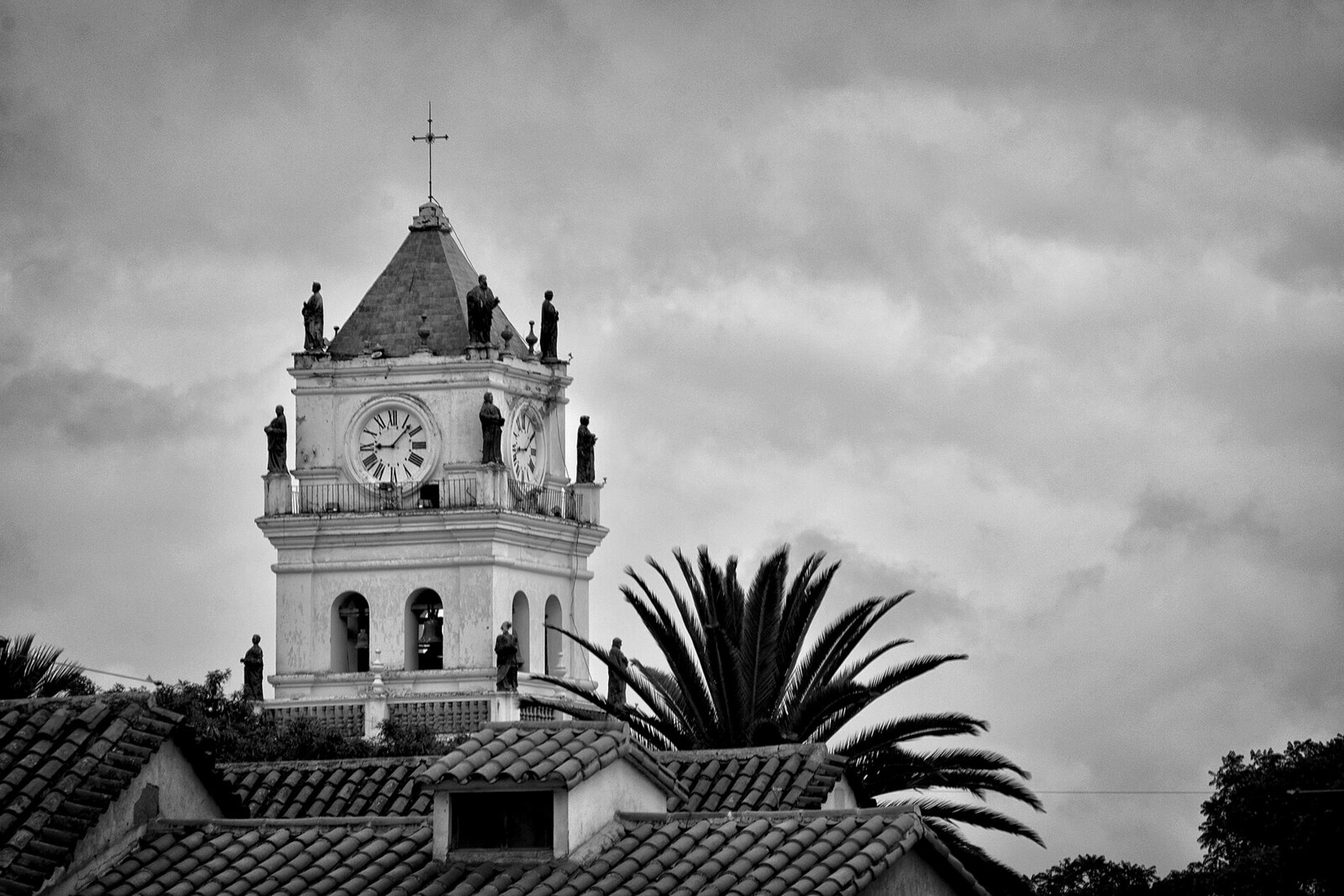
Look around first
What to notice
- The chapel's separate street entrance
- The faces of Mary and the Child
- The gilded silver plate
- Jewelry on the image
The story of the place
In the Chapel of the Virgin of Guadalupe, connected to Sucre Cathedral, only the faces of Mary and the Child remain from the painting of sixteen oh one. Everything else that looks like paintwork is made up of gilded silver, pearls, gemstones, medals, and rings. The townspeople themselves brought about this transformation.
The Hieronymite Diego de Ocaña arrived from Spanish Extremadura not as a wandering artist. The Monastery of Santa María de Guadalupe sent him to establish confraternities and collect donations. Ocaña painted copies of the monastery's Black Madonna and left them wherever he found influential patrons. The local name of the Virgin of Guadalupe comes precisely from the Spanish monastery; it has nothing to do with the Mexican image.
In Potosí, one such painting was seen by Alonso Ramírez de Vergara, bishop of La Plata, who was seeking an equally venerated image for Sucre Cathedral. He invited Ocaña here. Juan de Larrategui, dean of the chapter and senior priest of the cathedral, housed the monk in his own home and paid for the materials.
Soon, an earthquake struck during Mass. Ocaña was in the cathedral and, seeing the vault and walls coming apart, called on the Virgin of Guadalupe for help. The earthquake itself is recorded in the chapter's records. The residents considered it a miracle that the church did not collapse and those inside were saved. After this, Larrategui began going from house to house and asking for jewelry for the still unfinished painting.
Ocaña immediately attached the gifts to the canvas. This was how venerated images were treated in Spain: the painted garment gradually became real adornment. The residents brought pearls, rubies, emeralds, chains, and rings. For Ocaña, the donors' generosity meant the success of his monastic mission; for the donors, each stone remained payment for a fulfilled request or a memory of danger survived.
The bishop ordered the finished image to be placed in his chapel. He had originally received this space from the cathedral chapter for his own burial chapel and intended to be buried here. The painting changed the purpose of the room. For its installation, Ramírez de Vergara summoned priests and religious confraternities from nearby settlements. The bishop's personal burial chapel became the sanctuary of the city's patroness.
The small room soon ceased to hold all its worshippers. In sixteen seventeen, Archbishop Jerónimo Méndez de la Piedra ordered the chapel enlarged and a separate entrance made from the street. That is why it looks like an independent church, although inside it connects with Sucre Cathedral.
Donations continued to be sewn onto the image after Ocaña's death. By seventeen eighty-four, their weight had torn the canvas. Chaplain Pedro Antonio Rojas y Argandoña commissioned a gilded plate from a silversmith at his own expense. The faces of Mary and the Child were cut from the damaged painting and transferred to a metal base; the jewels were then fastened to it. In saving the shrine, people almost completely dismantled Ocaña's work.
Before the September feast, this heavy silver image is carried from the chapel into the neighboring cathedral, where a novena—nine days of prayer—is held. After Mass and the city procession, it is returned. The route is only several meters: from the burial chapel that the bishop gave up to the painting, into the main church, and back again to the two faces remaining from the monk's work.
Useful on site
Active Sucre Cathedral; no reliable separate tourist schedule for unrestricted entry has been published.
Checked: June 24, 2026. Check the official source before visiting.The chapel is in an active religious space. If the entrance is closed, limit yourself to the cathedral façade; inside, keep quiet and follow local rules for photography.