 Guide On Map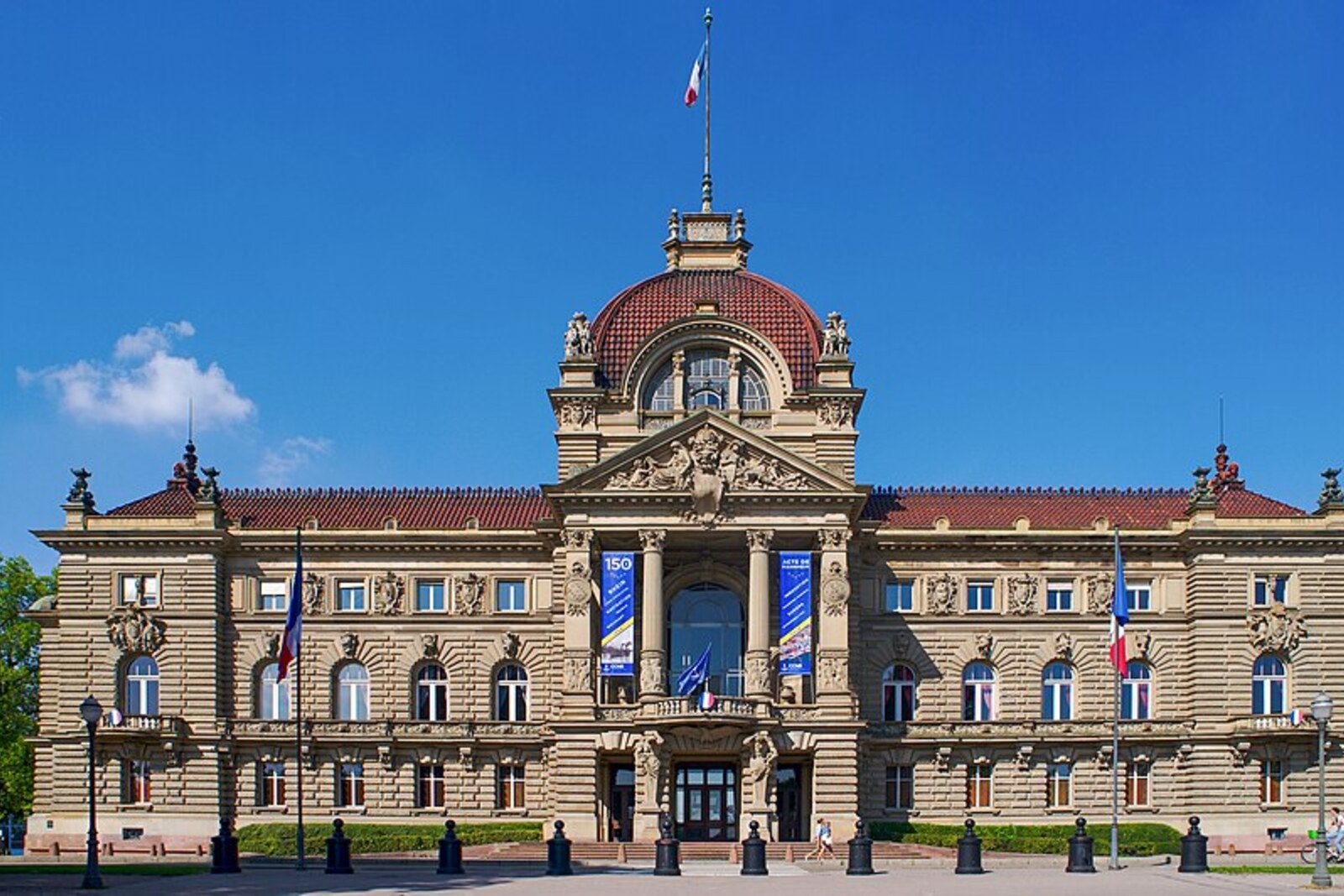
Look around first
What to notice
- The palace dome
- Ceremonial façade
- Main portal
- Garden in front of the building
The story of the place
Behind the ceremonial façade with its dome, lofty halls, long corridors, and staircases designed for ceremonies in the official residence of the German emperor have survived. Wilhelm I laid the first stone, and the palace was opened by his grandson Wilhelm the Second, who came here only during his infrequent visits to Strasbourg. After the First World War, the former imperial rooms were occupied by the Central Commission for the Navigation of the Rhine, which had been moved here from Mannheim. Its delegates still establish common rules for navigation and ship safety on the river, and the garden by the façade has remained part of the palace ensemble.
On February twelfth, nineteen fifty-seven, Maurice Roche, secretary general of the Bas-Rhin prefecture and the official responsible for this building's fate, drafted a memorandum against its demolition. His own administration was preparing another project: to remove the palace and occupy the cleared site with a new building for government services.
The arguments of those supporting demolition were entirely practical. After the war, part of the building remained damaged. Its lofty ceremonial halls, endless corridors, and staircases did not convert well into offices. The palace did not yet have protected status. Moreover, it reminded many residents of two German periods at once: first, it had housed the emperor's residence, and then, during the Second World War, the German military command.
The building had previously been called the Kaiserpalast—the Imperial Palace. It was commissioned for Wilhelm I, the German emperor, who needed an official residence in Strasbourg after Alsace was annexed to the German Empire. Wilhelm laid the first stone in eighteen eighty-four, but died before the work was completed. The palace was opened by his grandson, Wilhelm the Second. Three days of festivities did not make the emperor fond of his new residence: during his infrequent visits to Strasbourg, he stayed here only for a few days.
The name Palais du Rhin—"Palace of the Rhine"—came later and is unrelated to the building's location. After the First World War, the drafters of the Treaty of Versailles moved the Central Commission for the Navigation of the Rhine here from Mannheim. Its delegates coordinate common navigation rules, ship safety, and freedom of transport on the river that crosses several countries. In nineteen twenty, the commission's officials occupied the former imperial rooms, and the palace took the institution's name.
This name proved useful during the demolition dispute. Opponents of the project warned that if the building disappeared, the commission might leave Strasbourg for Mainz or Basel. Maurice Roche gathered these and other objections for a meeting of the commission for the protection of city views. On February eighteenth, the discussion ended in open resistance from architects, museum professionals, and representatives of tourism associations. The next day, the displeased prefect removed Roche from the matter. For a career civil servant, this was a very tangible consequence: his salary and further service depended on the same superiors whose project he had prevented.
Municipal councilor Robert Heitz secured the publication of information about the demolition in a regional newspaper. He collected the opinions of architects and artists and demanded that the decision be taken out of the offices and into public discussion. Letters began arriving at the editorial office; the palace's defenders spoke of preserving the garden, the enormous cost of dismantling the building, and the possible departure of the Rhine Commission. By summer, the project had been canceled.
Maurice Roche kept his post and became prefect of Savoy four years later. The damaged wing of the palace was restored; in nineteen seventy-seven, the building was placed under protection for the first time, and later recognized as a historic monument. The Central Commission for the Navigation of the Rhine still works inside, together with the regional cultural administration, which is now responsible for maintaining the palace. The new administrative building never took the place of Palais du Rhin, and the garden before its façade also remained.
Useful on site
Exterior viewing without a schedule. Interior access is not a guaranteed part of the walk and depends on programs, institutions, and events.
Checked: June 24, 2026. Check the official source before visiting.The building is used by institutions, so plan primarily for an exterior visit. Step back into the garden so that the upper coats of arms are not lost in the perspective.