 Guide On Map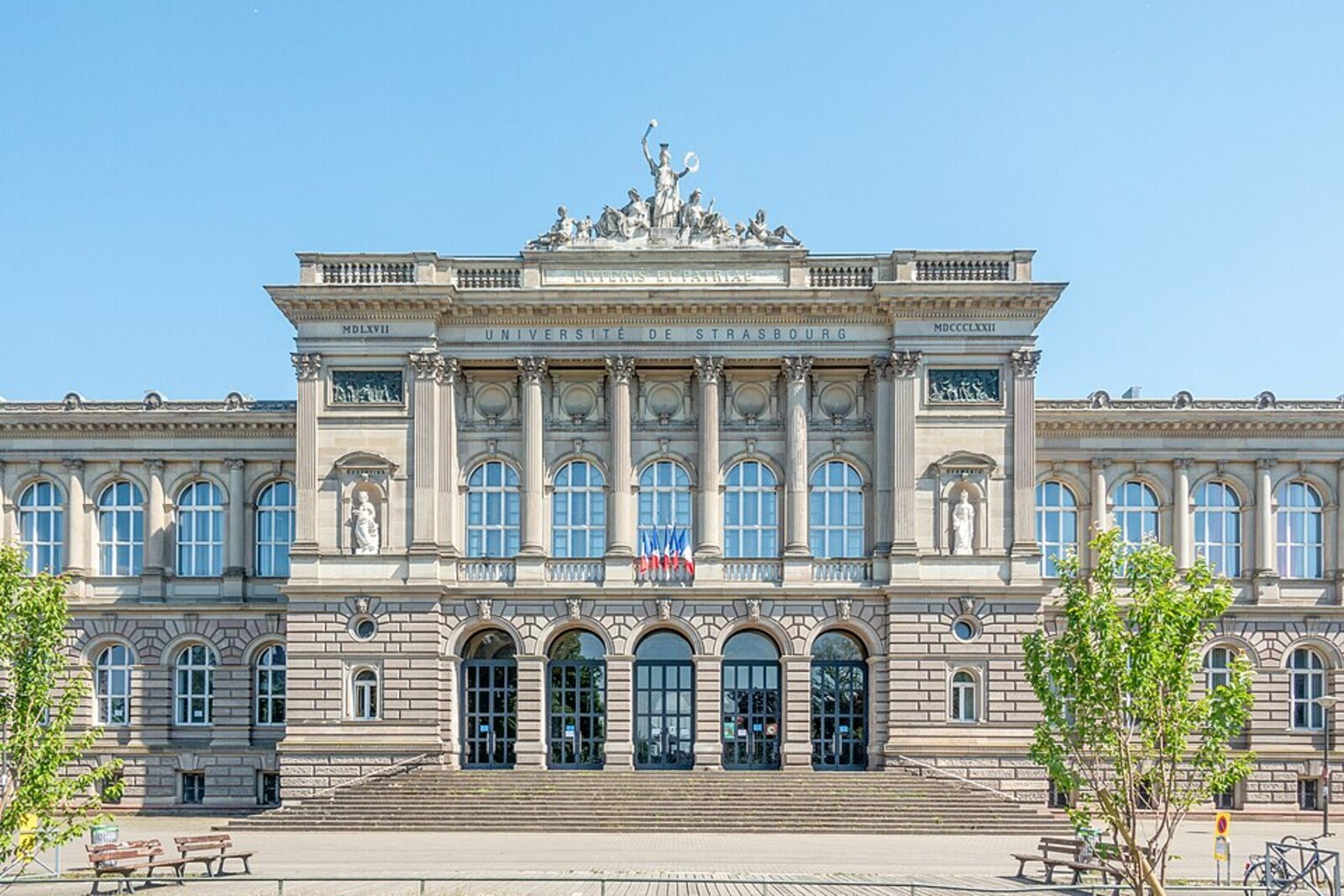
Look around first
What to notice
- Columnade of the main facade
- Broad ceremonial staircase
- Pediment of the Palais universitaire
- Plaque about the first meeting of the Council of Europe
The story of the place
The Palais universitaire opened in eighteen eighty-four as the main building of the German Kaiser Wilhelm University of Strasbourg. Historians, art historians, and theologians now study here. Yet in the summer of nineteen forty-nine, the university auditorium became the first parliamentary chamber of the Council of Europe for a month. The new organization did not yet have a building of its own, and Strasbourg was chosen as a city where the French and German past was to give way to cooperation.
On August tenth, the provisional chairman, French politician Édouard Herriot, opened the first meeting of the Consultative Assembly here. Its first chairman was elected as Belgian foreign minister Paul-Henri Spaak, who wanted representatives of European parliaments to move from ceremony straight to work.
The main dispute began nine days later. French lawyer and former member of the Resistance Pierre-Henri Teitgen demanded the immediate preparation of a convention that would oblige states to respect fundamental rights. For him, this was not an abstract matter. During the occupation, Teitgen published an underground newspaper, was seized by the Gestapo, spent fifteen days under interrogation, and escaped being sent to Germany by breaking through the roof of a railroad car and jumping out while it was moving.
Teitgen insisted on legal scrutiny of states' actions. Alongside him, the project was advanced by Scottish lawyer David Maxwell Fyfe, former deputy British prosecutor at the Nuremberg Trials. He led the committee that, over fourteen meetings, defined the list of protected rights and proposed the creation of the European Commission of Human Rights and the European Court of Human Rights. On September seventh, Teitgen presented the result in this auditorium, and the next day the delegates adopted his report: sixty-four votes to one, with twenty-one abstentions.
The ministers then shortened the draft and made the right of individual petition optional, but they could no longer bury the proposal. On November fourth, nineteen fifty, the states signed the European Convention on Human Rights. Teitgen later became a judge of the European Court of Human Rights created by it.
The Council of Europe soon moved to a separate building near the Orangerie, and the auditorium returned to the university. Inside the main entrance, a plaque remains with the exact address of where this story began: the first meeting of the Assembly of the Council of Europe took place here on August tenth, nineteen forty-nine.
Useful on site
Exterior viewing without set hours. Access to the interiors of the university building depends on the institution's schedule, events, and security; do not treat them as essential.
Checked: June 24, 2026. Check the official source before visiting.This is a working university, and access inside may depend on its current activities. Do not disturb classes: the facade and the square in front of it are enough to conclude the story.