 Guide On Map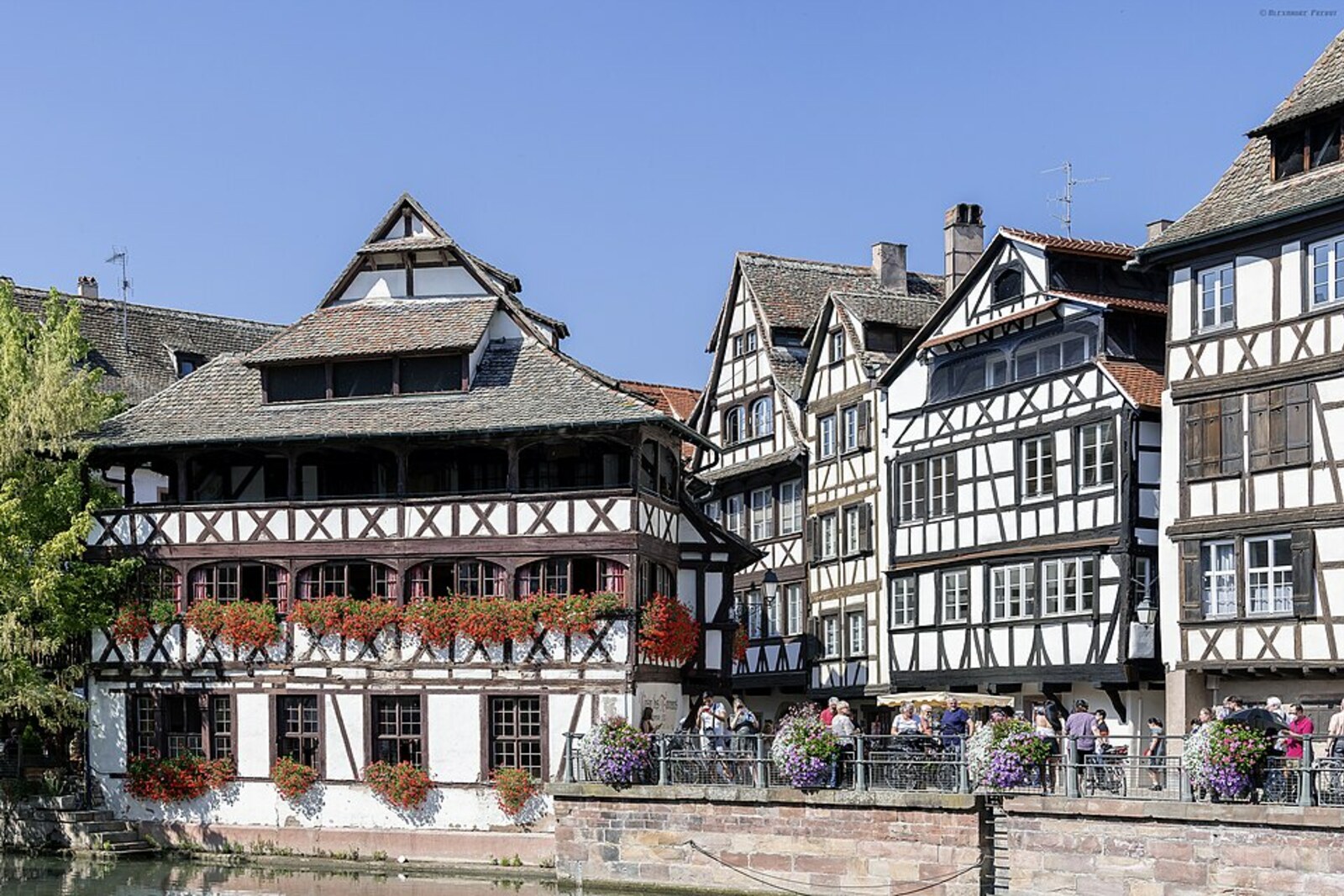
Look around first
What to notice
- The half-timbered facade of Maison des Tanneurs
- The glazed drying gallery
- High attic openings
- The canal in front of the house
The story of the place
Maison des Tanneurs stands above the canal: two half-timbered structures here were joined to a two-level gallery wing, with openings for ventilated attics left above. Tanners washed hides in river water, then tanned them and hung them up to dry. Dirty runoff and a persistent smell pushed this craft to the edge of old Strasbourg. The glazed arches below still preserve the volume of the former drying gallery.
In nineteen forty-nine, eight Alsatian winegrowers—four from Upper Alsace and four from Lower Alsace—jointly bought this house to open a restaurant here. The building required two years of work. The spacious galleries were especially strange for their new use: the previous owners had deliberately left them open.
Maison des Tanneurs means a house for tanners. These people made their living selling tanned leather, and the canal was part of their workshop. Hides were carefully washed in river water so that they absorbed tanning substances and became soft. After processing, they were hung in the open galleries and in the ventilated attics. Water drew the tanners to the western edge of old Strasbourg; this was also where crafts connected with dirty runoff and a persistent smell were moved.
The house took shape gradually. Its oldest core consists of two joined half-timbered structures; the year fifteen seventy-two is carved into the window frame of one of them. Later, the tanners added a transverse wing on the river side, with two levels of galleries, and gained much more space for drying. It was this production extension that created the facade most often photographed today.
The winegrowers enclosed the arches of the lower gallery with windows and placed restaurant tables where hides had once hung. Seven years later, they sold the establishment to the Behe couple. Their daughter Gabrielle Lenhardt and her son François then took over the restaurant. Behind the present windows above the canal, the former drying gallery retains its original volume, with high ventilated attics above it.
The name Petite France came from another house in the same quarter. At the end of the fifteenth century, syphilis spread across Europe, and in Strasbourg it was called the “French disease.” In the winter of fifteen oh three, the city magistrate opened a separate hospital for the sick—the Blatterhaus, meaning a house for people with sores. At first, it stood in neighboring Finkwiller.
In sixteen eighty-six, the city authorities moved the hospital to Grande Île, to a house by the Covered Bridges on what is now Rue des Moulins. Residents began calling it Zum kleinen Französel—“at the little Frenchman.” They meant the disease considered French. At first, the nickname referred to the hospital house; in seventeen ninety-five, the French name Petite France was already attached to the building itself and was then extended to the surrounding streets and canals.
The hospital ceased operating in seventeen eighty-nine, and its house was demolished in eighteen ninety-five. All that remained was the district’s name. By the canal stands the house of another group of residents—the tanners; behind the glass of their former drying gallery, restaurant tables are now set.
Useful on site
The district and its quays can be viewed from outside without a schedule; establishments inside the houses keep their own hours.
Checked: June 24, 2026. Check the official source before visiting.You do not need to enter the house for this stop. Do not block passage along the narrow walkways, and step away from the main viewpoint to look at the upper floors.