 Guide On Map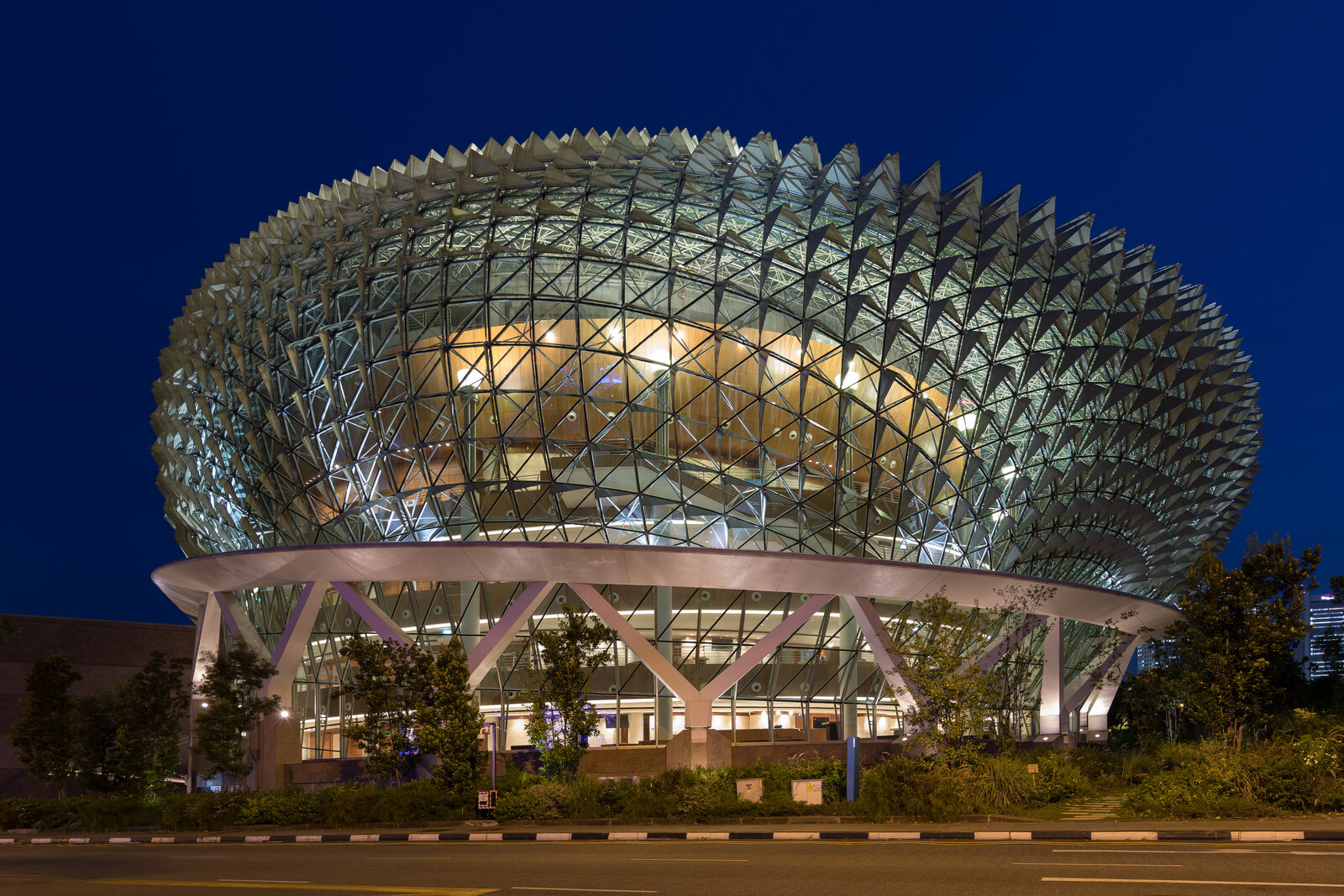
Look around first
What to notice
- The Esplanade’s spiky domes
- The open-air theater by the water
- The broad waterfront promenade
The story of the place
Esplanade Waterfront runs as a broad promenade along the bay; by the water, an open venue hosts free concerts, dance performances, and plays. In the past, this stretch of waterfront filled with the smell of charcoal in the evenings: in a low crescent-shaped pavilion, vendors prepared food, while the tables faced the water. Their livelihood depended on people walking along the open passage by the sea and staying here for dinner.
The name “Esplanade” is older than the two spiky domes on the waterfront. In the mid-nineteenth century, it referred to the seafront area in front of today’s Padang. Then Singapore reclaimed land, the shoreline moved outward, and the name passed to the new park and promenade. The performing arts center that opened in two thousand two took its name from this place.
Before the center was built, a low crescent-shaped pavilion stood here. It was erected by the sea for prepared-food vendors; its tables faced the water. In nineteen seventy, city authorities relocated satay sellers from Beach Road here. They grilled skewers of marinated meat over charcoal and served them with peanut sauce. The cluster of stalls came to be known as the Satay Club. People walking along the waterfront stayed here for dinner, so the vendors depended specifically on the open passage along the water.
Saiful bin Haji Juahir worked among them. He was the son of the owner of the Alhambra Satay stall. He helped his father and wanted to continue the family business. In nineteen eighty, his father handed the stall over to him. For Saiful, it was the trade he lived by: the meat was marinated, cut, and threaded onto skewers by hand, and the finished work was paid for according to the number of skewers eaten.
In the mid-nineteen nineties, the construction organizers cleared the site for the theater complex and the extension of Nicoll Highway. In nineteen ninety-five, the Satay Club was closed and demolished. Of the twenty-eight stall owners, eight moved to a new center at Clarke Quay; the rest dispersed to different districts or left the trade. Saiful, too, was offered a place at Clarke Quay, but the rent proved too expensive for him. He declined, went through several unsuccessful attempts to reopen a business, and only later managed to restore a steady income to the family stall in another part of the city.
On the bay-facing side of the Esplanade, there is now an open-air theater: free music, dance, and theatrical performances take place here. Nothing remains on this waterfront of the semicircular pavilion, the twenty-eight stalls, or Saiful’s workplace. Their site was taken by the theater buildings and Nicoll Highway.
Useful on site
The complex is open daily 08:00—23:30 or until 30 minutes after the last performance, if it ends later. The outer waterfront functions as a public space; individual venues follow the program.
Checked: July 1, 2026. Check the official source before visiting.The story concerns the entire waterfront, not only the theater complex. View the memorial from a respectful distance; performances and the Esplanade’s indoor venues require separate plans.