 Guide On Map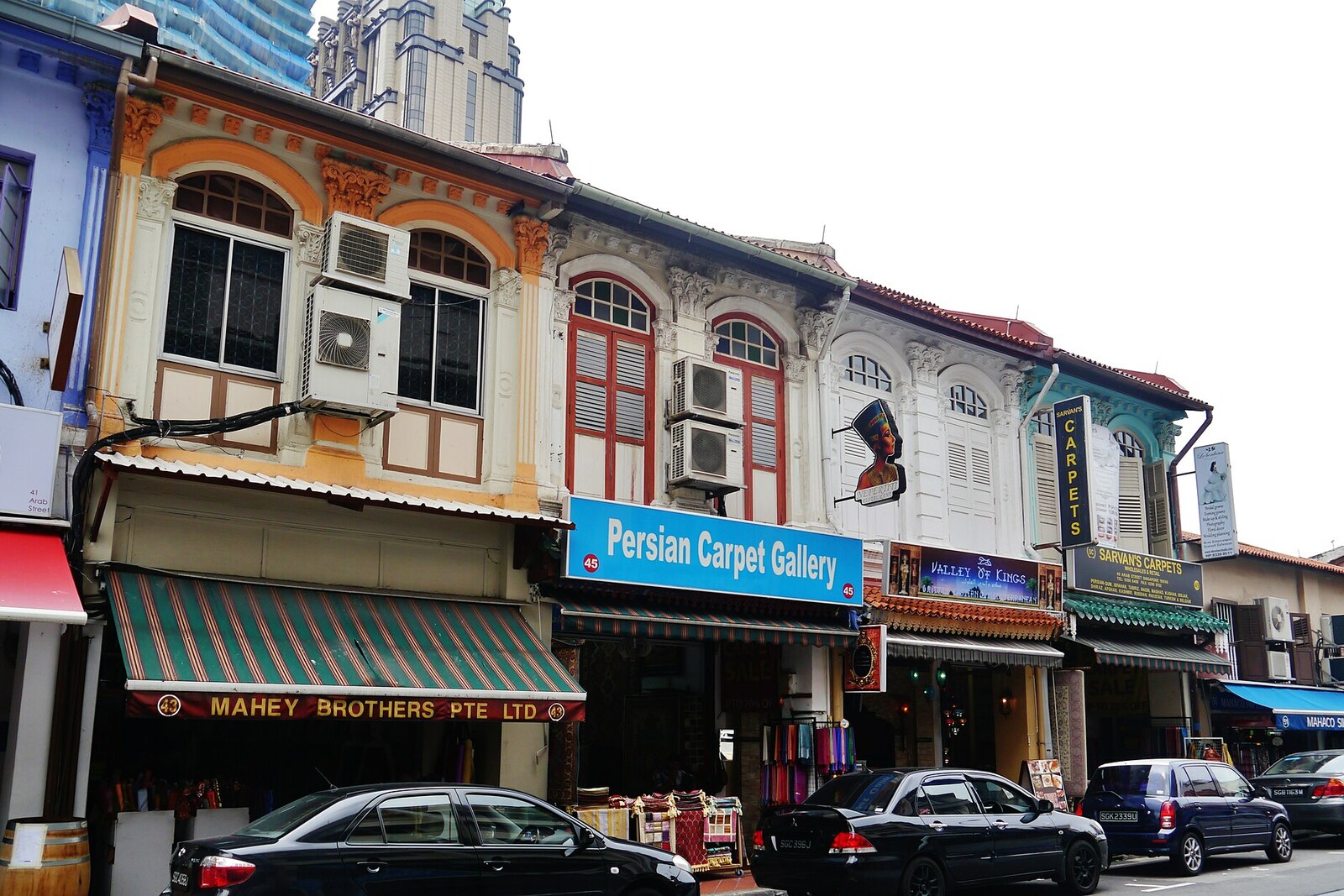
Look around first
What to notice
- House No. 62
- A row of narrow shophouses
- The street sign “Bussorah Street”
- Sultan Mosque at the end of the street
The story of the place
At house number sixty-two on Bussorah Street, one future pilgrim might arrive with twenty relatives. They came to see him off to Mecca, while the host had to accommodate the whole family, feed them, hire a bus, and put the pilgrim himself on a ship.
This was recounted by Alija binti Abdul Latiff, a former resident of the house. Her grandfather was a haji sheikh—a local pilgrimage organizer entrusted with both preparation for the rituals and arranging the journey. For the full package, he charged three hundred dollars, according to Alija's recollections. When the Hajj season ended, he rented out the vacant rooms to arrivals from Pakistan and South Africa, sometimes to refugees. The narrow shophouse served at once as a family home, an inn, and an office.
The sea route brought clients here. Muslims from Java and other islands of what is now Indonesia faced restrictions from the Dutch colonial administration and began their pilgrimage through Singapore. People also arrived here from Borneo, Malaya, Thailand, and the Philippines. The street led to Sultan Mosque and, at its other end, to the then shore near Beach Road, from where it was possible to reach a ship.
Usually, about ten days remained before departure. Haji sheikhs explained the order of the rituals, brokers bought tickets, money changers supplied the needed currency, and shopkeepers sold blankets, scarves, and belts with a pocket for money. A broker's mistake could leave someone in Jeddah without a return ticket; such cases are known. The pilgrim entrusted the broker with savings and a journey that took several weeks one way.
Before departure, families gathered on this street, prayers were recited in the mosque, and then the pilgrims were taken to the ship. Those returning passed along the same route. By the end of the nineteenth century, up to ten thousand people traveled through Singapore each year, and residents called this stretch Kampong Kaji—the Pilgrims' Village. “Kaji” is the Javanese pronunciation of the word “haji.”
The official name appeared in nineteen ten: the former Sultan Road was named Bussorah Street, after the then English name of Basra in Iraq. After nineteen seventy-five, pilgrims switched to airplanes and stopped waiting here for ships. House number sixty-two has survived in a row of old shophouses. The street sign reads “Bussorah Street,” while former residents still call this part of the street Kampong Kaji.
Useful on site
Open pedestrian street. Cafés, restaurants, bookshops, and retail outlets operate on individual schedules.
Checked: July 1, 2026. Check the official source before visiting.This is an active pedestrian and restaurant street; listen to the story without blocking the passageway or entrances.