 Guide On Map
Kampong Gelam: Sultan’s Streets and Street Murals
From Sultan Gate to the graffiti by Ophir Road
Guide On Map on your phone
Open the walk like a regular app
It takes about 10 seconds to install. No app store needed.
The whole path
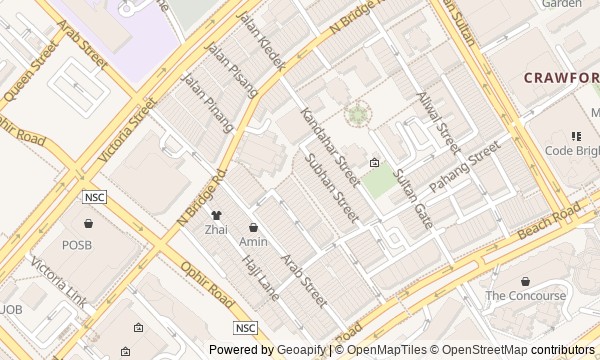
Route map
About the walk
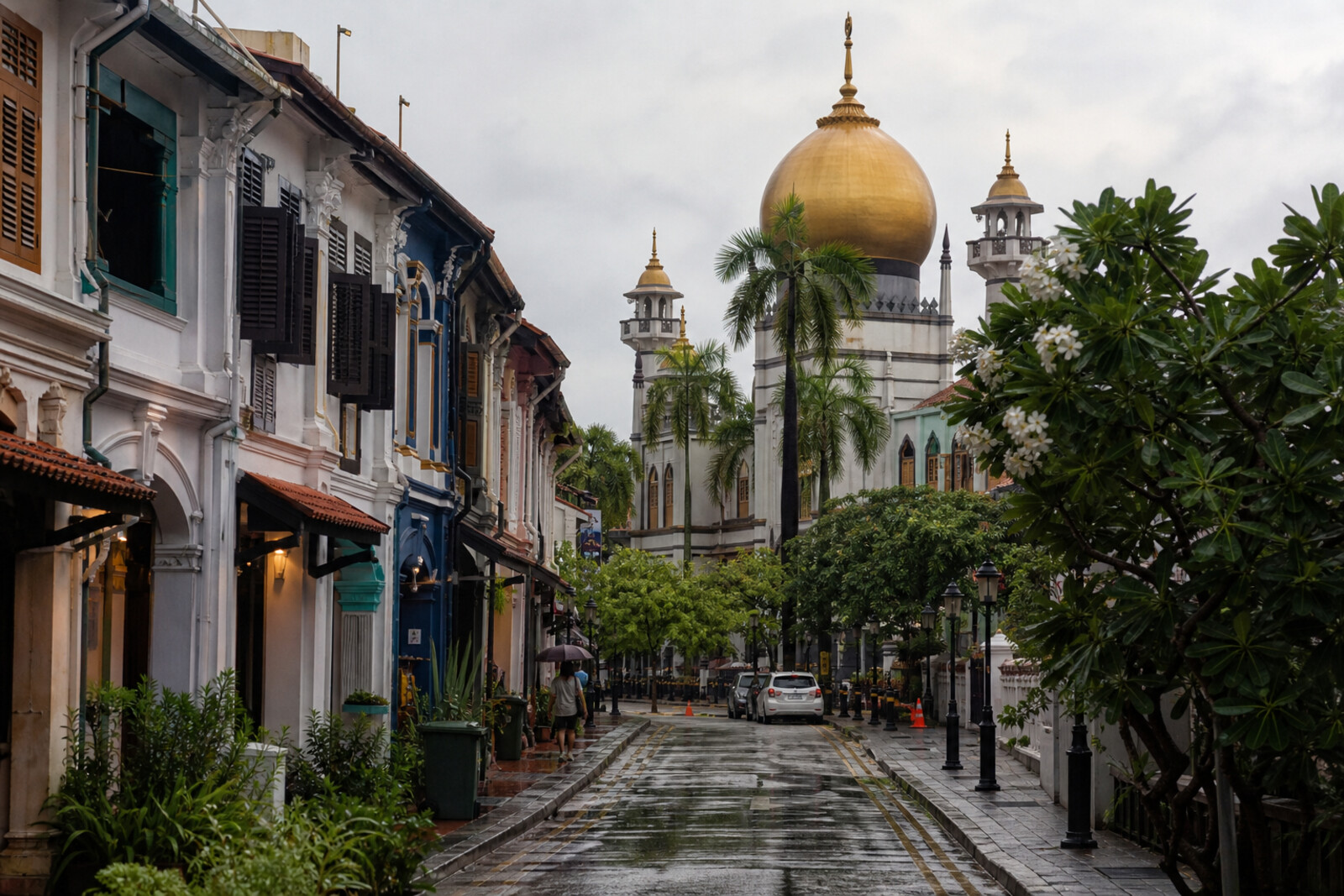
You will walk through Kampong Gelam from Sultan Gate and the former palace to Bussorah Street, Arab Street, Haji Lane, and the painted barriers by Ophir Road.
Behind the bright shophouses, the neighborhood’s old roles will come into view: a sultan’s residence, a port stop on the way to Mecca, a textile district, and service lanes. First you will see the yellow house whose seller was promised a very different buyer. Then the road will lead to a palace with an official inscription, a house where twenty relatives might see off a pilgrim, and a shop where expensive silk never quite found a home online. By the mosque, another question will arise: why were empty bottles needed beneath golden domes?
The story rests on family memories, documents, and the things in front of you. It will clearly separate oral tradition from established fact. By the end, you will be able to explain why to look for glass beneath a dome, artists’ names among trash bins, and murals on construction metal here.
Why this order
At the yellow house on Sultan Gate, you will begin with a private attempt to reclaim a former possession of the sultan’s family. In the neighboring Istana Kampong Glam, it will become clear how the family itself lost its rights to the palace site. From the former residence, you will step out onto Bussorah Street: after the rulers’ story, the everyday economy that grew around the mosque and the sea journey to Mecca comes into view. Along Bussorah Street, you will reach Arab Street, where pilgrimage services gave way to fabric trading and a family business. The next block leads to Haji Lane and the service lanes, where, beside protected shophouses, you can see how entrepreneurs won the right to paint blank walls. Then you will return to Sultan Mosque, because its rebuilding reveals another form of collective effort: fundraising by several communities at once. The final stretch to Bali Lane and Ophir Road continues the theme on a temporary construction barrier that the authorities, entrepreneurs, and artists turned into an official venue.
Those who want to understand Kampong Gelam beyond its bright facades Fans of family stories and urban trade Those interested in the path from protected buildings to legal street murals
Those looking for an overview of all Singapore Those expecting a walk only through modern bars and shops Those uninterested in detailed historical storytelling
Before you go
Expect most of the route to be outdoors, and bring water and protection from sun or rain. Check separately before your walk whether you can enter the Malay Heritage Centre and Sultan Mosque: museum and prayer schedules do not align, and worship and events take priority over tourist visits. At the mosque, choose modest clothing, speak quietly, and follow directions on site. Shops and cafes are independent businesses, so do not plan the route around a required purchase or entry.
When to go
2–3 hours for 1.1 kilometers. The lower end is enough for viewing the sites from outside and listening to the stories; allow more time for accessible interiors, a pause at the mosque, and a close look at the murals.
Backup plan
If the palace or mosque is inaccessible inside, the route still makes sense: look at the facades, courtyard, domes, and street axes from outside without trying to enter closed areas. If it rains, stay under permitted shelter and shorten the outdoor stops instead of standing in service passageways. If Haji Lane is crowded, walk through without a long pause and spend more time at Gelam Gallery or the final walls along the road. Street works change, so treat the absence of a familiar image as a new layer of the place, not a mistake in the route.
Route conditions
Elevation. Ascent — 3 m; descent — 2 m
OpenStreetMap extract of June 18, 2026: database data, not a check on the ground. Data © OpenStreetMap contributors, ODbL licence
Walk plan
Open in maps ↗- 1
Sultan Gate and Gedung Kuning
Here, a private family transaction will for the first time breach the direct boundary between the sultan's legacy and merchants' money. - 2
Istana Kampong Glam
The palace's history will show how a new house could become the final concession to a family already losing its former rights. - 3
Bussorah Street
One surviving house makes it possible to reconstruct how an entire pilgrimage village functioned before the sea crossing. - 4
Arab Street
A family shop will explain why the trade in expensive fabric has preserved a personal conversation between seller and buyer. - 5
Haji Lane and Gelam Gallery
This stop will show how a dispute over a single wall changed the rules for murals throughout the entire district. - 6
Sultan Mosque
The story of its rebuilding brings together donations from different communities and one striking detail beneath the domes. - 7
Graffiti Hall of Fame
The final stop will show how the inconvenience of lengthy construction became an official venue for seventeen artists.
Route features
Everything you need stays in the browser
Progress, saves and your trip plan are stored on this device.
Add Guide On Map to your home screen so the walk opens outside the browser.
How we handle sources, maps and corrections: our editorial standards