 Guide On Map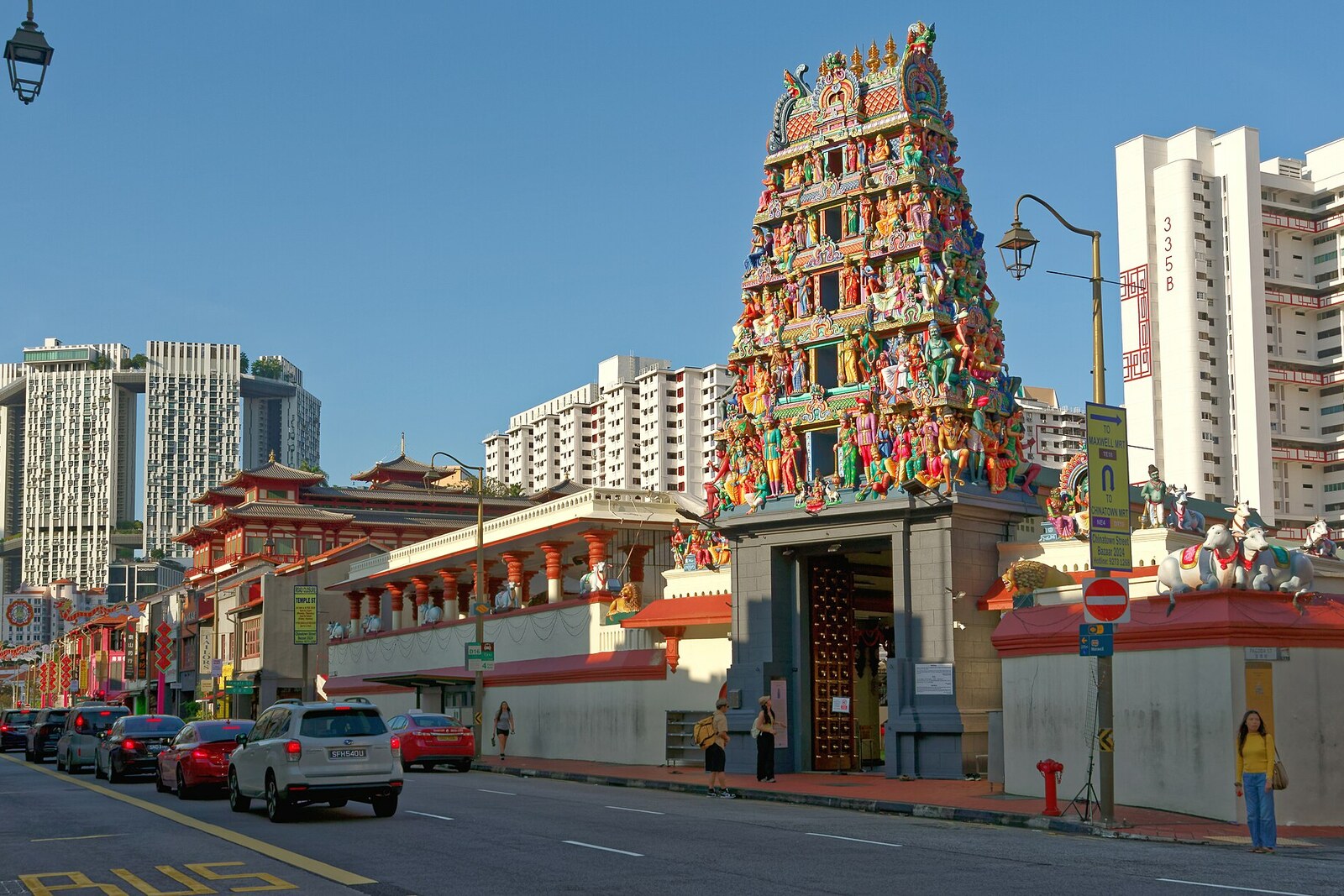
Look around first
What to notice
- Five-tiered gopuram
- Main sanctuary
- Large figure of Mariamman
- Small figurine of Sinna Amman
The story of the place
Above South Bridge Road rises a five-tiered entrance tower densely covered with figures of deities. Behind it stands a functioning temple to the Tamil mother goddess Mariamman, from whom people expected rain and protection during epidemics. For migrants from Indian port cities, it also served as a temporary home: they lived here until they found their first job and permanent housing, entered into marriages, and left records of deaths. The brick parts of the building and the tower appeared later than the original structure, and wedding ceremonies are still held here today.
The main sanctuary holds a small figurine of Sinna Amman—the “Little Goddess.” Narayana Pillai installed it here in eighteen twenty-seven. The wooden temple with a palm-leaf roof for which the figurine was intended disappeared long ago. The figurine remained.
Pillai, a former clerk of the East India Company, sought a permanent sanctuary for the Tamil Hindus arriving in Singapore. He himself came from Penang in eighteen nineteen. He earned his living making bricks and trading cotton textiles. For his brickworks, he summoned masons, carpenters, and other craftspeople from Penang and South India. These migrants made up part of the community that needed a temple.
Money did not come to Pillai without risk. European merchants supplied goods for his shop on credit. In eighteen twenty-two, a fire destroyed the shop, but the debts remained. Pillai persuaded his creditors to give him time, obtained a new plot for warehouses with Stamford Raffles's assistance, and resumed trading. After restoring his fortune, he invested money in the temple.
But he had to search for suitable land three times. The East India Company first offered a site on Telok Ayer Street. Pillai refused: there was no convenient source of fresh water nearby, which was necessary for Hindu rites. In eighteen twenty-one, the British Resident William Farquhar authorized construction by a freshwater stream—the present-day Stamford Canal. Then the planning commission designated this land for other needs.
Pillai received the present site on South Bridge Road in eighteen twenty-three. Four years later, a small temple stood here, with the Sinna Amman he had brought inside. Mariamman, to whom it is dedicated, is a Tamil mother goddess: the word “maari” means rain, and “amman” means mother. She is revered as a giver of rain and a protector against epidemic diseases, including cholera. For people arriving from the port districts of Nagapattinam and Cuddalore, she was a familiar patroness in an unfamiliar city.
The consequences of construction were not limited to worship. New arrivals could live at the temple until they found work and permanent housing. Priests solemnized Hindu marriages, and the temple kept records of marriages and deaths. Wedding ceremonies are still held here today.
The brick parts of the building appeared after Pillai, and the present five-tiered gopuram—an entrance tower with many figures—was built in the nineteen thirties. Neither the palm roof nor the wooden walls of the first temple remain. At the feet of the large Mariamman in the main sanctuary stands the small figurine of Sinna Amman that Pillai placed here in eighteen twenty-seven.
Useful on site
Daily 06:00–12:00 and 18:00–21:00; on Fridays, evening hours until 21:15. The temple is closed between the daytime and evening openings.
Checked: June 28, 2026. Check the official source before visiting.Remove your shoes before entering, keep your clothing covered, and do not cross the space of a ceremony in progress.