 Guide On Map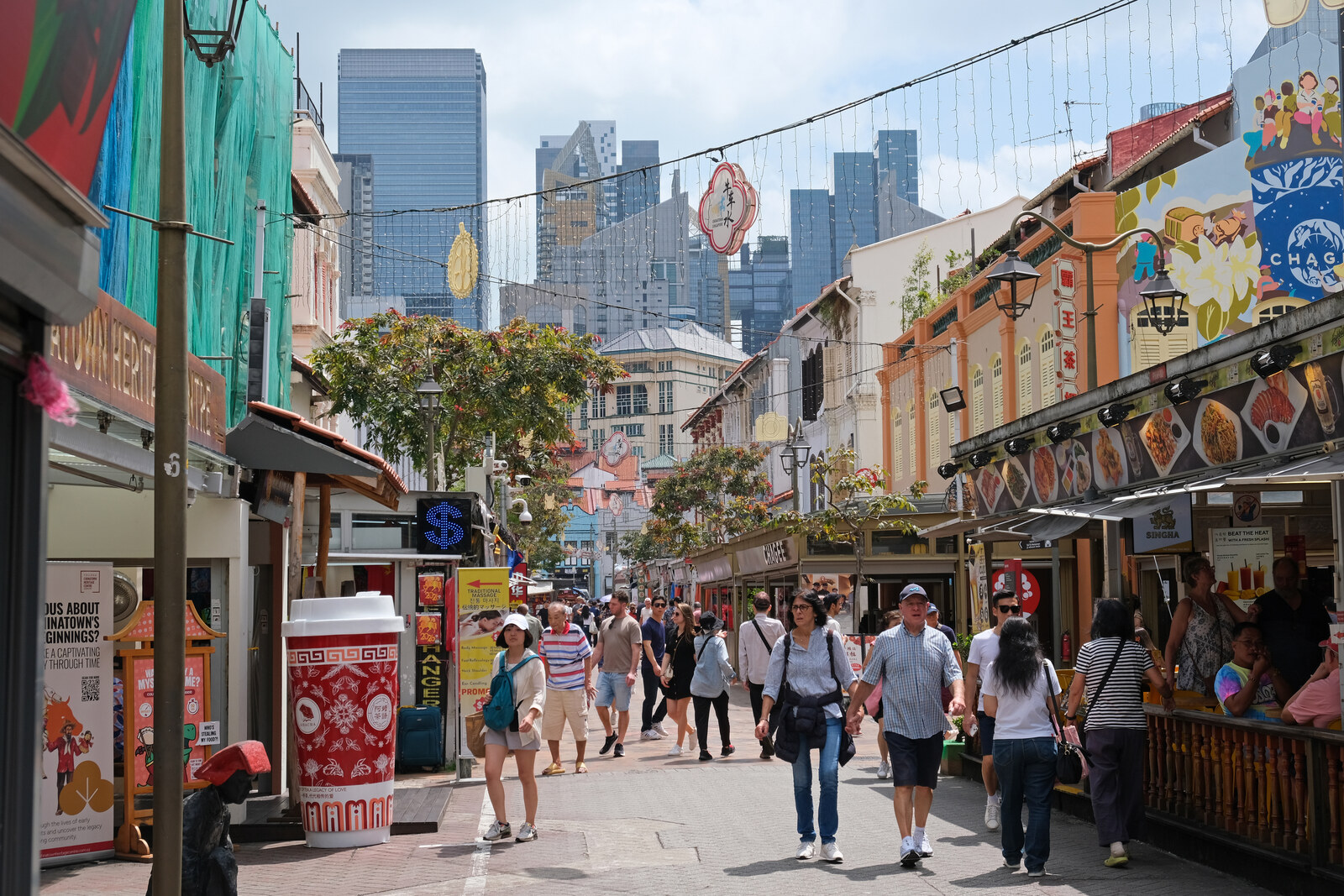
Look around first
What to notice
- House No. thirty-seven
- Row of shop windows
- Street sign
- Gopuram of Sri Mariamman Temple
The story of the place
The official name Pagoda Street appeared because of the tower of Sri Mariamman Temple. To Chinese residents, the gopuram—a gateway tower of a South Indian temple—resembled a pagoda. But in Cantonese, the street had another name: Kwong Hup Yuen kai, the street of the Kwong Hup Yuen firm.
Its office is believed to have been in house thirty-seven. Kwong Hup Yuen traded in the labor of Chinese migrants and was one of the largest such enterprises in Singapore. Brokers paid for the sea passage, food, and lodging of poor people from the southern provinces of China. So a person stepped ashore already a debtor. He was called a coolie—a hired manual laborer—although he often could not choose an employer.
Kwong Hup Yuen kept arriving men in a house on Pagoda Street until a contractor from a plantation or mine agreed to take them on together with their debt. Strong workers were valued more highly; the sick and weakened could be left without help. The brokers called the migrants themselves “zhuzai”—“piglets.” This word also described the method of the transaction: people were assessed by how much hard labor could be got out of them.
By nineteen oh one, twelve offices and dormitories for coolies operated on this short street. Each was allowed to keep up to two hundred people, but the established limit was constantly exceeded. The men shared wooden bunks; there was not enough water or toilets. Then a contractor took them to a construction site, the port, a mine, or a plantation. There they worked off the costs of passage and upkeep, while the broker received payment for each debtor hired.
In nineteen fourteen, the British administration abolished indentured labor, and the coolie trade declined. The former offices still served as cheap dormitories, and by the middle of the twentieth century tailoring and textile shops had opened in the houses. Later, bicycles were sold in house thirty-seven.
Now Pagoda Street has become a pedestrian shopping passage from the subway to South Bridge Road. The street sign retains the name of the temple tower. House thirty-seven remains among the row of shop windows, and the old Cantonese name retains the name of the firm that kept arriving debtors here.
Useful on site
The pedestrian street is accessible around the clock; shops and museums keep their own schedules.
Checked: June 28, 2026. Check the official source before visiting.Most of the past here has to be read from outside; do not try to enter premises that are not open to visitors.